

Residential renovations move fast — and the debris piles up faster. Whether you are gutting a kitchen, tearing off a roof, or demoing a second-story bathroom, the moment you start pulling material out you need a plan for getting it down and into the dumpster without injuring workers or trashing your client's yard. A dedicated trash chute is the cleanest, safest solution, and the good news is that the right chute for a residential job costs well under $5,000 — often a fraction of that.
This guide walks you through every decision you will face: what size chute fits a typical home renovation, how reusable polymer-fabric chutes compare to rentals and alternatives, what real setup looks like, and exactly how to buy the right product for your project budget.
Why Residential Renovation Debris Is a Different Problem Than Commercial Demolition
Most of the debris-management content online is written for high-rise construction or large commercial sites. Residential renovation has its own quirks that change the math entirely.
The Drop Heights Are Shorter, but the Hazards Are Real
A two-story home sits roughly 18 to 24 feet from the second-floor window to the dumpster on the driveway. A single-story renovation may only need 10 feet of drop. These modest heights are still enough to injure a worker throwing debris by hand — or to scatter shingles, drywall chunks, and tile fragments across a landscaped yard. Short drops are not trivial; they still need a controlled path to the container.
Neighbors, Landscaping, and Tight Access
On a residential site, the client's rose garden is three feet from the dumpster. The neighbor's fence is two feet beyond that. Uncontrolled debris scatter is a liability and a relationship problem. A properly anchored chute keeps every piece of material on a predictable trajectory straight into the bin — no scatter, no cleanup calls.
Crew Size and Ergonomics
Residential crews are often two to four people. Carrying heavy loads of drywall, tile, or roofing shingles down stairs and out the door is one of the leading causes of strains and back injuries on small job sites. OSHA's ergonomics guidance is clear that repeated load-carrying on stairs dramatically increases injury risk. A chute eliminates the stair carry entirely — workers slide material in at the work floor and the chute does the rest.
What Exactly Is a Reusable Polymer-Fabric Trash Chute?
If you have only seen the rusted steel chutes bolted to scaffolding on big commercial jobs, the modern reusable polymer-fabric chute is a different product category entirely.
How the Material Works
U-Chute manufactures chutes from a tough polymer-fabric blend that is lightweight enough to carry in one hand per section yet durable enough to handle roofing shingles, concrete rubble, broken tile, and general demolition debris. The fabric does not crack in cold weather, does not rust, and does not require tools to assemble. Each section connects to the next so you stack sections until you reach the drop height you need.
Why Reusable Beats Disposable for Budget-Conscious Jobs
Disposable cardboard chute sections get destroyed the moment wet drywall or heavy tile passes through them. Renting a steel chute system typically involves pickup fees, drop-off fees, and daily or weekly rental rates that add up fast on a week-long kitchen gut. A reusable U-Chute ships to your door, assembles in minutes, and goes back in the truck for the next job — paying for itself on the second or third project.
The Four U-Chute Sizes: Which One Fits a Residential Renovation?
U-Chute sells four configurations, and picking the right one for a residential job is straightforward once you know your drop height and the type of material you are moving.
10 ft Lite-Duty
The 10 ft lite-duty chute is built for light demolition, home cleanouts, and renovation jobs where the debris is mostly drywall, insulation, light framing lumber, and general construction waste. If your dumpster sits at ground level and your work is happening one story up — a classic single-story addition or a main-floor renovation — the lite-duty 10-footer is the most cost-efficient entry point. It is also the easiest chute to move around the site as the job progresses.
10 ft Heavy-Duty
The 10 ft heavy-duty version covers the same drop distances but handles heavier material — roofing shingles, tile, brick, and denser demolition debris. Roofers on single-story homes, kitchen remodelers pulling out thick ceramic tile, and small demo crews will find that the heavy-duty rating gives them the confidence to move material quickly without babying the chute. If you are not sure whether your material qualifies as lite or heavy, default to heavy-duty.
25 ft Heavy-Duty
Two-story homes, additions above a garage, and renovation projects on older three-story Victorian or craftsman houses typically need more than 10 feet of reach. The 25 ft heavy-duty chute handles these drops comfortably. Stacking sections gives you flexibility — you do not have to use all 25 feet if the dumpster is closer. This is the most versatile option for residential contractors who work across a variety of home sizes.
50 ft Heavy-Duty
The 50 ft heavy-duty chute is the commercial-grade option, built for multi-story residential buildings, apartment renovation projects, and larger multi-family structures. While a single-family home renovation rarely needs this length, contractors working on condo conversions, townhome gut-outs, or historic building restorations in urban markets will find the 50-footer essential. It also ships free to anywhere in the United States, just like the smaller sizes.
How to Calculate the Right Drop Height for Your Project
Getting this number right before you order saves you from ordering the wrong size and waiting on a second shipment. The calculation is simpler than it sounds.
Step-by-Step Drop Height Formula
- Identify your work floor. Which floor will debris be originating from? Measure the height of the window or opening you will feed the chute from, above grade (the ground outside).
- Identify your dumpster position. Where will the dumpster or debris pile sit? Most dumpsters are placed on the driveway, flush with grade.
- Subtract for dumpster height. A standard roll-off dumpster is about 4 feet tall. You want the chute to drop material into the container, not past it, so measure from the feed point down to the top of the container.
- Add a buffer. Add 2 to 3 feet of buffer to ensure the chute reaches and anchors properly without being stretched tight.
Example: Second-floor window sits 18 feet above grade. Dumpster top is 4 feet above grade. Net drop is 14 feet. Add a 3-foot buffer and you need 17 feet of chute. The 25 ft heavy-duty covers you with room to spare.
What Happens If You Under-Order?
A chute that is too short creates a gap between the chute exit and the container. Debris spills out, defeats the purpose of the chute, and creates the scatter problem you were trying to avoid. It is always better to have more chute than you need — unused sections can simply be left coiled in the truck.
Keeping Your Residential Renovation Under Budget: The Full Cost Picture
The phrase "under $5,000" covers a wide range of project scales. Here is how the debris-management piece fits into a realistic renovation budget breakdown.
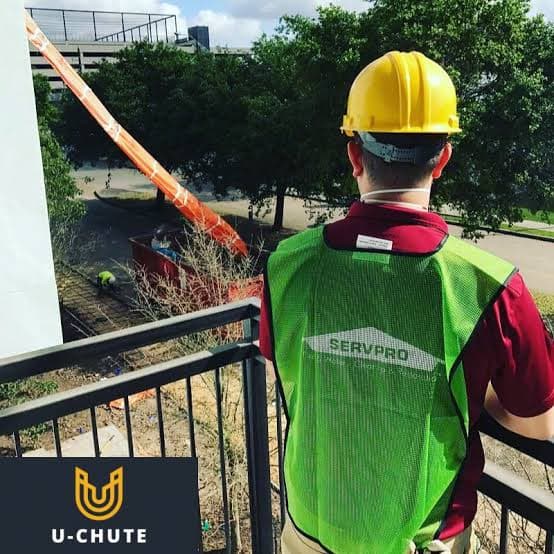
What Does a Trash Chute Actually Cost?
U-Chute's polymer-fabric chutes are priced to be accessible for small contractors and homeowners running their own renovation projects. All four sizes are listed with transparent pricing directly on the site, and every order ships free anywhere in the United States. You pay once, receive the chute, and own it — no daily rental fees accumulating while the job runs long. For a full breakdown of how chute costs compare across different project types, the cost estimate guide has the detail you need.
Rental vs. Purchase: The Real Numbers
- Rental: Steel chute rental typically runs $50–$150 per day depending on your market, plus delivery and pickup fees. A 10-day kitchen renovation could easily cost $700–$1,800 just for the chute rental.
- Purchase: A reusable U-Chute covers the same project and every project after that. For contractors running 10 or more jobs a year, the math is decisive.
- DIY alternatives (tarps, buckets, manual carry): These approaches look free but carry hidden costs — worker injury risk, longer job duration, debris scatter cleanup, and client dissatisfaction.
Does a Trash Chute Qualify as a Tax Deduction?
For professional contractors, equipment purchases like trash chutes are typically deductible as business expenses. The specifics depend on your entity structure and how the IRS classifies the purchase in your situation. This guide on construction chute tax deductions for contractors in 2026 lays out the key considerations worth reviewing with your accountant.
Setting Up a Trash Chute on a Typical Home Renovation Site
Assembly is the part that intimidates first-time buyers, and the reality is much simpler than it looks. Here is what setup looks like on a real residential job.
What You Need Before You Start
- The U-Chute sections for your chosen size
- An anchor point at the top: a window frame, door frame, or temporary wood blocking secured to the structure
- A dumpster or debris container positioned below the exit point
- Two people for initial setup (one to hold at top, one to guide sections below)
Assembly in Five Steps
- Position the dumpster. Place the container directly below the planned chute exit point before you start building up.
- Secure the top section. Hook or tie the top section to your anchor point at the window or opening. The anchor should be rated to handle the dynamic load of debris passing through.
- Connect sections downward. Attach sections one at a time, letting each one hang freely before adding the next. Polymer-fabric sections are light enough that one person can manage this from a ladder.
- Guide the exit into the container. The bottom of the chute should sit inside or just above the open top of the dumpster. You may want to angle it slightly to direct material toward the center of the bin.
- Test with a small load. Before committing heavy material, send a light test load through to confirm the path is clear and the chute is stable.
For homeowners tackling a family home renovation themselves, this detailed guide on trash chute setup for family home renovation projects covers every edge case you might encounter.
What Types of Residential Renovation Debris Can Go Through a Chute?
The short answer: most of it. But there are some specifics worth knowing before you load the chute.
Materials the Chute Handles Well
- Drywall sheets and chunks
- Roofing shingles (asphalt, fiberglass, and light wood shakes)
- Ceramic and porcelain tile
- Light framing lumber and trim pieces
- Insulation (batts and rigid board)
- Plaster and lath from older home walls
- General construction debris: packaging, cardboard, fasteners, small hardware
What to Be Careful With
- Rebar or sharp metal: Long pieces of rebar or sharp sheet metal can snag in the chute. Cut or bundle these before sending them through.
- Oversized lumber: Long 2x4 sections will not navigate the curve of the chute. Cut them to manageable lengths first.
- Hazardous materials: Asbestos-containing materials, lead paint debris, and similar regulated waste must be handled according to local regulations — they do not go through a standard debris chute regardless of brand. Review EPA guidelines on construction waste and materials for regulated material disposal requirements.
Safety Considerations for Residential Trash Chute Use
A chute makes debris handling safer, but only when it is used correctly. These are the safety principles worth building into your job-site routine.
Establish a Drop Zone
Mark a clearly defined exclusion zone at the base of the chute. No workers, no pedestrians, no pets inside that zone while the chute is in use. On a residential site where homeowners or their children may be nearby, this is especially important. Physical barriers — traffic cones, caution tape, or temporary fencing — make the boundary unmistakable.
Never Overload the Chute
Feed material in at a controlled pace. Jamming a large volume through at once can create a blockage or cause the chute to swing. One person manages the feed at the top; one monitors the exit at the bottom during heavy loading. This two-person check prevents the most common chute-related incidents.
Inspect the Anchor Before Every Use
The top anchor point bears the greatest stress during operation. Before the crew starts the morning, check that the anchor is secure and that the top section has not loosened overnight. On multi-day jobs, brief inspections at the start of each shift take 60 seconds and prevent the most serious failure mode.
For region-specific safety requirements, especially if you are working in a state with stringent construction safety codes, this guide on winter trash chute safety regulations by state in 2026 covers the compliance landscape in detail.
Residential Renovation Industries That Rely on Trash Chutes
The use cases extend well beyond the general contractor doing a kitchen remodel. Here is who is buying chutes for residential work specifically.
Roofing Contractors
Tear-off is the heaviest and most labor-intensive part of a residential roofing job. Shingles are dense, the pitch of a roof makes carrying loads to the edge dangerous, and a dumpster parked in the driveway is the natural exit point. A 10 ft heavy-duty or 25 ft heavy-duty chute positioned at the eave eliminates the most physically demanding part of the job and dramatically speeds up the tear-off phase.
Junk Removal Companies
Residential junk removal often involves clearing upper-floor rooms — old furniture, stored boxes, outdated appliances — in homes where taking items down stairs and through the house would damage flooring and walls. A chute through an upper-floor window lets crews move volume quickly without a single trip through the living room.
Kitchen and Bathroom Remodelers
The debris from a kitchen gut — cabinets, countertops, drywall, tile — is heavy and awkward. Bathroom demolition produces similar volume in a confined space. A chute positioned at the nearest window keeps the material flow moving without clogging the hallway and staircase with debris carts.
Estate Cleanout and Property Rehab Crews
Investors rehabbing distressed properties and estate cleanout crews work in homes where every room can be a debris source. A chute that can be repositioned quickly from window to window as the crew moves through the house multiplies their efficiency on a floor-by-floor basis.
U-Chute serves all of these industries. View the full range of applications and services here to see how the product line matches your specific work type.
Waste Diversion and Responsible Disposal During Residential Renovation
Getting debris safely out of the building is step one. What happens to it after it lands in the dumpster matters too — both for environmental reasons and increasingly for regulatory compliance in many municipalities.
Sorting at the Source
The easiest time to sort recyclable construction materials is before they go into the chute. Drywall, clean lumber, metal, and cardboard can often be recycled separately from mixed debris. Some jurisdictions require diversion of certain materials from landfills. A small investment in separate bins — one for recyclables, one for landfill waste — pays off in lower disposal fees and regulatory compliance. The EPA's recycling resources provide guidance on what construction materials qualify for recycling programs.
The Reusability Advantage
A reusable polymer-fabric chute itself is a sustainability choice. Unlike single-use alternatives, U-Chute products are designed for repeated use across dozens of projects. This reduces the volume of equipment waste generated by the construction industry — a meaningful consideration for contractors whose clients are increasingly asking about their environmental practices.
Ordering a U-Chute for Your Residential Renovation
The purchasing process is designed to be as simple as the product. There are no complicated quotes, no sales calls required, and no waiting for a representative to calculate pricing.
How to Choose and Order
- Calculate your drop height using the formula above.
- Identify your debris type — lite-duty for light mixed debris, heavy-duty for roofing, tile, or dense demolition material.
- Select the size — 10 ft lite-duty, 10 ft heavy-duty, 25 ft heavy-duty, or 50 ft heavy-duty.
- Order online with free shipping to any address in the United States.
- Receive, assemble, and get to work. No rental paperwork, no pickup scheduling, no daily fees.
If you are working in a specific region and want to know how other contractors in your market are using the product, the debris chute systems page covers applications across Texas and beyond. You can also find location-specific information for markets like Boulder, Colorado, Asheville, NC, Sarasota, Florida, and Bend, Oregon — all served with free shipping.
What If You Have Questions Before You Order?
The U-Chute FAQ page covers the most common questions about sizing, material compatibility, and setup. If you need something beyond what's there, the contact page connects you directly. There is no complicated support queue — just straightforward answers about a straightforward product.
Frequently Asked Questions
What size trash chute do I need for a two-story home renovation?
Most two-story homes have second-floor windows sitting 16 to 22 feet above grade. After accounting for the dumpster height (typically 4 feet), your net drop is usually 12 to 18 feet. Add a 2 to 3 foot buffer and a 25 ft heavy-duty chute covers the full range comfortably. If your project is on the lower end of that range and you are handling only light debris, a 10 ft heavy-duty with sections extended may work — but the 25 ft is the safer choice for versatility across different window positions on the same job.
Can a homeowner use a trash chute for a DIY renovation, or is it only for contractors?
Homeowners can absolutely use a U-Chute for a DIY renovation. The polymer-fabric sections are lightweight and assemble without tools. The main requirements are a secure anchor point at the top — a window frame or temporary wood blocking — and a dumpster or debris container positioned below. For a thorough walkthrough of setup on a family renovation project, the trash chute setup guide for home renovation projects covers everything a first-time user needs to know before the project starts.
Is a trash chute worth it for a short renovation project that only lasts a week?
Yes, especially when you compare purchase price against the rental alternative. A week-long rental from a local supplier — factoring in delivery, pickup, and daily fees — often costs more than purchasing a reusable U-Chute outright. If you are a homeowner who will only use it once, you can resell it after the project. If you are a contractor, it becomes part of your standard equipment inventory and pays for itself within the first two to three uses.
What materials should I never put through a residential trash chute?
Regulated hazardous materials — including anything containing asbestos, lead-based paint debris, or contaminated soil — must never go through a standard construction trash chute. These require specialized disposal procedures governed by federal and local environmental regulations. Long rigid materials like full-length rebar or uncut structural beams can also cause jams or anchor stress. For everything else — drywall, shingles, tile, lumber cut to manageable lengths, insulation, and general renovation debris — a heavy-duty U-Chute handles the material safely.
How do I secure a trash chute at the top on a residential job site?
The most common anchor method on a residential site is wrapping the chute's top attachment point around a solid window frame, door frame, or a section of temporary blocking screwed into framing studs. The anchor needs to handle the dynamic load of debris moving through — not just the static weight of the chute itself. Never anchor to drywall or loose trim. Two-person setup makes the initial attachment safer: one person manages the top while the other guides the lower sections into position over the dumpster.
Does buying a trash chute qualify as a business tax deduction for a contractor?
For most professional contractors, equipment purchases used in the course of business — including reusable debris management equipment like trash chutes — are deductible expenses. Whether the deduction applies in the year of purchase or must be depreciated over time depends on your business structure, the purchase amount, and current IRS rules for equipment expensing. Review the construction chute tax deductions guide for 2026 for a detailed breakdown, and confirm your specific situation with a qualified accountant before filing.
Can I use one trash chute across multiple job sites, or do I need one per project?
A single U-Chute is designed to move from job to job. The sections pack down to a manageable size, load into a truck or trailer easily, and set up fresh at the next site in minutes. Most residential contractors find that one well-chosen size — typically the 25 ft heavy-duty — covers the majority of their single-family and two-story projects. Contractors working a mix of single-story and multi-story jobs sometimes own both a 10 ft and a 25 ft so they always have the right drop length on hand without hauling extra sections unnecessarily.
Ready to Order Your Trash Chute for Your Next Residential Renovation?
Getting debris off your work floor and into the dumpster safely, efficiently, and within budget is not a complicated problem — but it does require the right equipment. A reusable U-Chute polymer-fabric trash chute gives you a purpose-built solution that ships free to your door, sets up in minutes, and pays for itself before the second job is done.
Choose the size that matches your drop height and debris type, order directly through the site, and start your next renovation with a debris management plan that actually works. Visit the debris chute systems page to browse the full product lineup or reach out with any questions before you order. Quality construction debris management without compromise — that is what U-Chute delivers.