
If you manage construction, demolition, or roofing jobs across multiple states, you already know that regulatory requirements can shift dramatically the moment you cross a state line. What passes inspection in one jurisdiction may trigger a stop-work order in another. Construction debris chute regulations by state cover everything from minimum chute angles and load ratings to permit requirements, noise ordinances, and mandatory debris containment standards.
This guide lays out the regulatory landscape in plain language — covering federal baselines, regional enforcement patterns, and the practical decisions contractors make every day to stay compliant without blowing the project budget. Whether you work residential roofing in the Southeast, high-rise demolition in the Northeast, or commercial gut-outs in the Mountain West, the sections below will give you a clear picture of what the rules actually require.
The Federal Baseline: OSHA and EPA Standards That Apply Everywhere
Before diving into state-level variation, it helps to understand the floor every contractor must clear regardless of location. Two federal agencies set the baseline: the Occupational Safety and Health Administration (OSHA) and the Environmental Protection Agency (EPA).
OSHA Requirements for Chute-Based Debris Removal
OSHA's construction standards — primarily found in 29 CFR 1926 — address debris management in several sections. Key provisions relevant to trash chutes include:
- 1926.25 (Housekeeping): Construction areas must be kept clear of debris, and scrap must be removed at regular intervals. Chutes are one of the accepted methods for moving debris from upper floors.
- 1926.252 (Disposal of waste materials): When debris is dropped more than 20 feet to any exterior point of a building, an enclosed chute must be used. This is the regulation most crews bump into first. No chute, no drop — period.
- Enclosure requirements: Any chute opening greater than 45 degrees from horizontal must be guarded to prevent unintended material from entering or injuring workers below.
- Signage: The area below and around the chute discharge point must be barricaded and clearly posted to keep unauthorized personnel out.
OSHA also addresses ergonomic safety in loading and unloading operations — meaning the way crews feed material into the chute matters as much as the chute itself. Proper body mechanics, manageable load sizes, and safe platform positioning all fall under federal scrutiny.
EPA Waste Handling and Air Quality Rules
The EPA regulates construction and demolition (C&D) debris as a distinct waste category. While the EPA doesn't mandate specific chute designs, it does require that debris handling minimize airborne dust and prevent commingling of hazardous materials (like asbestos-containing materials or lead paint chips) with general waste streams.
Chutes that create billowing dust clouds or allow debris to scatter outside a contained area can trigger violations under Clean Air Act provisions enforced at the state level. EPA data on materials, waste, and recycling underscores how significant construction debris is as a waste category — C&D debris represents a substantial share of total municipal solid waste, and regulators have become increasingly attentive to how it is collected and handled at the source.
How State-Level Enforcement Actually Works
States can adopt OSHA's federal standards verbatim, create their own OSHA-approved state plans (called State Plans), or layer additional regulations on top of the federal baseline through building codes, environmental agencies, or city and county ordinances. As of 2026, 22 states plus the District of Columbia and Puerto Rico operate approved State Plan programs that cover private-sector construction.
State Plan States vs. Federal OSHA States
The distinction matters because State Plan states can — and often do — establish requirements that go beyond federal OSHA minimums:
- State Plan states (examples): California, Washington, Oregon, Michigan, North Carolina, Arizona, Hawaii, and others. These states have their own safety agencies and inspectors. Their rules may be more restrictive than federal OSHA, but never less restrictive.
- Federal OSHA states (examples): Texas, Florida, Georgia, New York, Illinois, Colorado. In these states, federal OSHA inspectors enforce 29 CFR 1926 directly. Local jurisdictions may still add building code requirements layered on top.
The practical implication: if you're running jobs in California and Texas simultaneously, the California crew is answering to Cal/OSHA, which has additional fall protection, heat illness, and debris management rules. The Texas crew answers to federal OSHA — but may still face Houston, Dallas, or Austin city permit requirements for debris chute placement in the right-of-way.
Northeast States: Dense Urban Environments and Strict Local Codes
The Northeast corridor — Massachusetts, New York, New Jersey, Connecticut, Pennsylvania — tends to have the most layered regulatory environment for construction debris chutes. Dense urban settings mean sidewalk sheds, street permits, and noise restrictions come into play alongside safety codes.
New York State and New York City
New York City operates under one of the most detailed local construction codes in the country. NYC's Department of Buildings (DOB) requires a separate permit for any trash chute or debris removal system affixed to a scaffold or building facade. Key NYC-specific requirements include:
- Chutes must terminate into a closed dumpster or enclosed collection area — open pile discharge is prohibited in most zones.
- The discharge end must be no more than 24 inches above the collection container to prevent projectile debris.
- Any chute extending over a public sidewalk requires an approved sidewalk shed or protective overhead structure.
- Noise from chute use is subject to NYC's Noise Code (Local Law 113 of 2005), which restricts certain operations in residential zones during evening hours.
Massachusetts and Boston Specifics
Massachusetts operates under a State Plan for public employees but uses federal OSHA for private-sector construction. Boston's Inspectional Services Department adds permit requirements for debris chutes in historic districts and any chute that extends over a public way. Contractors working near Boston's older building stock (pre-1940 masonry) should also be aware of lead paint and asbestos rules that affect how debris is collected and channeled.
If you're sourcing equipment for Northeast jobs, the Manchester, NH coverage area and Portland, Maine coverage area pages outline how U-Chute systems ship to and serve New England contractors directly.
Southeast States: Hurricane-Zone Roofing and High-Volume Demolition
The Southeast — Florida, Georgia, the Carolinas, Virginia, and Tennessee — sees enormous roofing and renovation activity, especially after hurricane seasons. State-level debris chute regulations here focus heavily on wind load, secure attachment, and containment on sloped roofs.
Florida's Unique Requirements
Florida operates under federal OSHA but has one of the most active state building code systems in the country (the Florida Building Code, updated on a three-year cycle). For debris chutes, Florida inspectors look at:
- Attachment security: Chutes must be secured against wind loads consistent with the local wind speed zone — critical in coastal counties like Miami-Dade, Broward, and Sarasota.
- Debris containment at grade: Many Florida counties require that collection containers be fully enclosed or covered to prevent storm water from mixing with construction debris and creating runoff violations under NPDES permits.
- Hazmat pre-screening: Older Florida housing stock (pre-1978) often contains lead paint; roofing demolition debris must be screened before entering the chute to avoid commingling with regulated waste.
Contractors working Florida's Gulf Coast and Atlantic Coast markets can find region-specific product information on the Sarasota and Boca Raton pages.
North and South Carolina
North Carolina is a State Plan state, meaning NC DOL's Occupational Safety and Health Division enforces its own standards. South Carolina uses federal OSHA. Both states are experiencing significant residential construction growth, and their inspectors have become more active in citing debris management deficiencies on framing and roofing sites. The Asheville, NC and Columbia, SC coverage pages provide product details relevant to Appalachian-region and Midlands contractors.
Midwest and Plains States: Agricultural and Industrial Crossover
States like North Dakota, Nebraska, Montana, and the broader Plains region present a different challenge: lower population density, fewer local permit layers, but significant variation in how counties enforce state building codes — especially for agricultural conversions, grain elevator demolitions, and industrial facility teardowns.
What Midwest Contractors Should Watch
- County-level enforcement variability: In rural counties, building inspectors may not have specific chute inspection checklists, but federal OSHA still applies — and a serious incident will bring federal investigators regardless of local enforcement gaps.
- Agricultural structure demolitions: Grain bins, silos, and feed lot structures often contain hazardous dust and biological material. Chute systems must be evaluated for whether the material being channeled requires containment beyond standard construction debris protocols.
- Wind exposure: Plains states have significant open-field wind exposure. Chute attachment and stability standards become practical safety priorities even when not explicitly called out in local code.
Regional resources for these markets include the Fargo, ND, Billings, MT, and Scottsbluff, NE pages.
Mountain West and Pacific Northwest: Environmental Regulations Take Center Stage
Oregon, Washington, and Colorado bring some of the country's most active environmental regulatory frameworks to the job site. In these states, debris management is viewed through both a safety and an environmental sustainability lens.
Oregon and Washington State Plans
Both Oregon and Washington operate State Plan programs. Oregon OSHA and Washington L&I each publish construction safety rules that go beyond federal minimums. Relevant provisions for debris chutes include:
- More stringent fall protection requirements at chute loading points — crews must have guardrail systems or personal fall arrest systems any time they are within six feet of an unprotected edge while loading a chute.
- Washington's noise exposure rules (WAC 296-817) can affect how and when chute-based debris operations occur on urban sites.
- Oregon's solid waste rules (OAR Chapter 340) may require separation of recyclable C&D materials (concrete, wood, drywall) before they enter the chute — not after. This affects chute workflow design on green building projects.
Contractors in the Pacific Northwest will find the Bend, OR coverage page a useful regional starting point.
Colorado: High-Altitude and Urban Code Overlaps
Colorado uses federal OSHA but has strong local building departments in Denver, Boulder, and Fort Collins. Boulder in particular has aggressive green building and deconstruction ordinances that affect how debris is collected and documented. The Boulder, CO coverage page speaks to these regional requirements. Contractors in Colorado's high-country resort communities should also note that some mountain counties have adopted stricter debris containment rules to protect watershed areas.

Mountain South and Appalachian Region: Older Building Stock, Unique Hazards
West Virginia, Kentucky, and parts of western Virginia and Pennsylvania present a distinct regulatory environment shaped by older building stock, legacy industrial sites, and coal-region demolition projects. The Charleston, WV coverage area highlights some of the regional nuance for contractors in this corridor.
- Asbestos and legacy materials: Pre-1980 buildings in these regions frequently contain asbestos insulation, coal tar roofing products, and lead-containing materials. Any debris chute operation involving these structures requires hazmat pre-abatement before general debris can run through the chute. Regulatory agencies including the EPA and state environmental agencies enforce this strictly.
- Structural instability: Demolition in older urban cores often involves structurally compromised buildings. OSHA's 1926.850 (preparatory operations for demolition) requires an engineering survey before demolition starts, and the chute attachment plan must be part of that documented survey.
Permit Requirements: When You Need One and When You Don't
One of the most common compliance mistakes contractors make is assuming that because they own a compliant chute, they don't need a permit to use it. Permit requirements for chute use vary widely and depend on several factors.
Situations That Typically Require a Permit
- Chute extending over or into a public right-of-way (sidewalk, street lane, bike path)
- Chute affixed to a scaffold system that itself requires a permit
- Work in a historic district or landmark building
- Chute used in conjunction with a dumpster placed in a public street or parking lane
- Projects involving hazardous material abatement running concurrent with general demolition
- High-rise projects (typically 6+ stories) in most major cities
Situations That Typically Do Not Require a Separate Chute Permit
- Residential roofing replacement on a private lot with full containment at grade
- Interior renovation debris removal where the chute terminates inside the building footprint into a dumpster in a private driveway
- Portable chute use during a single-day junk removal operation on private property
When in doubt, pull the permit. The cost of a permit is trivial compared to a stop-work order or a fine. The U-Chute FAQ page addresses common questions about project setup, and the contact page is a good starting point if you have a specific compliance scenario you want to walk through.
Chute Selection and Its Regulatory Implications
Not every chute is the right chute for every regulatory environment. The physical specifications of your debris chute — length, duty rating, material, and how sections connect — affect whether you're in compliance on a given job.
Matching Chute Length to Drop Height Requirements
OSHA's 20-foot drop threshold (above which an enclosed chute is required) sounds simple, but real buildings are rarely simple. A three-story structure might have a true drop height of 32 feet from the loading point to grade — meaning a 25-foot chute section is insufficient and a 50-foot unit is what the job actually requires.
U-Chute's lineup addresses this directly with four size options: the 10-foot lite-duty, 10-foot heavy-duty, 25-foot heavy-duty, and 50-foot heavy-duty. The 50-foot heavy-duty is the right tool for multi-story drops and is detailed fully in the 50-foot heavy-duty specifications guide. For roofing projects specifically, the roofing demolition debris chute setup guide walks through the attachment and positioning process in detail.
Duty Rating and Load Compliance
Inspectors and safety officers on larger projects increasingly ask for documentation on chute load ratings. Using a lite-duty chute for heavy roofing tear-off material (tile, slate, thick asphalt shingle bundles) creates both a safety problem and a potential compliance problem if the chute fails and debris escapes the containment zone. Match the duty rating to the material weight — and document that decision in your site safety plan when required.
The chute vs. dumpster comparison guide is a useful resource for understanding when a chute is the regulatory-preferred solution versus when alternative debris management methods may better fit a site's constraints.
Multi-Story Buildings: Heightened Requirements and Common Violations
The taller the building, the more regulatory scrutiny debris management receives. High-rise demolition, window replacement, and facade renovation projects in cities like Chicago, New York, Seattle, and Houston are regularly inspected specifically for debris containment compliance.
Top Compliance Violations on Multi-Story Sites
- Inadequate bottom containment: The discharge end of the chute not terminating into a closed dumpster or properly barricaded collection area.
- Unsecured chute sections: Individual sections not properly locked or clamped, allowing separation during high-volume debris runs.
- Exceeding safe drop height: Running material through a chute that doesn't reach the collection container, allowing debris to free-fall the last several feet and creating projectile risk.
- No barricaded exclusion zone: Failure to establish and sign the required exclusion zone around the chute discharge area.
- Chute left unattended while loaded: Leaving a chute with debris partially inside it during breaks, creating risk if a section separates.
The detailed guide on preventing debris spillage on multi-story buildings covers containment strategies and attachment methods that directly address these common citations.
Industry-Specific Regulatory Nuances
Beyond the geographic variation, different industries face different regulatory overlays when using construction debris chutes. A junk removal company and a demolition contractor may be using the same physical chute, but the compliance picture can look quite different.
Junk Removal Operations
Junk removal companies face a regulatory gray zone: they often work on residential properties where formal permits aren't required, but they're removing material that can include regulated waste (old appliances with refrigerants, CRT monitors, batteries). The debris chute itself is not regulated in the same way as a demolition chute, but the material going through it may be. The junk removal companies guide goes deeper on this topic.
Roofing Contractors
Roofers deal with the highest frequency of OSHA chute-related citations because roofing tear-off is one of the most common scenarios where debris is dropped from height. State-by-state variation here is significant: California Cal/OSHA, Washington L&I, and Michigan MIOSHA all have roofing-specific debris management provisions that go beyond the federal baseline.
Residential Renovation and Pet-Friendly Homes
An emerging area of concern involves occupied residential renovation — projects where families (and pets) remain in the home during partial demolition. Chute placement, containment, and scheduling become important both for regulatory compliance and for practical liability management. The pet-friendly renovation guide addresses the specific setup considerations for these situations.
Documentation: What Your Site Safety File Should Include
Compliance is only as solid as the documentation behind it. If an OSHA inspector arrives on site or a project owner asks for your debris management plan, these are the documents you should have ready:
- Site-specific debris management plan: Identifies chute placement, attachment method, exclusion zone dimensions, and collection container location.
- Chute manufacturer specifications: Load rating, maximum drop height, and material certifications. Keep the product documentation for your U-Chute system with your site safety file.
- Hazmat pre-screening results: If the building contains suspect materials (asbestos, lead paint), have the testing and abatement records on site before debris operations begin.
- Permit copies: Any municipal permits for chute use, scaffold attachment, or right-of-way occupation.
- Crew training records: Documentation that workers operating the chute have been briefed on safe loading procedures, exclusion zone enforcement, and emergency procedures.
OSHA inspectors may request any of these documents on short notice. Having a clean, organized site safety file demonstrates good-faith compliance and frequently results in fewer citations even when minor deficiencies are found.
Staying Current: How Regulations Change and How to Keep Up
Construction debris chute regulations are not static. Building codes are updated on three-year cycles in most states. State OSHA plans can revise standards independently of the federal update cycle. Municipal ordinances can change with a single city council vote.
Practical Steps to Stay Compliant
- Subscribe to your state OSHA agency's email update list — most agencies now offer direct notification of standard changes.
- When entering a new city market, contact the local building department directly and ask specifically about debris chute or debris management permit requirements.
- Join your regional trade association (roofing, demolition, general contracting). Associations often provide compliance updates faster than government agencies communicate them publicly.
- Review the EPA recycling and waste guidance pages annually — changes to C&D debris classification can affect what you can and cannot put through a chute without additional handling requirements.
- Consult the SBA's business management resources if you're building compliance into a formal business process — they offer frameworks for documenting safety programs that satisfy both regulatory and insurance requirements.
The About U-Chute page provides background on the company's approach to building chute systems that meet the durability and performance standards contractors need to stay compliant across job types and geographies.
Frequently Asked Questions
At what height is an enclosed debris chute legally required on a construction site?
Under OSHA 29 CFR 1926.252, an enclosed debris chute is required when materials are dropped more than 20 feet to any exterior point of a building. This is the federal baseline that applies in all states. State Plan states (like California, Oregon, Washington, and North Carolina) may have lower thresholds or additional requirements, so always verify with your state's safety agency before assuming the 20-foot rule is the only standard that applies to your project.
Do I need a permit to use a construction debris chute?
It depends on your location and project type. Permits are typically required when the chute extends over a public right-of-way, is attached to a permitted scaffold, or is used on a project in a historic district or high-rise building. Residential roofing and interior renovation projects on private property with contained grade-level collection frequently do not require a separate chute permit. When uncertain, contact your local building department directly — the cost of a permit is far less than a stop-work order or fine.
How do State Plan states differ from federal OSHA states for chute regulations?
In State Plan states — such as California, Washington, Oregon, Michigan, and North Carolina — the state operates its own occupational safety agency with authority to adopt standards that exceed federal OSHA minimums. This means chute attachment, loading zone fall protection, noise restrictions, and debris separation requirements can all be more stringent than the federal baseline. In federal OSHA states like Texas, Florida, and Georgia, federal 29 CFR 1926 applies directly, but local building codes and municipal ordinances can still add layers of requirement on top.
Can I use the same debris chute for all types of construction material?
Not always. The physical chute may be compatible with various materials, but regulatory requirements often dictate that hazardous or regulated waste — including asbestos-containing material, lead paint chips, and refrigerant-containing appliances — cannot be commingled with general construction debris in the same chute run. Pre-abatement of hazardous materials before general debris chute operations begin is required by both EPA regulations and most state environmental agencies. Always complete and document hazmat screening on pre-1980 structures before chute-based debris removal begins.
What exclusion zone is required around the base of a debris chute?
OSHA requires that the area below and around the discharge end of any debris chute be barricaded and clearly posted to prevent unauthorized personnel from entering. The specific dimensions of the exclusion zone are not defined by a single federal measurement — they should be based on the potential throw distance of the heaviest debris exiting the chute, the height of the drop, and any site-specific hazards. A common industry practice is a minimum six-foot barricaded perimeter around the collection container, with signage visible from all approach directions.
Are reusable polymer debris chutes compliant with OSHA requirements?
Yes, provided they are rated for the material weight and drop height of the application. OSHA's chute requirements address function and safety — that debris is contained and directed, not the specific material the chute is made from. Reusable polymer-fabric chutes like those manufactured by U-Chute meet the containment and enclosure requirements of 29 CFR 1926.252 when properly sized, attached, and used within their rated load capacity. Document the manufacturer's specifications in your site safety file to demonstrate compliance if inspected.
What documentation should I keep on site related to debris chute compliance?
Your on-site safety file for debris chute operations should include a site-specific debris management plan, the manufacturer's product specifications and load rating documentation for the chute system in use, copies of any permits for right-of-way occupation or scaffold attachment, hazmat pre-screening and abatement records if applicable, and training records showing that crew members have been briefed on safe chute loading procedures and exclusion zone enforcement. OSHA inspectors can request these documents without advance notice, so keeping them organized and accessible at the job site is essential.
Get the Right Debris Chute for Your Project — Shipped Free Anywhere in the US
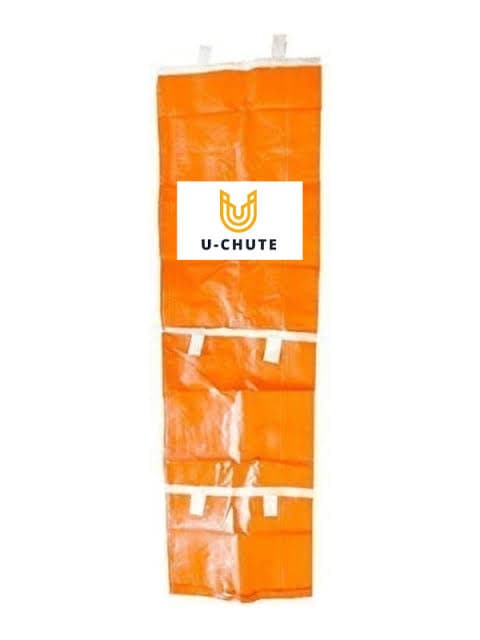
Navigating construction debris chute regulations by state is complex, but selecting the right chute system doesn't have to be. U-Chute manufactures reusable polymer-fabric debris chutes in four sizes — 10-foot lite-duty, 10-foot heavy-duty, 25-foot heavy-duty, and 50-foot heavy-duty — designed to meet the containment and performance standards that OSHA, state agencies, and municipal inspectors look for on real job sites.
Every size ships free anywhere in the United States. You choose the chute that matches your drop height and material load, buy it directly online, and get to work. Browse the full product lineup on the services page or visit the debris chute systems page to find the right fit for your next project. Questions about your specific application? The contact page is the fastest way to get a direct answer.