

Winter construction doesn't slow down — deadlines don't move just because the temperature drops. But the moment ice, snow, and freezing rain enter the equation, your debris management system faces stresses it was never designed to handle on its own. Trash chutes that perform flawlessly through a Texas summer or a mild fall can become serious hazards when moisture freezes, materials get heavier, and your crew is wearing gloves too thick to feel what they're doing.
This guide covers every winter trash chute safety tip contractors need to know heading into the 2026–2027 cold season. Whether you're running a demolition, roofing tear-off, interior renovation, or high-rise debris removal, these practices will protect your workers, protect your equipment, and keep your site compliant with OSHA expectations all winter long.
Why Winter Changes Everything About Debris Chute Safety
Most contractors think about fall protection, scaffold stability, and ground conditions when cold weather hits. Far fewer think systematically about how their debris chute systems for construction sites perform differently in freezing conditions. That oversight can be costly.
Here's what actually changes when temperatures drop below freezing:
- Material weight increases. Wet concrete debris, snow-covered drywall scraps, and ice-coated roofing shingles can weigh 20–40% more than the same material in dry conditions. That added load stresses chute connections and anchor points.
- Fabric flexibility decreases. Any chute system made from polymer fabric — including U-Chute's reusable sections — will stiffen somewhat in extreme cold. This is normal, but it means you need to inspect connections more carefully before the first load drops.
- Ice accumulation inside chute sections. If debris sits in the chute overnight in freezing temperatures, moisture can freeze the material to the chute walls. Loading more debris on top of frozen material creates unpredictable blockages and dangerous pressure buildup.
- Footing hazards multiply. Workers loading debris at upper floors are often leaning over openings or working near unguarded edges. Ice on staging areas or loading platforms compounds fall risk dramatically.
- Visibility drops. Short winter days mean more debris loading happens in low-light or artificial-light conditions — another factor that demands tightened procedures.
Pre-Season Equipment Inspection: The Winter Readiness Checklist
Before the first freeze hits your job site, run a full equipment inspection. This is non-negotiable. Problems that are minor inconveniences in October become job-stopping safety incidents in January.
Inspect Every Chute Section Individually
- Look for existing tears, abrasion wear, or stress marks around the connection rings. Cold temperatures will accelerate failure at any existing weak point.
- Check all metal hardware — hooks, rings, and fasteners — for rust or corrosion that could compromise grip strength.
- Confirm that connector hardware operates smoothly with gloved hands. If it's fiddly without gloves, it will be dangerous with them.
- Lay each section flat and inspect the seams. Any separation or fraying needs to be addressed before winter loads compound the stress.
Review Your Size Selection for the Project
Winter projects often generate heavier debris loads than the same scope of work in summer. If you're currently running a 10 ft lite-duty chute for a small construction project, verify that the debris type and volume haven't changed with the season. Heavier, wetter material may warrant stepping up to a heavy-duty configuration. U-Chute offers 10 ft heavy-duty, 25 ft heavy-duty, and 50 ft heavy-duty options so you can match the chute to the real-world demand of a winter job.
Anchor Points and Rigging
- Re-inspect all anchor points where the top of the chute attaches to the structure. Ice loading can shift anchor positions overnight.
- Verify that rope, cable, or strap connections haven't been weakened by previous season use.
- If you use carabiners or snap hooks, confirm they're rated for the loads you're running — wet, icy debris is heavier than the same debris dry.
Daily Pre-Shift Inspection Protocol for Cold Weather
A winter job site requires a daily inspection protocol that goes beyond what most crews do in warmer months. Build this into your morning safety briefing — it takes less than 10 minutes and can prevent a critical incident.
Morning Walk-Down: What to Look For
- Check for overnight ice accumulation inside the top section. Use a flashlight to look down into the chute. If you see or hear ice, do not load debris until it's cleared.
- Check the exterior of each chute section for ice sheeting. Ice on the outside of the chute can break loose and fall unpredictably — a serious hazard to anyone working or passing below.
- Inspect the landing zone at the bottom of the chute. Snow and ice can fill a debris container overnight and reduce clearance. A full or partially blocked container will cause debris to back up inside the chute.
- Verify that all connection points are still secure. Temperature cycling — freezing at night, warming during the day — causes metal hardware to expand and contract, which can loosen connections.
- Confirm the exclusion zone at the base is clear and properly marked. Snow can obscure barrier lines and warning tape. Re-establish the perimeter every morning.
End-of-Day Winterization Steps
- Clear any debris that has accumulated inside the chute before temperatures drop at night. Debris frozen to chute walls overnight is dangerous and difficult to clear in the morning.
- Cover the top opening of the chute with a plywood cap or heavy tarp secured with bungee cords. This prevents precipitation from entering the chute and freezing inside.
- If ambient temperatures will drop below 20°F, consider folding the bottom sections of the chute and storing them in a heated area or at minimum a covered, wind-blocked space.
OSHA Compliance and Winter Debris Management
Winter weather doesn't create a pass on OSHA compliance — in fact, cold conditions trigger additional regulatory considerations. OSHA's ergonomics guidelines are directly relevant to debris management, because the physical demands of loading a trash chute in cold gear — heavier materials, bulkier clothing, reduced dexterity — increase the risk of musculoskeletal injury.
Key OSHA Considerations for Winter Trash Chute Operations
- Fall protection at loading points. Workers loading debris into upper-floor chute openings must have appropriate fall protection in place. Snow and ice on working surfaces make this even more critical than in dry conditions.
- Exclusion zones below the chute. OSHA's construction standards require that the area below any vertical debris chute be barricaded to prevent personnel exposure. In winter, make sure exclusion zone barriers are visible against snow-covered ground — use high-visibility tape or stakes that extend above the snow line.
- Signage and communication. Post warning signs at both the top loading point and the base of the chute. In winter, laminated signs hold up better than paper signs in wet, freezing conditions.
- PPE requirements. Workers operating near debris chutes in winter need non-slip footwear rated for icy conditions, insulated gloves that maintain adequate dexterity, and high-visibility outerwear.
For a deeper dive into preventing debris from escaping the chute system entirely, see our guide on how to prevent construction debris spillage from high-rise trash chutes — the principles apply at any height but are amplified in winter conditions.
Ice and Blockage Prevention Inside the Chute
A blocked debris chute is one of the most dangerous situations on a construction site. Workers may attempt to clear it by dropping additional material from above, by reaching into the chute, or by hitting the exterior of the chute — all of which carry serious injury risk. Prevention is vastly preferable to any clearing procedure.
How Blockages Form in Winter
Most winter blockages in trash chutes result from one of three situations:
- Wet, heavy material that partially freezes in place between loads. A crew drops wet drywall at the end of the morning shift, leaves for lunch, and returns to frozen debris blocking the chute.
- Ice accumulation at chute connections. Where two sections meet, there's a slight change in diameter. Water can pool and freeze at these joints, narrowing the passage.
- Oversized material jammed by cold stiffness. Material that would normally flex and compress slightly as it travels down the chute becomes rigid in extreme cold and jams at bends or connection points.
Blockage Prevention Tactics
- Keep loads moving — don't let debris sit in the chute during breaks. Either clear it all the way through or don't load until you're ready to continue.
- Break up large pieces before loading in cold weather. Don't assume a piece that fits the chute opening in summer will move freely when it's frozen solid.
- Use a chute size appropriate for the debris type. Wet, heavy demolition debris should go down a heavy-duty chute, not a lite-duty model.
- If you're operating in extreme cold (below 10°F), consider running a short test load at the start of each shift to confirm the chute is clear and moving freely before the main work begins.
Worker Safety at the Loading Zone
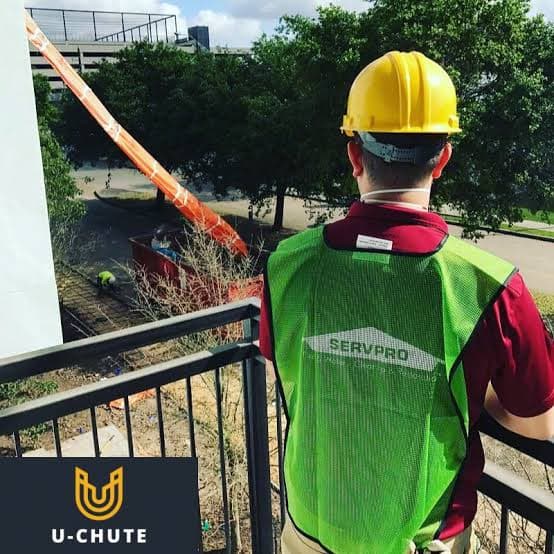
The loading zone — wherever a worker feeds debris into the top or an intermediate section of the chute — is the highest-risk location on a cold-weather debris management setup. This is where falls, back injuries, and chute-related incidents are most likely to occur.
Ergonomics and Lifting Practices
According to OSHA ergonomics guidelines, musculoskeletal disorders are among the most common and costly workplace injuries in construction. In winter, the risk is amplified because workers are lifting heavier material (wet debris), wearing clothing that restricts movement, and working on surfaces that may shift underfoot.
- Never twist and lift simultaneously — especially when wearing insulated outerwear that reduces torso mobility.
- Position debris containers close to the chute opening to minimize carry distance.
- Use two-person lifts for debris loads over 50 lbs. Wet roofing shingles, wet insulation batts, and concrete rubble can easily exceed this threshold.
- Rotate loading assignments every 30–45 minutes to prevent fatigue-related injuries in cold conditions.
Footing and Platform Safety
- Apply non-slip mats or abrasive tape on any loading platform or staging area near the chute opening.
- Designate one crew member to monitor platform conditions and call for a de-icing treatment when ice forms.
- Never use a loading platform that hasn't been inspected and cleared of ice at the start of the shift.
- Ensure all workers have proper fall protection when loading from upper floors — winter does not suspend this requirement.
Choosing the Right Chute Size for Winter Projects
Equipment selection matters more in winter than in any other season. The wrong chute size for your debris type and drop height creates additional handling demands that compound cold-weather risk. See the U-Chute FAQ for detailed guidance on which size fits which application.
Here's a practical guide to matching chute size to common winter construction scenarios:
- 10 ft lite-duty: Best for single-story residential roofing tear-offs where debris is light (asphalt shingles, felt paper) and weather exposure is limited. Not recommended for wet, heavy demolition material in winter.
- 10 ft heavy-duty: Good for short drops with heavier material — masonry fragments, wet insulation, or dense debris loads common in winter gut-renovation projects.
- 25 ft heavy-duty: The workhorse for two- to three-story residential and light commercial work. The added chute length handles the extra momentum of heavier winter debris without stressing connection points.
- 50 ft heavy-duty: Commercial and multi-story applications where drop heights are significant. If your job site generates high debris volume across a winter build season, this is the configuration that won't let you down.
If you're not sure which configuration is right for your current project, the U-Chute services overview breaks down the applications where each size excels.
Environmental Responsibility in Winter Debris Management
Winter construction generates a specific waste profile that carries environmental implications. Wet, contaminated debris — drywall soaked with snowmelt, insulation mixed with ice — is harder to sort and recycle effectively. EPA data on materials, waste, and recycling consistently shows that construction and demolition debris is one of the largest waste streams in the United States, and wet contamination is a primary reason recyclable materials end up in landfills.
Using a reusable debris chute system is already a meaningful step toward reducing environmental impact. As detailed in our analysis of reusable trash chutes and their environmental impact, polymer-fabric chutes that last through dozens of projects have a dramatically lower lifecycle footprint than disposable alternatives.
Winter-Specific Environmental Best Practices
- Keep the bottom of the chute directed into a covered dumpster or container to prevent snowmelt from spreading contaminated runoff across the site.
- Separate recyclable debris before it gets wet. Load roofing metal, clean lumber, and other recyclables first — before precipitation makes separation impractical.
- For more guidance on responsible debris disposal, the EPA's recycling resources include construction-specific guidance that applies to winter job sites.
Training Your Crew for Cold-Weather Chute Operations
Equipment and procedures only work if your crew knows them. Invest 15 minutes in a cold-weather safety briefing at the start of winter operations — and repeat it any time a new worker joins the site or weather conditions change significantly.
What to Cover in the Winter Chute Safety Briefing
- Review the daily inspection checklist and assign who is responsible for completing it each morning.
- Demonstrate what a properly connected chute section looks and feels like — so workers recognize when something is wrong.
- Explain the blockage risk and what the correct response is if a blockage occurs. (Stop loading. Notify the site supervisor. Do not attempt to clear from above.)
- Walk the crew through the exclusion zone at the base of the chute and emphasize that nobody enters that zone while debris operations are active — regardless of the task that seems urgent.
- Confirm everyone understands the end-of-day winterization procedure.
Documentation and Site Records
Keep a brief written record of your daily chute inspections. If an incident occurs, documentation of your inspection protocol is evidence of due diligence. A simple dated log noting who inspected, what was found, and what corrective action was taken is sufficient for most projects.
Regional Considerations: Cold-Climate Contractors Across the U.S.
Winter conditions vary enormously across the country, and the specific hazards your crew faces depend on where you operate. A contractor in the mid-Atlantic faces wet, heavy snow and frequent freeze-thaw cycles. A contractor in the upper Midwest faces sustained deep freezes where equipment stiffness is the dominant concern. Mountain-region contractors deal with rapid weather changes and unpredictable loading.
U-Chute ships free to contractors anywhere in the United States, and contractors from Manchester, NH to Fargo, North Dakota to Billings, Montana rely on these systems through demanding winter seasons. The reusable polymer-fabric construction handles cold-weather conditions well, but the operational protocols above apply regardless of region.
For contractors in warmer climates — Sarasota, Florida or Boca Raton, Florida, for instance — winter safety looks different: it's primarily about managing rainy-season wet debris rather than ice. The core principle is the same: understand how weather changes your debris profile, and adjust your chute setup and procedures accordingly.
Tracking Market Trends That Affect Winter Safety Planning
The debris management industry continues to evolve, and staying current on equipment developments helps you make better procurement decisions heading into winter. Our Q4 2026 construction debris chute market trends analysis breaks down the shifts contractors need to know — including how supply chain improvements have made reusable chute systems more accessible and cost-effective than prior years.
For contractors in the Southeast, our location-specific guides — like the Winston-Salem, North Carolina contractor guide — cover regional considerations for debris chute operations that apply across seasons, including winter preparedness specific to that climate zone.
Frequently Asked Questions
Can I use a polymer-fabric trash chute in temperatures below freezing?
Yes. Reusable polymer-fabric chutes like those manufactured by U-Chute are designed for field conditions and handle cold temperatures well. You may notice some stiffening in extreme cold — below 0°F — but this doesn't affect structural integrity if the chute sections are in good condition. The key is to inspect connections more carefully in cold weather, avoid leaving debris inside the chute overnight, and cap the top opening when not in use to prevent ice accumulation inside the system.
What should I do if debris freezes inside the trash chute?
Stop all loading immediately. Do not attempt to dislodge a frozen blockage by dropping additional debris from above — this is one of the most dangerous things you can do on a winter job site. Notify your site supervisor. The safest clearing approach is to apply gentle external pressure or warm water to the affected section from the outside while keeping all workers clear of the base exclusion zone. In many cases, the blockage will clear as ambient temperatures rise during the day. Prevent recurrence by clearing the chute fully at the end of each shift and capping the opening overnight.
How do I keep the exclusion zone visible when the ground is snow-covered?
Standard barrier tape and ground-level cones can disappear under even a light snowfall. For winter operations, use tall stake-mounted barriers or high-visibility panel fencing that extends at least 4 feet above grade. Supplement with overhead signage visible from multiple approach directions. Check and re-establish the exclusion zone perimeter every morning as part of your daily pre-shift inspection, and after any significant snowfall during the workday.
Which U-Chute size is best for a winter roofing tear-off project?
For most residential roofing tear-offs — one to two stories — the 10 ft heavy-duty or 25 ft heavy-duty is the right choice in winter. Even if you'd normally use a lite-duty chute for the same project in summer, the added weight of wet, snow-saturated shingles and underlayment makes the heavy-duty construction a safer bet. The 10 ft sections stack to match your drop height, so you can configure exactly what the project needs without over-building the system.
How often should I inspect my trash chute during a winter project?
At minimum, conduct a formal inspection at the start of every shift — this is your daily pre-shift walk-down. Additionally, designate someone to perform a quick visual check of connection points and the base exclusion zone after any significant weather event during the workday (heavy snowfall, freezing rain, rapid temperature drop). Don't wait until a problem is obvious; in cold weather, a small issue can become a safety incident much faster than in warmer conditions.
Does wet winter debris affect how long the chute lasts?
Reusable polymer-fabric chutes are designed to handle wet debris, and moisture alone doesn't significantly shorten their service life. What does cause wear is abrasive material — broken concrete, brick fragments, metal scraps — that grinds against the interior fabric with each use. In winter, wet abrasive debris is heavier and moves differently than dry material, which can accelerate wear at seams and connection points. Inspect after every heavy demolition project, not just at the start of each season, and address any developing wear before it becomes a failure point.
Are there OSHA regulations specifically covering trash chutes in winter?
OSHA does not have a separate winter-specific standard for trash chutes, but existing construction safety regulations — covering fall protection, exclusion zones, PPE, and ergonomics — all apply and become more critical in cold conditions. OSHA's General Duty Clause also requires employers to address recognized hazards, which includes winter-specific risks at chute loading points and below the chute. Following the daily inspection and training protocols described in this guide puts you in a strong compliance posture even in the absence of a dedicated cold-weather chute standard.
Ready to Equip Your Crew for a Safe Winter Season?
Winter construction is demanding enough without equipment that creates additional hazards. A properly sized, well-maintained, and correctly operated debris chute system removes one major risk from your winter job sites — and U-Chute makes it straightforward to get exactly the configuration you need, shipped free anywhere in the United States.
Visit the U-Chute about page to learn more about the company and the standards behind the product, or head straight to the debris chute systems page to choose the size that fits your next project. If you have questions before you buy, the contact page is the fastest way to get answers from people who understand construction debris management.
Stay safe this winter — and keep the debris moving.