

Small construction projects generate a surprising amount of debris — broken drywall, old roofing shingles, ripped-out flooring, busted concrete chunks. The question most contractors and owner-operators ask early in the planning process is simple: how much does a trash chute actually cost for a job this size, and is it worth it?
The short answer is yes, and the investment is often smaller than people expect. This guide walks you through every factor that influences the cost of trash chutes for small construction projects, which size makes sense for your drop height and debris load, and exactly how to calculate a realistic estimate before you buy.
Why Small Construction Projects Need a Debris Chute in the First Place
The default move on a small job is to toss debris over the side, carry it down in buckets, or pitch it into a dumpster from a window. Every one of those methods creates real problems — worker fatigue, safety risk, slower cleanup cycles, and sometimes property damage on the ground below.
A trash chute solves all of that by channeling debris from upper floors or a roof directly into a dumpster or pile at grade level. It is a single-purchase piece of equipment that pays for itself in labor savings over the first job or two. For a deep look at the environmental side of the equation, see our post on Construction Debris Chute Environmental Impact and Carbon Footprint 2026.
The Hidden Labor Cost of Not Using a Chute
Every trip a worker makes carrying debris down a ladder or staircase is non-productive time. On a bathroom gut-and-remodel running three to five days, a two-person crew can easily lose two to three hours per day just moving material. At $35–$60 per labor hour per worker, that adds up to $140–$360 in wasted labor daily — far more than the one-time chute cost on most small jobs.
Safety Is Not Optional
Carrying heavy loads down ladders or throwing debris from elevated positions creates fall and strike hazards. OSHA's ergonomics guidance is clear that repetitive heavy lifting is one of the leading causes of construction-site injuries. A properly rigged chute eliminates most of that exposure on a small job with minimal setup time.
What Factors Drive the Cost of Trash Chutes for Small Projects
Pricing on construction debris chutes is driven by a few straightforward variables. Understanding them helps you match the right product to your budget without overspending or underbuying.
Chute Length and Drop Height
The biggest cost driver is the total drop height — the vertical distance from where you're loading debris to the dumpster or ground below. A single-story renovation at 10 feet of drop needs a very different setup than a three-story gut job. U-Chute manufactures chutes in four sizes: 10 ft lite-duty, 10 ft heavy-duty, 25 ft heavy-duty, and 50 ft heavy-duty. Choosing the right length from the start means you're not paying for capacity you don't need.
Duty Rating and Material Weight
Lite-duty chutes are designed for lighter debris loads — think drywall scraps, insulation, light framing offcuts. Heavy-duty chutes handle denser material like roofing shingles, concrete chunks, and tile. For most small construction projects, the debris type is the primary deciding factor between lite and heavy-duty, not the overall job size. Buying the wrong duty rating and stressing the material is the most common mistake on first purchases.
Reusability and True Cost Per Use
Single-use plastic debris chutes exist but their economics are brutal over any volume of work. A reusable polymer-fabric chute from U-Chute is designed to be used repeatedly across multiple projects. When you divide the purchase price by even ten uses, the per-job cost drops to a fraction of what disposable alternatives run. That math is critical when you're estimating the true cost for small construction projects over a full year of work.
Shipping and Handling
This one is easy — U-Chute ships free anywhere in the United States. There is no freight calculation to factor into your estimate, no regional surcharge, no hidden box fee. What you see on the product page is your landed cost.
Realistic Cost Estimates by Project Type
Let's get concrete. Below are common small construction project scenarios and the chute configuration that fits each one. These are guidance ranges — your specific needs may vary, and exact pricing is listed on the U-Chute product pages.
Single-Story Roof Replacement (1–2 Stories)
- Typical drop height: 10–18 feet
- Debris type: Asphalt shingles, underlayment, metal flashing — heavy per square foot
- Recommended chute: 10 ft heavy-duty or 25 ft heavy-duty depending on exact eave height
- Cost consideration: A single chute purchase covers dozens of roofing jobs. Roofers are among the most frequent repeat users of debris chutes.
Bathroom or Kitchen Gut-and-Remodel (2nd or 3rd Floor)
- Typical drop height: 10–25 feet
- Debris type: Tile, drywall, cabinetry, old fixtures — mixed weight
- Recommended chute: 10 ft heavy-duty (single story) or 25 ft heavy-duty (multi-story)
- Cost consideration: Remodelers working in occupied buildings especially benefit — a chute protects common areas from debris scatter and resident complaints.
Small Commercial Demolition
- Typical drop height: 20–50 feet
- Debris type: Mixed construction and demolition waste, possibly concrete and structural material
- Recommended chute: 25 ft or 50 ft heavy-duty
- Cost consideration: Even on small commercial demo jobs, a chute reduces the number of workers needed on debris detail significantly. For a full demolition contractor breakdown, see our Trash Chute for Demolition Contractors: Cost Estimate and Complete Buying Guide.
Junk Removal and Cleanout Work
- Typical drop height: 10–20 feet
- Debris type: Household items, light construction debris, furniture, appliances
- Recommended chute: 10 ft lite-duty or 10 ft heavy-duty
- Cost consideration: Junk removal companies often run multiple jobs per day — a lightweight, easy-to-deploy chute keeps their crews moving fast.
How to Calculate Your Own Cost Estimate in Five Minutes
You don't need a spreadsheet or a sales rep to figure out what a chute will cost for your project. Walk through this quick checklist:
- Measure your drop height. Stand at the loading point and estimate the vertical distance to the top of your dumpster or debris pile. Round up to the nearest 5 feet.
- Identify your debris type. Is it primarily light material (drywall, insulation) or heavy material (shingles, concrete, tile)? Heavy material requires a heavy-duty rating.
- Choose your chute length. Match it to your drop height — you need enough chute to span from the loading point to just above the dumpster opening. Having extra length is better than being short.
- Check the product page. Visit the Debris Chute Systems page to confirm the exact price for your chosen size.
- Factor in reuse. Estimate how many times you'll use this chute over the next 12 months. Divide the purchase price by that number to get your true cost per use.
- Add $0 for shipping. Free US shipping, no exceptions.
That's your estimate. Most small-project contractors are surprised by how quickly the math justifies the purchase — especially when they compare it against the labor cost of debris-moving without a chute.
Comparing Trash Chute Options: What You're Really Choosing Between
When you're shopping for a trash chute for a small construction project, you'll encounter a few broad categories of products. Here's how they stack up:
Reusable Polymer-Fabric Chutes (Like U-Chute)
- Designed for repeated use across multiple jobs
- Lightweight sections that are easy to carry and rig
- Available in multiple duty ratings to match debris weight
- Stackable sections let you match exact drop height
- Best long-term cost per use for contractors doing regular work
Single-Use Plastic or Corrugated Chutes
- Lower upfront cost but must be discarded after one job
- Environmental impact is significant — see our post on Construction Chute vs Open Dumpster: Environmental Impact and Sustainability for more context
- Not rated for heavy debris loads in most cases
- Generate waste of their own, adding to landfill volume
Improvised Solutions (Buckets, Tarps, Manual Carry)
- Zero upfront cost, but high ongoing labor cost
- Significant safety exposure, particularly on multi-story work
- Creates risk of property damage from falling debris
- Not a viable solution for any project with more than a few hours of debris work
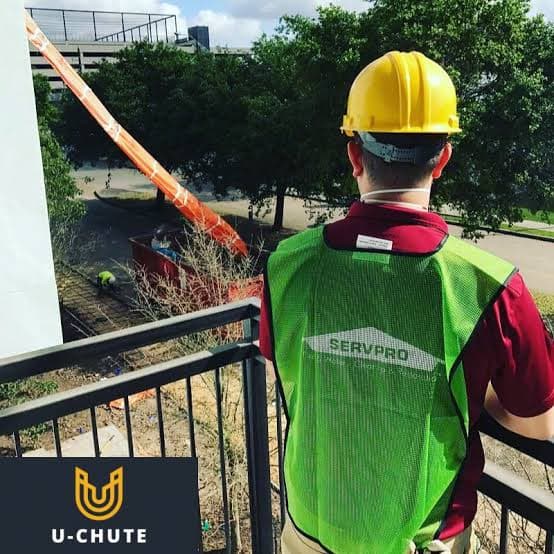
Matching Chute Size to Your Small Project: A Practical Cheat Sheet
Here is a quick-reference guide for matching U-Chute's four sizes to real-world small project scenarios:
- 10 ft Lite-Duty: Ground-to-low-roof junk removal, single-story window drop, light cleanout work. Best for jobs where debris is lightweight and the drop is 10 feet or less.
- 10 ft Heavy-Duty: Single-story roofing tear-off, first-floor gut demo with tile or concrete debris. Handles the weight without worry.
- 25 ft Heavy-Duty: Two-to-three story residential remodels, low commercial buildings, roofing on 2-story homes. The most versatile size for small-to-mid project contractors.
- 50 ft Heavy-Duty: Mid-rise commercial demo, multi-story residential demolition, any project where the drop exceeds 25 feet. Overkill for most small residential jobs, but the right call when the drop is there.
If you're unsure which size fits your job, the U-Chute FAQ page covers sizing questions in detail, or you can reach out through the contact page and get a direct answer.
Regulatory Considerations That Affect Your Cost Estimate
Debris management isn't purely a logistics question — in some jurisdictions, there are permit requirements and safety regulations that apply to how debris chutes are deployed on a job site. Factoring these in upfront avoids costly surprises.
Texas-Specific Rules
If you're working in Texas, there is a specific regulatory landscape around construction debris management. Our dedicated guide — Trash Chute Regulations and Permits in Texas 2026: The Complete Contractor's Guide — covers what permits may apply, where they're required, and how to stay compliant without slowing your project down.
General OSHA Compliance
OSHA's standards for construction sites require that debris be handled in a way that doesn't create hazards for workers on lower levels. Using an enclosed chute system is one of the cleanest ways to satisfy that requirement on a multi-story job. The OSHA ergonomics standards also apply to the manual handling tasks a chute replaces — it's a two-for-one compliance win.
Winter and Seasonal Conditions
In northern states, seasonal conditions can affect how debris chutes perform and what safety protocols apply. If you work in multiple states, our post on Winter Trash Chute Safety Regulations by State 2026 is worth a read before winter jobs start.
The True ROI of a Trash Chute on a Small Construction Job
Return on investment is the frame that makes this purchase decision simple. Let's walk through a real-world scenario:
Scenario: A two-person roofing crew doing residential tear-offs in Texas. Average job is a 25-square roof on a one-story home. They currently carry shingles down in bundles using tarps and buckets.
- Average time lost per job without a chute: 90 minutes per worker = 3 labor hours total
- Average labor rate: $45/hour per worker
- Labor waste per job: $135
- Jobs per month: 8
- Monthly labor waste: $1,080
A 10 ft heavy-duty U-Chute pays for itself after a handful of uses. At eight jobs per month, the payback period is measured in days, not months. After payback, every subsequent use is pure cost savings — and the chute keeps working as long as it's maintained properly.
The detailed cost breakdown for Texas contractors covers this math in more depth if you want to run your own numbers.
Where Small Contractors Often Overbuy or Underbuy
A few common mistakes are worth flagging so you don't make them on your first order.
Overbuying: Choosing 50 ft When 25 ft Is Enough
The 50 ft heavy-duty chute is a serious piece of equipment for serious drop heights. If your projects are consistently under 25 feet, you're carrying extra weight and paying for capacity you won't use. Most small construction project contractors find the 25 ft heavy-duty is their sweet spot.
Underbuying: Choosing Lite-Duty for Heavy Debris
This is the more consequential mistake. Routing concrete, tile, or dense asphalt shingles through a lite-duty chute puts unnecessary stress on the material and can shorten its life significantly. Identify your heaviest debris type first, then select duty rating.
Not Accounting for Chute Stack Height vs. Dumpster Position
Your chute needs to reach from the loading point to above the dumpster — not to the ground. If your dumpster sits 4 feet off grade and your loading point is 20 feet up, you need 16 feet of effective chute, not 20. Measure twice, order once.
Where U-Chute Ships and Who Uses These Chutes
U-Chute sells and ships direct to buyers anywhere in the United States with free shipping on every order. There is no distributor markup, no middleman, and no minimum order quantity. You buy the size you need and it ships to your door.
The customer base spans a wide range of industries and trades:
- Roofing contractors handling tear-offs on residential and light commercial buildings
- Demolition contractors working on small commercial and residential sites
- Junk removal companies moving material from multi-story buildings
- General contractors managing debris on gut-and-remodel jobs
- Property managers handling cleanouts in multi-story residential buildings
Customers in cities across the country — from Boulder, Colorado to Sarasota, Florida and from Asheville, NC to Bend, Oregon — use U-Chute products across all four sizes depending on the work they're doing. The direct-to-buyer model keeps the cost competitive without sacrificing build quality.
Sustainability and the Long-Term Cost Advantage of Reusable Chutes
Cost estimates aren't just about dollars. Construction and demolition waste represents a significant share of total solid waste in the United States, and how you manage debris on your projects affects your environmental footprint whether you track it or not. According to EPA data on materials, waste, and recycling, construction and demolition debris is one of the largest waste streams in the country.
A reusable chute reduces that impact in two ways. First, it keeps your own operation out of the disposable-equipment cycle. Second, when a chute channels debris efficiently into a sorted dumpster rather than scattering it across a job site, it makes material separation and recycling easier — which can reduce tipping fees at facilities that charge by weight or mix level.
That sustainability angle also matters for contractors bidding on projects for clients who have environmental commitments — green building certifications, corporate sustainability goals, or local government contracts with recycling requirements. A reusable debris chute is a defensible choice on those bids.
How to Buy the Right Trash Chute for Your Next Small Project
The buying process at U-Chute is deliberately simple. There's no sales process to navigate, no quote request to submit, and no lead time negotiation. You identify the right size using the criteria above, go to the product page, and complete your purchase. Free shipping handles the rest.
If you have questions about which size fits your specific job, the FAQ page covers the most common sizing and usage questions. For anything not answered there, the contact page gets you to the right person directly.
The About U-Chute page gives more context on the company and the products if you want to understand what you're buying before you commit.
Frequently Asked Questions
How much does a trash chute cost for a small construction project?
The cost depends on the size and duty rating you need. U-Chute offers four sizes — 10 ft lite-duty, 10 ft heavy-duty, 25 ft heavy-duty, and 50 ft heavy-duty — with pricing listed directly on the product pages. All orders ship free anywhere in the United States. Because the chutes are reusable, your true cost per project drops significantly the more you use them. Most small-project contractors recover the full purchase price within a handful of jobs through labor savings alone.
What size trash chute do I need for a one- or two-story project?
For a single-story project with a drop height up to 10 feet, the 10 ft heavy-duty or lite-duty is the right fit depending on debris weight. For two-story work with drops between 10 and 25 feet, the 25 ft heavy-duty covers most scenarios. Measure from your loading point to just above the dumpster opening — that is the chute length you need, not the total building height. When in doubt, choose the longer size; extra length is much easier to manage than coming up short.
Is a trash chute worth it on a small job?
Yes, in almost every case. The labor savings from eliminating manual debris carrying typically outweigh the purchase cost within the first few uses. On a two-person crew doing repetitive small jobs — roofing, remodeling, junk removal — the payback period can be less than a week of active work. Beyond the direct labor savings, a chute reduces fall hazards, prevents property damage from thrown debris, and can support compliance with OSHA site safety requirements.
Can I use the same chute for different types of debris?
Yes, as long as you match the duty rating to your heaviest debris type. The heavy-duty chutes handle dense material like asphalt shingles, concrete, tile, and mixed demolition debris. The lite-duty chute is appropriate for lighter material such as drywall scraps, insulation, and light framing offcuts. Mixing heavy debris through a lite-duty chute will stress the material and reduce its lifespan. When projects vary, it's worth having the heavy-duty version as your baseline so it can handle any job you bring it to.
Does U-Chute ship outside Texas?
Yes. U-Chute ships free to any address in the United States, not just Texas. Contractors in New Hampshire, Montana, Florida, Oregon, and every other state order directly from the website and receive free shipping on every order. There are no regional shipping fees or freight surcharges to factor into your cost estimate. The price on the product page is your total landed cost.
How do I know whether to choose lite-duty or heavy-duty?
The deciding factor is debris weight, not project size. If you're handling shingles, tile, concrete, or any dense construction material, choose heavy-duty. If debris is primarily drywall, insulation, cardboard, or light wood trim, lite-duty may be sufficient. When projects vary and you're unsure, defaulting to heavy-duty is the safer choice — it handles everything lite-duty can and more. Choosing lite-duty for heavy debris is the most common sizing mistake on first orders.
How many times can a U-Chute trash chute be reused?
U-Chute's polymer-fabric chutes are built for repeated use across many projects, not single-use deployment. The actual number of uses depends on debris type, how the chute is handled during setup and teardown, and storage practices between jobs. Contractors who handle the chute carefully and store it properly between uses consistently get significant mileage out of a single purchase. This reusability is the foundation of the product's cost advantage over disposable alternatives on any volume of regular construction work.
Ready to Get Your Cost Estimate and Order the Right Chute?
You now have everything you need to make an informed decision. Measure your drop height, identify your debris type, match those to the right U-Chute size, and check the price on the product page. Free US shipping means your estimate is exactly what you see — no surprises at checkout.
Visit the Debris Chute Systems page to see all four sizes, confirm pricing, and place your order. If you have questions before you buy, the FAQ page and contact page are both there to help. Get the right chute on your next small construction project and stop losing hours to manual debris moving.