
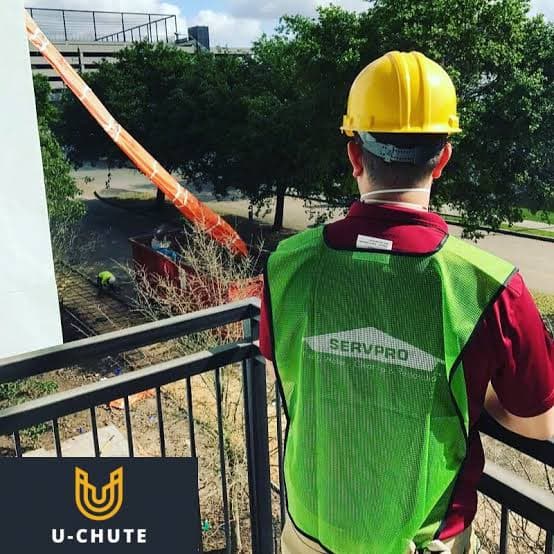
Running debris off a multi-story jobsite without a chute is one of the fastest ways to earn a stop-work order in Texas. Running one incorrectly is nearly as costly. Construction chute safety regulations in Texas have tightened considerably by 2026, and contractors who haven't reviewed their setup recently may be operating with outdated assumptions that expose their crew — and their business — to real liability.
This guide breaks down every layer of regulation that applies to trash chute and debris chute operations on Texas construction sites: federal OSHA standards, Texas-specific enforcement patterns, jobsite best practices, anchoring requirements, PPE obligations, and how the chute you choose affects your compliance posture from day one.
Why Chute Safety Rules Matter More Than Ever in 2026
The debris-removal phase of a construction or demolition project is deceptively dangerous. Falling objects account for a significant share of construction fatalities nationwide, and Texas — with its booming residential construction, active demolition corridor, and large commercial project pipeline — sees its share of those incidents every year.
Regulators at both the federal and state level have responded. OSHA's "struck-by" hazard enforcement has intensified, and the Texas Department of Insurance Division of Workers' Compensation (TDI-DWC) has flagged falling-object incidents as a priority audit category. That means contractors can no longer treat chute setup as an afterthought.
The Cost of Non-Compliance
- OSHA serious violations: up to $16,550 per violation (2026 penalty schedule)
- Willful or repeat violations: up to $165,514 per violation
- Stop-work orders that freeze an entire jobsite — not just the debris operation
- Elevated workers' compensation premiums following a recordable incident
- Potential civil liability if debris exits the chute and strikes a third party
Compliance isn't bureaucratic box-checking. It's the difference between a productive project and one that grinds to an expensive halt.
Federal OSHA Standards That Govern Construction Chutes in Texas
Texas does not operate its own OSHA-approved State Plan for private-sector employers. That means federal OSHA has direct jurisdiction over private construction worksites in Texas. The relevant standards live primarily in 29 CFR Part 1926 — OSHA's Construction Industry regulations.
29 CFR 1926.252 — Disposal of Waste Materials
This is the primary federal standard for debris chutes. Key requirements include:
- Chutes must have an enclosed receiving area at the bottom to prevent debris from bouncing or scattering
- The area surrounding the base of the chute must be barricaded to prevent anyone from walking beneath or adjacent to it while in use
- Chutes must have a slope no steeper than 45 degrees unless designed with enclosed sections that prevent free-fall of material
- When debris is dropped more than 20 feet to any exterior point, an enclosed chute must be used — open dropping from height is prohibited
29 CFR 1926.502 — Fall Protection (Adjacent to Chute Openings)
Workers who access upper floors or roof levels to load a chute are subject to fall protection requirements. Any leading edge, floor opening, or roof edge within 6 feet of a chute loading point requires:
- Guardrail systems, safety net systems, or personal fall arrest systems (PFAS)
- Warning line systems where appropriate on low-slope roofs
- Covers over floor openings created for chute pass-throughs, rated for the anticipated load
29 CFR 1926.20 — General Safety and Health Provisions
This catch-all standard requires that contractors initiate and maintain programs for frequent and regular inspection of all job sites, materials, and equipment. Chutes, anchoring hardware, and receiving areas fall squarely within that mandate. Inspections must be documented.
Texas-Specific Enforcement and State-Level Rules
Even though federal OSHA governs private worksites, Texas has its own regulatory layer that affects how chute safety intersects with state law.
Texas Department of Insurance — Division of Workers' Compensation
TDI-DWC enforces health and safety standards on Texas worksites through its Health and Safety Unit. Inspectors can issue citations, require abatement, and refer violations to OSHA. For public-sector construction (state buildings, TxDOT projects, municipal jobs), TDI-DWC is the enforcement authority — not federal OSHA.
Local Permit Requirements
Texas municipalities handle chute-related permits differently. Houston, Dallas, Austin, San Antonio, and Fort Worth each have their own permitting frameworks. In many Texas cities, a debris chute installation on a building that extends over a sidewalk or public right-of-way requires:
- An encroachment or street-use permit from the city's public works department
- Proof of general liability insurance naming the city as additional insured
- A signage and barricade plan showing pedestrian protection measures
For a full state-by-state breakdown of permit requirements, see our guide on Trash Chute Permit Requirements by State 2026.
Texas Commission on Environmental Quality (TCEQ)
TCEQ regulates construction waste disposal. While TCEQ doesn't regulate chute equipment directly, it governs what comes through the chute. Contractors must ensure that debris collected via chute is sorted and disposed of in compliance with solid waste rules — particularly for projects involving asbestos-containing materials (ACM), lead paint, or other regulated substances.
Anchoring and Structural Attachment Requirements
How a chute is anchored to the building is where many Texas contractors fall short. A chute that tips, shifts, or separates mid-use becomes a projectile hazard. The anchoring system is as regulated as the chute itself.
Minimum Anchoring Standards
- Chutes must be secured to the structure at every section — not just at the top and bottom
- Attachment points must be to structural members (studs, joists, columns, or masonry), not to sheathing, drywall, or non-structural elements
- Rope, wire, or strap used to secure sections must be rated for the anticipated load with an appropriate safety factor (a minimum 4:1 safety factor is widely applied by reputable manufacturers)
- The lowest section must direct flow into a dumpster, roll-off, or contained receiving area — never open air or onto the ground
Wind and Weather Considerations in Texas
Texas weather is not forgiving. High-wind events, afternoon thunderstorm gusts, and Gulf Coast tropical activity all create load conditions that chute anchoring must withstand. Best practice for Texas jobsites:
- Use supplemental cross-bracing or diagonal tie-backs on chutes exceeding 25 feet of vertical run
- Inspect all anchor points after any wind event exceeding 35 mph before resuming use
- Secure or remove the topmost chute section during extended inactivity (overnight, weekends) if high winds are forecast
- Never leave a chute attached to scaffolding that itself has not been engineered for the combined lateral load
Personal Protective Equipment Requirements for Chute Operations
OSHA mandates specific PPE for workers who operate, load, or work near active debris chutes. Supervisors on Texas jobsites should verify that every crew member in the debris-handling zone is equipped and trained.
Required PPE
- Hard hat (Class E minimum): protects against falling debris dislodged during loading or from above
- Safety glasses or face shield: dust, splinters, and small particles exit chute sections at every connection point
- Gloves: cut-resistant gloves for handling sharp demolition debris — framing nails, sheet metal, broken tile
- Steel-toed boots: required at base of chute where debris lands in the receiving container
- High-visibility vest: required whenever crew operates near vehicle traffic, including dumpster trucks
- Dust respirator (minimum N95): mandatory for drywall, concrete, or any potential silica-generating demolition material
OSHA's ergonomics guidance at osha.gov/ergonomics is also worth reviewing for crews who repeatedly lift and load heavy debris — musculoskeletal injuries are a leading cause of lost work days on demolition projects.
PPE at the Loading Point
Workers feeding debris into the top of a chute are at the highest risk of contact with the chute structure itself, dropped tools from above, or debris bounce-back. Fall protection must be in place before loading begins. The loading zone is not a place to skip PPE because "it's just for a minute."
Barricading and Exclusion Zone Requirements
OSHA 1926.252 is explicit: the area beneath and adjacent to an active debris chute must be barricaded. No one should be able to walk into that zone unintentionally. Here is how to set up a compliant exclusion zone in Texas.
Exclusion Zone Setup Checklist
- Mark the debris impact area at the base of the chute — extend the zone a minimum of 6 feet outward from the chute's lowest discharge point in all directions
- Erect rigid barricades (jersey barriers, interlocking fence panels, or at minimum Type III wooden barricades) — caution tape alone is not compliant
- Post signage: "Falling Debris — Do Not Enter" visible from every approach direction
- Establish a single controlled access point with a swing gate or removable section for dumpster access only
- Assign a spotter or signal person if debris operations and dumpster-truck positioning occur simultaneously
- Re-inspect the barricade perimeter at the start of each shift — overnight wind or site traffic can displace panels
Public Rights-of-Way in Texas Cities
When a Texas project is located in an urban environment where the chute discharge zone overlaps a sidewalk, alley, or street, the city's public works or transportation department typically requires a traffic control plan. This plan must be stamped by a licensed Texas professional engineer and may require flagging personnel during active debris operations.

Chute Equipment Standards and What "Compliant" Looks Like
The chute itself — its material, construction, and dimensions — contributes to whether a setup passes inspection. Inspectors look at the hardware, not just the paperwork.
What to Look for in a Compliant Chute
- Enclosed sections: open-sided troughs are not appropriate for drops exceeding 20 feet; enclosed cylindrical or rectangular sections are required
- Secure section-to-section connections: each section must lock or attach to the next with a positive connection — no loose stacking that can separate under load
- Adequate internal diameter: sections must be large enough to pass the anticipated debris without creating blockages that back pressure could dislodge
- Load-rated attachment hardware: hooks, straps, or rings must be rated for the application and inspected before each use
- No structural damage: cracks, tears, or deformations that compromise the chute's integrity disqualify it from service
U-Chute's polymer-fabric chutes are engineered for reuse across many project cycles. Unlike disposable single-use alternatives, a reusable chute that is properly maintained and inspected between jobs is structurally predictable — you know what you're attaching to the building before the first load goes in. For a head-to-head look at how reusable and disposable options compare on safety and cost, read our Reusable Trash Chutes vs Disposable Debris Chutes: 2026 Comparison.
Sizing Your Chute Correctly for Safety and Compliance
Undersized chutes create blockages. Blockages create dangerous clearing attempts — workers reaching into loaded sections, shaking sections loose from their anchors, or striking sections with tools. Choosing the right chute size is itself a safety decision.
U-Chute's Four Sizes and When to Use Each
- 10 ft lite-duty: single-story residential cleanouts, low-volume material, ground-level loading only — not designed for multi-section stacking on taller drops
- 10 ft heavy-duty: roofing tear-offs, single-story commercial gut-outs, can be stacked for drops up to two stories
- 25 ft heavy-duty: two- to three-story residential renovation, light commercial, interior demolition with second-floor loading
- 50 ft heavy-duty: mid-rise commercial, four- to five-story residential, full demolition projects with sustained high debris volume
When in doubt, go larger. A chute with capacity headroom flows debris cleanly and reduces the temptation for workers to force oversized pieces through the opening. For a detailed matching guide, see our How to Choose Construction Debris Chute Size for Your Project Type.
You can also use our interactive Construction Debris Chute Size Calculator guide to match drop height and material volume to the right product before you order.
Documentation and Inspection Records Texas Contractors Should Maintain
OSHA compliance is not just about doing the right things — it's about being able to demonstrate that you did them. When an inspector walks onto a Texas jobsite, documentation is the difference between a conversation and a citation.
Records to Keep On-Site
- Pre-use inspection log for the chute (date, inspector name, condition noted)
- Manufacturer's load rating and product specifications for the chute
- Anchor point inspection log — especially after high-wind events
- PPE issuance records for all crew members working in the debris zone
- Permit copies for any city-issued right-of-way or street use permits
- Safety data sheets (SDS) for any hazardous materials that may pass through the chute
- Toolbox talk sign-in sheets covering chute safety training for the crew
How Often to Inspect
At minimum: before first use each day, after any significant weather event, and after any incident or near-miss. For multi-week projects, schedule a formal documented inspection every 7 days regardless of weather. Treat the chute like any other piece of heavy equipment — it requires a maintenance cadence, not just installation and forget.
Environmental Compliance for Texas Construction Debris
What your chute delivers into the dumpster must comply with Texas and federal disposal rules. Chute operations don't exist in a regulatory vacuum — the downstream handling of debris is part of the same compliance picture.
The EPA's materials, waste, and recycling data makes clear that construction and demolition debris is one of the largest waste streams in the United States. Texas contractors are increasingly subject to local ordinances that require a minimum percentage of C&D debris to be diverted from landfill — particularly in Austin and Houston.
Regulated Materials Requiring Special Handling
- Asbestos-containing materials (ACM): must be wet-suppressed, bagged, and kept separate — never mixed into a general debris chute stream
- Lead-based paint debris: wet methods required during demolition; PPE requirements escalate significantly
- Concrete with rebar: can be separated for recycling — many Texas C&D recyclers accept clean concrete at reduced cost
- Treated lumber: classified as hazardous waste in some scenarios; verify local disposal rules before mixing with general debris
The EPA's recycling overview at epa.gov/recycle provides a solid foundation for understanding which materials have recognized recycling pathways — even when flowing through a construction debris chute. For a deeper look at how chute use intersects with sustainability goals, read our post on the Trash Chute Environmental Impact on Construction Waste.
Chute Safety for Roofers and Demolition Contractors Specifically
Two trades dominate U-Chute's Texas customer base: roofing contractors and demolition crews. Each faces slightly different regulatory emphasis points.
Roofers
- Roof-mounted chute inlets must be positioned away from valley gutters and eave edges where workers travel
- Warning line systems (required on low-slope roofs over 50 feet wide) must account for the chute loading zone — the zone where a worker feeds material is considered a working edge exposure
- Shingle granules create a slip hazard around the chute base — rubber matting or aggregate-top plywood at the dumpster receiving area reduces slip incidents
- Ladder placement for roof access must not conflict with the chute's attachment points — no sharing of anchor hardware between ladder standoffs and chute straps
Demolition Contractors
- Demolition projects require a written hazard analysis (OSHA 1926.850 through 1926.860) before work begins — chute placement must be addressed in this document
- Structural integrity of floors used as loading platforms must be confirmed before workers stand at a chute inlet — a floor weakened by demolition may not support the combined load of a worker and debris payload
- Dust control is especially critical: interior demolition debris moving through a chute generates significant airborne particulate that escapes at every section joint
- Coordinate chute operations with mechanical and plumbing demo — a chute inlet positioned near unsupported gas or water lines creates secondary hazard exposure
Frequently Asked Questions
Does Texas have its own OSHA construction chute regulations separate from federal rules?
Texas does not have an OSHA-approved State Plan for private-sector employers, so federal OSHA has direct jurisdiction over private construction sites. The key federal standard for debris chutes is 29 CFR 1926.252. For public-sector worksites — state agencies, TxDOT projects, municipal construction — the Texas Department of Insurance Division of Workers' Compensation (TDI-DWC) is the enforcement authority and applies rules substantially equivalent to federal OSHA standards.
When is a construction debris chute legally required in Texas?
Federal OSHA (29 CFR 1926.252) requires an enclosed chute when debris is dropped more than 20 feet to any exterior point. Below that threshold, chutes are still highly recommended for safety and efficiency, but they are not mandated by regulation. Many Texas city permits for urban projects will impose chute requirements regardless of drop height when work is adjacent to occupied buildings or public rights-of-way.
How often must a construction chute be inspected on a Texas jobsite?
OSHA's general inspection mandate (29 CFR 1926.20) requires frequent and regular inspections of all equipment. Industry best practice — and the standard most OSHA inspectors apply — is a documented pre-use inspection at the start of each workday, an additional check after any weather event exceeding 35 mph winds, and a formal documented weekly inspection for projects lasting more than seven days. All inspections should be logged with the inspector's name, date, and findings.
What PPE is required for workers operating a debris chute?
Workers operating, loading, or working in the exclusion zone around a debris chute must wear a hard hat (Class E minimum), safety glasses or a face shield, cut-resistant gloves, steel-toed boots, and a high-visibility vest when near vehicle traffic. When debris contains silica-generating materials such as concrete or drywall, an N95 dust respirator is mandatory. Fall protection — guardrails, safety nets, or a personal fall arrest system — is required at any loading point within 6 feet of a roof edge or floor opening.
Can a construction debris chute overhang a public sidewalk in Texas cities?
Yes, but it requires permits. When a chute installation extends over a public sidewalk or right-of-way, most Texas cities — including Houston, Dallas, Austin, and San Antonio — require an encroachment or street-use permit from the public works department. The permit typically requires proof of general liability insurance naming the city as additional insured, an approved barricade and signage plan, and in many cases a traffic control plan stamped by a licensed Texas professional engineer.
Are reusable polymer-fabric chutes compliant with OSHA debris chute standards?
Yes, provided the chute sections are in good condition, properly anchored, and used within their rated capacity. OSHA 1926.252 specifies performance requirements — enclosed sections, barricaded base areas, contained receiving — not a specific chute material. Reusable polymer-fabric chutes meet these requirements when properly installed and maintained. The key compliance factors are secure section-to-section connections, load-rated attachment hardware, and a documented pre-use inspection confirming no structural damage.
What should I do if a chute-related incident occurs on a Texas construction site?
Immediately secure the area and render aid. Any incident resulting in a fatality or the in-patient hospitalization of one or more workers must be reported to federal OSHA within 8 hours of the event (or 24 hours for a hospitalization). Preserve the scene and all equipment for OSHA inspection. Document everything: photographs, witness statements, inspection logs, and the chute's condition before and after the incident. Notify your insurance carrier promptly and do not resume chute operations until hazards are corrected and documented.
Get the Right Chute for Your Texas Project — Shipped Free
Compliance starts with equipment that meets the job's demands. U-Chute's reusable polymer-fabric debris chutes are built for the kind of repeated, hard use that Texas demolition contractors, roofers, and renovation crews put them through — and they ship free anywhere in the United States.
Choose from four sizes designed to match your drop height and debris volume: 10 ft lite-duty, 10 ft heavy-duty, 25 ft heavy-duty, and 50 ft heavy-duty. Each section stacks to reach your required height, connects securely, and is ready to work within minutes of delivery.
- Browse all chute options on our Debris Chute Systems page
- Learn more about who we are and how we build our products on the About U-Chute Trash Chute page
- Have questions about which size fits your project? Visit our Frequently Asked Questions or Contact us directly
Don't let chute selection be an afterthought. The right chute, properly installed and anchored, is your first line of defense against a struck-by citation — and your crew's best protection on every Texas jobsite in 2026.