

Every demolition foreman, roofer, and junk removal crew eventually faces the same question: do you buy a reusable debris chute system or keep burning money on disposable alternatives? In 2026, that question has a clearer answer than ever before — and the math tilts heavily toward reusable polymer-fabric systems for almost every job type.
This guide breaks down every meaningful dimension of the decision: upfront cost vs. lifetime value, safety performance, environmental footprint, storage logistics, jobsite versatility, and more. Whether you're a seasoned demolition contractor running multiple crews or a one-truck junk removal operator trying to stretch every dollar, you'll find a concrete, actionable comparison here.
Let's dig in.
What Are Reusable Trash Chutes — And How Do They Differ from Disposable Options?
Before comparing the two categories, it helps to understand exactly what each one is — because the market uses several overlapping terms.
Reusable Debris Chute Systems
Reusable trash chutes are manufactured from durable materials — most commonly heavy-duty polymer-fabric composites — designed to be assembled, used, cleaned, disassembled, and stored for the next project. Sections typically connect end-to-end so the chute can be scaled to match the drop height of any structure. U-Chute, for example, manufactures four sizes — a 10 ft lite-duty, a 10 ft heavy-duty, a 25 ft heavy-duty, and a 50 ft heavy-duty — giving crews maximum flexibility. You can read more about the full lineup on the Debris Chute Systems for Construction Sites Across Texas page.
Key characteristics of reusable systems:
- Built from polymer-fabric or similarly durable composite materials
- Modular, stackable sections that scale to any drop height
- Cleaned and stored between uses — no per-job repurchase
- One-time purchase with multi-year service life
- Suited for a wide range of debris types: shingles, drywall, concrete chunks, demo waste
Disposable Debris Chutes
Disposable chutes are typically made from single-use polyethylene tubing, thin corrugated materials, or even improvised solutions like heavy garbage bags and tarps rigged together. Some are marketed as "one-time-use construction chutes" and are designed to be discarded after a single job or once they sustain damage. Others are rented from equipment companies by the day or week.
Key characteristics of disposable systems:
- Thin-wall polyethylene or corrugated construction — not rated for repeated abuse
- Designed for single-use or very limited reuse
- Recurring cost on every job or pay period
- Prone to puncture, tearing, and failure under heavy or sharp debris
- Generate jobsite waste after every use
True Cost Comparison: Upfront Price vs. Lifetime Value
The single biggest misconception contractors hold about reusable trash chutes is that the higher sticker price makes them more expensive. When you run the numbers over a realistic project horizon, the opposite is almost always true.
The Disposable Cost Trap
Disposable chutes feel cheap in the moment because you're only looking at one purchase. But add up what that purchase looks like across a full season of roofing jobs or a month of active demo work:
- A single-use polyethylene chute section: $15–$40 per section, per job
- A 25-foot drop requires multiple sections — cost multiplies quickly
- High-debris work (roofing tear-offs, full gut renovations) may destroy a disposable chute mid-job
- Rental fees from equipment companies often run $50–$120 per day for basic chute setups, plus delivery charges
- After 20–30 jobs, a contractor has spent several hundred to several thousand dollars and has nothing to show for it
That cumulative spend is gone. You don't own an asset. You've simply paid a recurring tax on every project.
The Reusable Investment Model
A quality reusable system purchased once continues to perform job after job. The break-even point — where the reusable system costs less than the cumulative disposable spend — typically arrives within the first handful of uses, depending on job frequency and what the disposable alternative was costing per project.
After break-even, every additional job is essentially free from a chute-cost standpoint. The polymer-fabric construction used in systems like U-Chute's lineup is built to handle repeated loading cycles, sharp debris edges, and UV exposure without degrading the way thin polyethylene does.
You can explore how project type and drop height affect which size makes sense for your work in this detailed guide: How to Choose Construction Debris Chute Size for Your Project Type.
Hidden Costs That Favor Reusables
Beyond the direct purchase comparison, reusable systems eliminate several hidden costs that disposable chutes generate:
- Disposal fees: Discarded chute materials must be hauled off the jobsite as waste — adding volume to your dumpster load or creating a separate disposal cost
- Time cost of failure: When a disposable chute tears mid-project, work stops while you improvise or source a replacement
- Crew labor: Improvised debris management (hauling bags by hand, rigging tarps) is slow and costly in labor hours
- Liability exposure: A failed chute that drops debris unpredictably can damage property or injure workers — an incident that reusable, properly rated systems are designed to prevent
Durability and Material Performance Under Real Jobsite Conditions
Not all debris is created equal. A light residential roofing job with asphalt shingles behaves very differently from a commercial gut renovation with broken drywall, metal studs, and random fasteners. Your chute needs to handle whatever lands in it.
How Polymer-Fabric Holds Up
Modern polymer-fabric chute construction — the material category used in U-Chute's heavy-duty lineup — delivers a combination of flexibility and toughness that thin-wall polyethylene simply can't match. The fabric construction absorbs impact, flexes under load, and resists puncture from sharp debris edges like broken shingle corners, nails, and splintered wood.
Polymer-fabric systems also handle UV exposure far better than clear or translucent polyethylene, which becomes brittle with prolonged sun exposure and cracks under stress. On multi-day exterior demolition projects, that UV resistance is a real durability advantage.
Where Disposable Chutes Fail — Literally
Single-use polyethylene chutes are optimized for cost, not performance. Common failure modes include:
- Puncture from a single sharp corner of broken tile, metal flashing, or splintered lumber
- Seam separation under heavy debris load — particularly at the section connection points
- Tearing at anchor points when the chute is pulled taut against the structure
- UV-induced brittleness after even a few days of direct sun exposure
- Complete failure during high-volume jobs, requiring mid-project improvisation
Each failure event costs time, creates a safety hazard, and may result in debris falling in uncontrolled directions — a serious liability on any jobsite with workers or bystanders below.
Safety Performance: Controlled Debris Flow vs. Jobsite Hazards
OSHA's construction safety standards exist for a reason: uncontrolled falling debris is one of the most preventable causes of jobsite injuries. OSHA's ergonomics and safe-loading guidance underscores the importance of controlled material handling — and debris chutes are one of the primary tools for achieving that control.
Reusable Systems and Predictable Load Management
A well-built reusable trash chute with rated section capacity gives crews a predictable, repeatable debris path. The structural integrity stays consistent from job to job because the material is designed to handle repeated loading. Workers above can feed debris into the chute confidently, knowing it won't tear away and send material flying.
Modular section design also means the chute can be properly anchored at multiple points along its length, reducing swing and keeping the debris stream directed into the target container. That anchoring matters most on tall structures where wind and material momentum can cause an inadequately supported chute to whip and fail.
The Safety Risk Profile of Disposable Alternatives
Disposable chutes introduce variability into an environment where predictability saves lives. Because material integrity degrades quickly — and because crews often don't know exactly how many uses a given section has already seen — a disposable chute's load rating is effectively unknown in practice.
Common safety issues with disposable systems:
- Sudden failure under load, sending debris over the side of the structure
- Improvised connections between sections that aren't engineered to hold under stress
- Inconsistent anchoring because thin-wall material can't support proper clamp loads
- Worker complacency — crews that have "always used disposable" may not recognize when a chute is close to failure
For any job where workers or the public are below the work zone, this safety risk profile is simply unacceptable.
Environmental Impact: Waste Generation and Sustainability
Construction and demolition waste is one of the largest waste streams in the United States. According to EPA data on materials, waste, and recycling, construction and demolition debris represents a massive portion of total solid waste generated annually. Adding single-use plastic chute material to that stream — job after job, contractor after contractor — compounds an already significant problem.
The Disposable Chute Waste Cycle
Every disposable chute that goes in the dumpster at job's end is a net addition to landfill volume. Thin polyethylene sheeting is generally not accepted in standard recycling streams, and contaminated jobsite plastic (covered in roofing adhesive, drywall dust, or construction chemicals) rarely qualifies for any recycling program even if one is available. The material simply becomes waste.
For contractors who want to make a credible environmental argument to clients or municipalities — particularly relevant for LEED-targeted projects or jobs in environmentally conscious markets — a reusable debris management system is a demonstrable win. For more context on the environmental case for better debris management, see our post on Trash Chute Environmental Impact on Construction Waste: The Full Picture.
Reusables and the Resource Efficiency Case
The EPA's recycling overview frames resource efficiency as a core principle of sustainable waste management — and reusable equipment is a textbook application of that principle. Manufacturing one durable chute system that serves a contractor for years produces a fraction of the material consumption and waste generation of disposable alternatives over the same period.
This matters increasingly in 2026 as commercial clients, GCs, and municipal permit authorities look more carefully at contractor sustainability practices. Having a reusable system is a small but real differentiator in competitive bid environments.
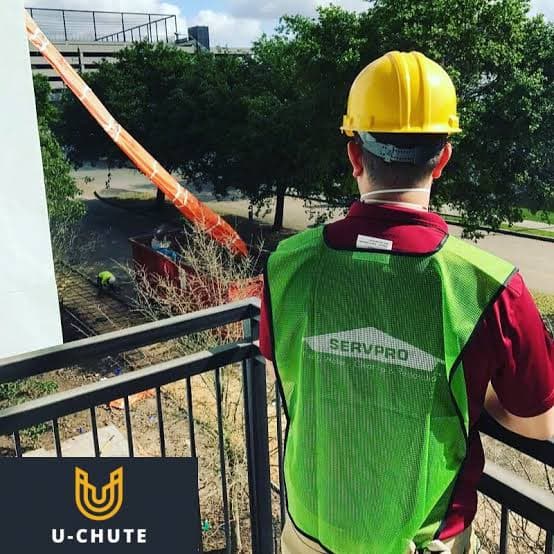
Versatility Across Industries and Job Types
One of the strongest arguments for investing in a quality reusable system is how broadly it applies across your work. A disposable chute purchased for a specific job type often doesn't work well outside that use case. A well-built modular system travels with you across industries.
Roofing and Tear-Off Projects
Roofing is one of the highest-volume applications for debris chutes. A typical residential tear-off generates thousands of pounds of shingles, underlayment, and fasteners that need to travel from the roof deck to a dumpster or roll-off below — fast, safely, and without showering workers or property with debris.
Reusable heavy-duty chutes handle shingle load without issue and stand up to the abrasive, nail-studded material that punches through thin disposable sections. Roofers in markets from Sarasota, Florida to Boulder, Colorado use reusable systems specifically because the roofing season is long enough that the break-even on a quality chute arrives in weeks, not months.
Demolition and Gut Renovations
Interior gut renovations and commercial demo work put debris chutes through their hardest test. Mixed debris — drywall, metal, concrete, insulation, old fixtures — hits chute walls at sharp angles and high velocity. Only a rated, durable system keeps that material moving in the intended direction.
The modular stacking design of systems like U-Chute means you can match the exact drop height of a multi-story renovation without improvising connections or overlapping sections in ways that compromise structural integrity.
Junk Removal Operations
Junk removal companies often operate in residential settings where the homeowner is present and the work zone is tight. A controlled, professional-looking debris chute setup signals competence to the client and protects the property below from stray material. Reusable systems that can be set up and broken down quickly are a genuine operational advantage in this industry.
Contractors in markets like Asheville, NC and Boca Raton, Florida have found that a reusable chute system pays for itself in improved client presentation alone — before counting the direct cost savings on debris management.
Specialized Applications
Beyond the core use cases, reusable chute systems serve contractors in applications that disposable chutes handle poorly or not at all:
- Historic renovation work where property protection is paramount
- Multi-story commercial projects where crew safety requirements are strictly enforced
- Projects in dense urban areas where debris control is a permit condition
- Landscaping and hardscape demo where heavy aggregate debris is common
On that last point, contractors working in markets with specific permit requirements should review the Trash Chute Permit Requirements by State 2026: The Complete Contractor Guide to understand what's required in their jurisdiction.
Storage, Transport, and Logistics: Practical Jobsite Reality
A comparison between reusable and disposable systems isn't complete without acknowledging the practical logistics of each. Both approaches require physical space and handling — the question is which one creates fewer headaches across a full project calendar.
How Reusable Systems Store and Transport
Quality polymer-fabric chute systems are designed to be lightweight despite their durability. Sections collapse and stack compactly, making them easy to transport in a pickup truck bed, trailer, or work van alongside other equipment. There's no bulky tube to wrestle or fragile material to protect from puncture during transport.
Between jobs, sections store in a dry space — a shop corner, a storage unit, a van shelf — without taking up significant footprint. The investment doesn't depreciate sitting on a shelf; it's ready to deploy on the next call.
Disposable Chute Logistics Headaches
Disposable systems require ongoing procurement. You need to reorder before each job or maintain a stock that itself takes up space. Thin polyethylene tubing in bulk rolls takes up volume in a shop or vehicle, and if sections are punctured during transport or storage, they're useless — you've wasted inventory without generating any value.
For contractors running multiple crews simultaneously, coordinating disposable chute supply across jobsites is a logistics task that simply disappears when you switch to reusable systems.
The Rental Market vs. Ownership: A Third Option Worth Evaluating
Some contractors consider renting debris chute equipment rather than purchasing disposable or reusable systems outright. It's worth addressing directly, because the rental model has a specific use case where it makes sense — and a much larger set of situations where it doesn't.
When Rental Makes Sense
Equipment rental is genuinely appropriate for one-time or very infrequent project types. If you're a general contractor who rarely handles demolition work but finds yourself managing a single large gut renovation, a short-term rental might pencil out better than owning a system you'll use once every two years.
That scenario describes a narrow slice of the contractor market. Most operators who are considering a chute system at all are doing work that calls for it repeatedly.
Why Ownership Beats Rental for Regular Operators
For any contractor using a debris chute more than a handful of times per year, ownership of a reusable system is the clear financial winner:
- No daily or weekly rental fees accumulating across every project
- No delivery scheduling or pickup coordination
- No rental damage liability — if you own the chute, you control maintenance decisions
- Equipment available immediately when a last-minute job comes in
- No deposit tied up with a rental company
For a direct cost analysis that puts exact numbers on the rental vs. purchase vs. disposable question, see the Trash Chute vs Dumpster Rental Cost Comparison: Which Saves More? breakdown.
Shipping, Availability, and Getting Started Without Friction
One of the historical objections to reusable debris chute systems was procurement friction — finding a supplier, managing freight costs, waiting on industrial supply timelines. That friction has largely been eliminated for contractors in the U.S. market in 2026.
Free Shipping to All 50 States
U-Chute ships every size in its lineup — the 10 ft lite-duty, 10 ft heavy-duty, 25 ft heavy-duty, and 50 ft heavy-duty — free of charge to any address in the United States. That removes one of the cost variables that historically made reusable systems appear less competitive with locally sourced disposable materials.
Contractors in markets far from industrial supply hubs — like Fargo, North Dakota, Billings, Montana, or Scottsbluff, Nebraska — benefit from this shipping model as much as operators in major metro areas. The system arrives at your location ready to deploy, no freight broker required.
Direct Online Purchase — No Middleman
Because U-Chute sells directly online, customers see real pricing, choose the size that fits their project, and complete the purchase without a sales process or negotiation. The four available sizes cover the full range of residential and light commercial applications, and the site makes it straightforward to identify which configuration matches your drop height and debris volume.
If you have questions about sizing or application, the Frequently Asked Questions About U-Chute Trash Chute page covers the most common contractor scenarios, and the Contact page connects you directly with the team for specific project questions.
Regional Considerations: Markets Where Reusable Systems Deliver Extra Value
While the economic and safety case for reusable systems is universal, certain regional markets present conditions that amplify the advantage further.
High-Volume Construction Markets
In active construction markets — Texas, Florida, the Carolinas — contractor workloads are high enough that the break-even on a reusable system arrives fast. A roofing crew doing multiple tear-offs per week in a market like Charleston, West Virginia or Portland, Maine is burning through disposable alternatives at a rate that makes ownership math obvious.
Permit-Regulated Urban Markets
Dense urban environments often carry specific requirements for debris containment and jobsite safety. Municipalities in markets like Manchester, NH or Bend, Oregon may require rated chute systems for permitted demo work — which eliminates improvised or thin-wall disposable options from compliance consideration entirely.
Markets with Environmental Ordinances
Some municipalities and counties have enacted construction waste management ordinances that require documentation of debris containment practices. A reusable, rated system is far easier to document and defend in a permit review than improvised disposable solutions — and the sustainability argument resonates with planning departments in markets where environmental standards are part of local policy.
Making the Decision: A Practical Framework for Contractors
If you've read this far, you have everything you need to make an informed decision. Here's a practical decision framework distilled from the full comparison:
Choose a Reusable System If:
- You use a debris chute on more than a handful of jobs per year
- Your work involves heavy debris types (shingles, concrete, mixed demo waste)
- Worker and bystander safety is a non-negotiable project requirement
- You work in permit-regulated environments with debris containment requirements
- You want to reduce recurring operational costs over a multi-season horizon
- You care about your company's environmental footprint and client perception
- You want equipment on hand and ready without reordering before every job
Disposable Might Fit If:
- You have a single, one-off project with no expectation of repeat chute use
- The job involves only very light debris with zero sharp-edge content
- Storage space is completely unavailable even for lightweight, compact sections
In practice, most contractors who run through this framework land firmly in the reusable column. The disposable scenario is genuinely narrow — and even in that scenario, a single low-cost 10 ft lite-duty reusable section may be cheaper and more reliable than single-use alternatives purchased for the same job.
For contractors in Texas markets specifically, the Trash Chutes League City Texas: The Contractor's Complete Guide covers regional context and application scenarios in depth. Contractors in the Midwest can find relevant guidance in the Trash Chutes Des Moines Iowa: The Contractor's Complete Guide.
You can also review the full U-Chute product and service context on the About U-Chute Trash Chute page or browse all available configurations at All services.
Frequently Asked Questions
How many uses does a reusable polymer-fabric debris chute typically last before needing replacement?
The service life of a quality polymer-fabric chute depends on debris type, frequency of use, and how well the system is maintained between jobs. In normal contractor use — moderate to heavy debris, multiple jobs per month — a well-built system can serve for several years before material fatigue becomes a factor. The key is periodic inspection of section walls and connection points, and proper cleaning and storage between uses. Compare that to a disposable chute, which is rated for a single use by design, and the lifetime value difference is enormous.
Can a reusable trash chute system handle mixed demolition debris including nails, metal studs, and broken tile?
Yes — that's precisely the use case that heavy-duty polymer-fabric systems are engineered for. The material construction of quality reusable chutes provides puncture resistance that thin-wall polyethylene disposables simply can't match. Sharp debris like broken tile corners, loose nails, and splintered lumber will destroy a disposable section quickly; a rated heavy-duty chute absorbs that impact without failure. Always load debris progressively rather than dropping large single items from the very top of the drop, as that protects both the chute and the landing zone below.
Do I need different chute sizes for different job types, or will one system cover everything?
Most contractors working across residential and light commercial jobs can cover the majority of their work with a well-chosen single size, or a combination of two sizes. The 10 ft sections work well for low-rise residential applications, while the 25 ft and 50 ft heavy-duty systems cover multi-story drops. Modular design means you can stack sections from different lengths to match the exact height of any structure. The guide at How to Choose Construction Debris Chute Size for Your Project Type walks through the sizing decision in detail.
Are there permit requirements in my state that mandate a specific type of debris chute?
Permit requirements vary significantly by state, municipality, and project type. Some jurisdictions require rated and documented debris containment systems for permitted demolition work, which effectively rules out improvised or unrated disposable solutions. Others have no specific chute requirements but do mandate general debris containment under construction site safety codes. The Trash Chute Permit Requirements by State 2026: The Complete Contractor Guide is the most current reference for understanding what applies in your market.
Does U-Chute ship to my state, and what are the shipping costs?
U-Chute ships free to any address in the United States, regardless of location. All four sizes — the 10 ft lite-duty, 10 ft heavy-duty, 25 ft heavy-duty, and 50 ft heavy-duty — are available for direct online purchase with no freight surcharge added at checkout. Contractors in remote markets that historically faced steep industrial freight costs benefit from the same pricing as operators in major metro areas. Ship timing is visible during the purchase process, and the team can be reached via the contact page for specific delivery questions.
How does switching to a reusable system affect my company's environmental footprint?
Switching from disposable to reusable debris chutes reduces your construction waste stream in two ways: you're no longer discarding single-use plastic chute material after every job, and you're removing a recurring material purchase from your supply chain entirely. Over a full season of active work, that reduction is measurable. Construction and demolition debris is one of the largest waste categories tracked by the EPA, and eliminating single-use plastic from your jobsite operations is a credible and demonstrable sustainability improvement — one that increasingly resonates with commercial clients and municipal permit reviewers.
What maintenance does a reusable debris chute require between jobs?
Maintenance is minimal. After each use, inspect section walls and connection points for any cuts, abrasion, or stress marks. Remove accumulated debris from inside the sections — a rinse with water handles most material. Allow sections to dry before storage to prevent mold or material degradation, then stack compactly in a dry location. With that basic routine, a quality polymer-fabric system retains full structural integrity across many uses. The maintenance time investment per job is measured in minutes, not hours — a trivial tradeoff against the cost and hassle of recurring disposable purchases.
Ready to Stop Paying for Single-Use and Start Owning Your Debris Management?
The comparison is clear: reusable trash chutes outperform disposable alternatives on cost, safety, durability, environmental impact, and operational simplicity — for any contractor who uses a debris management system more than occasionally.
U-Chute manufactures reusable polymer-fabric debris chutes in four sizes, ships free anywhere in the United States, and sells directly online so you can choose the right system for your work and get it ordered without a sales process. Visit the Debris Chute Systems for Construction Sites Across Texas page to see the full lineup, or head to Contact if you have questions about the right configuration for your specific project type. Your next job doesn't have to cost you another disposable chute.