
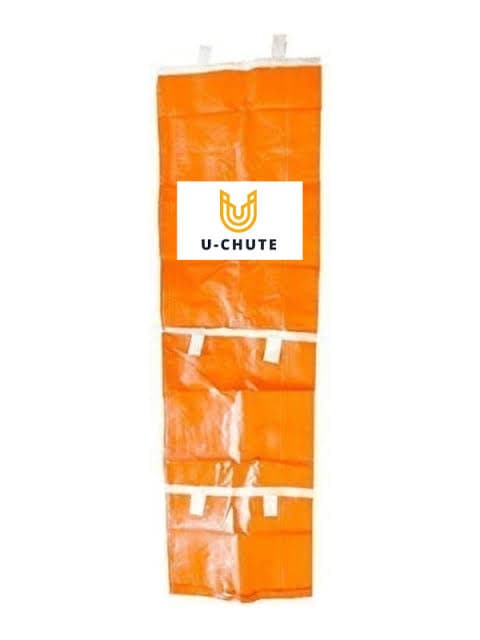
If you've ever priced out a construction project and hit a surprise line item, you know the frustration. Debris management costs — especially trash chutes — have a way of being underestimated, then quietly blowing up the budget. Whether you're a roofer working a two-story teardown, a demolition contractor gutting a commercial building, or a junk removal crew handling a multi-floor cleanout, the question is the same: how much does a trash chute actually cost per project?
The honest answer is: it depends — but not in a hand-wavy way. There are specific, quantifiable factors that drive cost up or down. This guide breaks down every one of them so you can budget accurately, avoid overpaying, and choose the right debris chute system for each job.
Why Trash Chute Costs Vary So Widely
Contractors quoting trash chute costs will give you numbers that range from a few hundred dollars to several thousand per project. That spread isn't random — it reflects three entirely different purchasing or renting models, each with its own cost structure.
- Single-use cardboard or flimsy plastic chutes: Low upfront cost, high per-project cost when replaced frequently.
- Rental chutes from a local supplier: Medium daily rate that compounds fast on longer jobs.
- Reusable polymer-fabric chutes (buy-to-own): Higher upfront, near-zero marginal cost per subsequent project.
Most contractors who do more than two or three jobs a year discover that the buy-to-own model is the most cost-efficient by a wide margin. But let's walk through each scenario with real numbers so you can make the comparison yourself.
The Four Main Cost Drivers of Any Trash Chute Project
1. Drop Height and Chute Length Required
The single biggest cost variable is how far debris needs to travel from the work level to the dumpster below. A one-story roof job might need just 10 feet of chute. A six-story commercial demo could need 50 feet or more. More length means more materials, more sections, and — in a rental model — higher daily fees.
When you buy a reusable chute, you're buying a specific length configuration. U-Chute's lineup covers the most common drop heights directly:
- 10 ft lite-duty: Ideal for single-story residential jobs, light debris loads.
- 10 ft heavy-duty: Single-story applications with heavier material like shingles, concrete chunks, or dense demolition debris.
- 25 ft heavy-duty: Two- to three-story jobs — the workhorse for most roofing and mid-rise residential work.
- 50 ft heavy-duty: Four- to five-story structures, commercial demolition, multi-story gut-and-renovate projects.
Each lightweight section is designed to stack, so you're not locked into a fixed configuration. You buy the length you need and get to work — no custom fabrication, no waiting on a supplier.
2. Project Duration
Duration is the factor that makes rentals expensive. A typical rental chute runs anywhere from $75 to $175 per day depending on length and your local market. A three-day roofing job might cost $225–$525 in rental fees alone — plus delivery, pickup, and deposit. A two-week commercial project at the same rate hits $1,050–$2,450 before a single nail is pulled.
When you own your chute, project duration becomes irrelevant to cost. Day one and day fourteen cost the same: nothing extra.
3. Debris Type and Weight
Not all debris is created equal. Drywall dust and light framing scraps are forgiving on equipment. Roofing shingles, concrete, tile, and heavy masonry are not. Using an undersized or lite-duty chute for heavy demolition debris will shorten the product's lifespan dramatically — and in a rental context, you may be liable for damage.
Matching chute duty rating to the debris type is one of the most important decisions you'll make. Choosing heavy-duty polymer fabric for shingle tear-offs and concrete debris protects your investment and keeps the job safe. Our Roofing Demolition Debris Chute Setup guide covers the specifics of sizing for different material types.
4. How Many Projects Per Year You Run
This is the factor that changes the entire math. If you run 20 roofing projects a year, every dollar you spend on a reusable chute gets divided by 20. The break-even point against rental costs typically comes after just two to four projects, depending on job length and local rental rates.
Contractors and junk removal companies doing high project volume almost universally shift to owned equipment once they run the numbers. The tax deduction implications for contractor equipment purchases in 2026 make the buy-to-own case even stronger.
Rental Trash Chute Costs: What to Expect in 2026
Rental costs vary by region and supplier, but the 2026 market looks roughly like this for standard construction trash chutes:
- Daily rental rate (10–15 ft chute): $75–$125/day
- Daily rental rate (25–30 ft chute): $110–$175/day
- Daily rental rate (50 ft chute): $150–$225/day
- Delivery and pickup fee: $50–$150 per trip (often charged both ways)
- Damage deposit: $200–$500 (refundable if returned undamaged)
- Minimum rental period: Most suppliers require a 2–3 day minimum
Add those line items up for a five-day job using a 25 ft chute: $110–$175/day × 5 days = $550–$875, plus $100–$300 in delivery/pickup, plus a deposit that ties up your cash. Total out-of-pocket: $650–$1,175 for a single job.
That's real money — and none of it stays with you. It's a cost that resets at zero with every new project.
Buy-to-Own Trash Chute Costs: The Long-Game Math
U-Chute's reusable polymer-fabric chutes are sold at clearly published prices on the site, ship free anywhere in the United States, and are sized to the four most common drop heights in the field. When you buy a chute, you make a one-time investment that pays for itself across multiple jobs.
Here's how the math plays out for a contractor running consistent volume:
- Purchase the right size once — match the chute to your typical job height.
- Use it on your first project — you've already reduced your per-project cost vs. renting.
- Use it on projects two, three, four... — each additional job drives the per-project cost down further.
- After 5–10 projects, your cost per use is a fraction of any rental rate you'd have paid.
The polymer-fabric construction is designed for genuine reuse — not the "reusable" label that some suppliers apply to equipment that degrades quickly. Lightweight sections are easy to transport, store between jobs, and deploy without a crew of four. That labor efficiency compounds the savings further.
For businesses managing multiple active job sites, the ability to own multiple chutes and run them simultaneously is a major operational advantage you simply can't replicate with rental logistics. Learn more about how different crew types deploy these systems on our Debris Chute Systems for Construction Sites page.
Hidden Costs That Inflate Your Per-Project Spend
Delivery Delays and Job-Site Downtime
When you rent, you depend on the supplier's schedule. If the chute arrives a day late, your crew waits or improvises — both of which cost money. When you own your equipment, it's in your truck when you need it. There's no delivery window to manage, no phone tag with a rental yard, no day-rate ticking while you wait.
Labor Costs for Manual Debris Handling
Without a properly installed trash chute, debris gets wheelbarrowed, carried by hand, or tossed — all of which are slower and carry real injury risk. OSHA's ergonomics guidelines are explicit about the musculoskeletal risks of repetitive heavy lifting and carrying. A chute that moves material vertically removes that manual handling loop entirely, protecting both your crew and your workers' comp record.
Waste Contamination Penalties
Uncontrolled debris that lands outside a dumpster or contaminates recyclable material streams can trigger cleanup costs and, in some jurisdictions, fines. A proper chute system directs material precisely into the container, reducing scatter and keeping your job site compliant with EPA materials waste guidance on sorted disposal.
Insurance and Liability Exposure
Debris thrown or dropped without a controlled system is a safety hazard to workers and bystanders. Some general liability policies include exclusions or surcharges related to unsafe debris handling practices. A documented chute system demonstrates due diligence — something insurers and site inspectors notice.
Per-Project Cost Comparison: Rental vs. Buy-to-Own
Let's put concrete numbers side by side across three common project types to illustrate how the per-project cost compares over a realistic contractor's annual volume:
Scenario A: Residential Roof Tear-Off (2-Day Job, 10 ft Chute)
- Rental path: ~$100/day × 2 days + $100 delivery/pickup = $300 per project
- Buy-to-own (after 5 projects): Purchase price ÷ 5 jobs = significant savings per use
Scenario B: Mid-Rise Renovation (5-Day Job, 25 ft Chute)
- Rental path: ~$140/day × 5 days + $150 delivery/pickup = $850 per project
- Buy-to-own (after 3 projects): Break-even typically reached before the fourth job
Scenario C: Commercial Demo (10-Day Job, 50 ft Chute)
- Rental path: ~$190/day × 10 days + $200 delivery/pickup = $2,100 per project
- Buy-to-own (after 2 projects): Ownership pays off after just the second commercial use
These comparisons make one thing very clear: the more days and the more projects involved, the more decisive the buy-to-own advantage becomes. Contractors doing any kind of repeat project volume are leaving real money on the table by renting.

How Chute Size Selection Affects Your Total Project Cost
Choosing the wrong size chute is one of the most common and costly mistakes contractors make. It affects cost in both directions:
Oversizing: Paying for Length You Don't Need
Buying a 50 ft heavy-duty chute for a two-story house is like renting a 26-foot box truck to move a studio apartment. You'll carry the extra cost and extra handling burden without getting anything useful in return. Match your chute length to the actual drop height of your project.
Undersizing: False Economy That Costs More Later
Running a lite-duty chute through a heavy concrete demolition job will degrade the material prematurely and create safety risks mid-project. The right duty rating for the debris type is non-negotiable. Our FAQ page includes specific guidance on matching chute specs to debris weight class.
Getting It Right the First Time
The simplest rule: identify the maximum drop height on your typical jobs, pick the chute length that matches or slightly exceeds it, and select heavy-duty if you're handling roofing material, concrete, tile, or dense demolition debris. When in doubt, heavy-duty is the correct choice for any professional application.
For teams working on multi-story commercial projects, our post on trash chute setup mistakes on multi-story commercial buildings is required reading before your first setup.
Shipping Costs and What Free US Shipping Actually Means
One cost element that surprises some buyers: shipping. Heavy equipment often carries substantial freight costs that aren't obvious until checkout. U-Chute ships all four chute sizes free anywhere in the United States — that's baked into the price, not added at the end. There's no freight surcharge to rural addresses, no dimensional weight upcharge for bulky sections.
This matters for total project cost because equipment that you buy online and deploy yourself eliminates the supplier markup and the delivery fee that come with rental logistics. The price you see is the price you pay, and the chute arrives ready to use.
For contractors operating in areas where equipment suppliers are sparse — rural markets, smaller metros — the ability to order online and receive equipment at a job site or shop address is a meaningful operational improvement. Whether you're running projects in Billings, Montana, Fargo, North Dakota, or Bend, Oregon, free shipping means the same price regardless of geography.
Regulatory Compliance and Its Effect on Project Budgeting
Debris management isn't purely a logistics decision — it's increasingly a compliance decision too. Local building departments, OSHA regulations, and environmental guidelines create a framework that affects how you can legally and safely handle demolition waste on active sites.
Proper trash chute systems demonstrate a controlled debris removal process, which aligns with site safety plans and can satisfy requirements from general contractors on larger commercial jobs. For state-specific regulatory context, our guide to winter trash chute safety regulations by state in 2026 covers the jurisdictional nuances that affect job planning and compliance budgeting.
The EPA's recycling and waste management guidance also emphasizes proper handling of construction and demolition waste streams — chute systems that direct material cleanly into sorted containers support that goal and can simplify reporting on projects with green building requirements.
Industries and Applications With the Highest Cost-Per-Project Leverage
Some business types see a dramatically faster return on trash chute investment than others. Here are the applications where the cost math is most favorable:
- Roofing contractors: Tear-offs are frequent, fast-paced, and generate heavy shingle debris. A heavy-duty chute pays for itself in a handful of jobs and makes every roof job faster and safer for the crew.
- Junk removal companies: Multi-floor cleanouts with heavy volume are the core use case. Manual hauling through stairwells is the slowest, most physically demanding alternative — a chute changes the economics of every job.
- Demolition contractors: High debris volume, heavy material, longer project durations — all factors that make ownership far superior to renting at daily rates.
- Remodeling and renovation crews: Drywall, flooring, and framing waste across multi-story homes adds up fast. A properly set up chute for residential renovation saves time on every floor above grade.
- Commercial property managers: Buildings undergoing renovation or tenant buildout benefit from controlled debris removal that protects common areas and satisfies building management requirements.
How to Calculate Your Break-Even Point Before You Buy
The break-even calculation is straightforward. Here's the formula:
- Find your typical per-project rental cost — daily rate × average project days + delivery/pickup.
- Note the purchase price of the chute size that matches your typical job.
- Divide the purchase price by the typical per-project rental cost — that's your break-even project count.
For most contractors, break-even lands between two and five projects. After that point, every project you run with your owned chute is pure savings compared to the rental alternative. For businesses running 10, 20, or 30+ jobs per year, the cumulative savings are substantial.
If you want to think about this in annual terms: a roofer running 25 jobs a year at $300/job in rental costs spends $7,500 annually on chute rental. A single equipment purchase that eliminates that cost pays for itself many times over in year one. From a business planning perspective, this is the kind of fixed-vs.-variable cost shift that the SBA's small business management guidance recommends evaluating carefully when scaling a service operation.
Operational Efficiency Gains That Don't Show Up in Purchase Price
The cost of a trash chute isn't just about equipment — it's about what the equipment enables for your crew's speed and safety on the job. Faster debris removal means faster project completion. Faster project completion means more jobs per season, less overtime, and better client satisfaction.
Faster Job Completion
A properly installed chute system removes the manual debris relay — crew members on upper floors can direct material down the chute continuously while other crew members keep working. There's no stopping to haul wheelbarrows, no stairwell bottleneck, no waiting for a forklift.
Reduced Crew Fatigue and Injury Risk
Physical fatigue accumulates across a project day. Reducing the manual lifting and carrying load on your crew through a chute system keeps them sharper and reduces the risk of end-of-day accidents — which tend to be when mistakes happen. Better crew condition also means fewer workers' compensation claims over a season.
Cleaner Job Sites and Better Client Perception
Controlled debris flow means material lands in the dumpster, not scattered across the yard or neighboring property. Clients and property managers notice. A clean job site is a professional job site — and that reputation compounds over time into referrals and repeat business.
Contractors in markets like Boulder, Colorado, Asheville, North Carolina, and Sarasota, Florida operate in areas where property presentation standards are high and clients are attentive — a chute system signals professionalism from day one of a job.
Frequently Asked Questions
How much does a trash chute rental typically cost per day in 2026?
Rental rates in 2026 range from $75 to $225 per day depending on chute length and your local market. Short chutes (10–15 ft) typically run $75–$125/day; mid-length chutes (25–30 ft) run $110–$175/day; and longer configurations (50 ft) can reach $150–$225/day. Delivery and pickup fees add another $50–$150 per trip, and most suppliers charge a damage deposit of $200–$500. For any project lasting more than a few days, rental costs compound quickly and often exceed the purchase price of a comparable reusable chute.
Is it cheaper to buy or rent a trash chute for a single project?
For a single short project — say, one or two days — rental can be the more cost-effective option if you have no future projects lined up. However, most contractors underestimate how often they'll need a chute. Once you factor in delivery fees, deposits, and the minimum rental periods most suppliers require, even a single-project rental can cost $300–$600. If you anticipate doing more than two or three jobs in a year, buying a reusable chute almost always comes out ahead financially, often reaching break-even after just the second or third use.
What size trash chute do I need for my project?
Match the chute length to the drop height from the work level to the dumpster below. A single-story job typically needs 10 feet of chute. Two- to three-story projects usually require 25 feet. Four- to five-story structures and most commercial jobs need 50 feet. For duty rating: lite-duty is appropriate for light material like drywall scraps and framing waste; heavy-duty is required for roofing shingles, concrete, tile, masonry, and any dense demolition debris. When in doubt on duty rating, always choose heavy-duty for professional applications.
Does free shipping actually cover all US locations, including rural areas?
Yes. U-Chute offers free shipping on all four chute sizes to any address in the contiguous United States, including rural locations and smaller markets where equipment suppliers are harder to find. There are no freight surcharges, no dimensional weight fees, and no rural delivery penalties. The price listed on the site is the price you pay — the chute arrives ready to deploy without any additional shipping costs at checkout.
How many projects can a reusable polymer-fabric trash chute handle before it needs replacement?
Polymer-fabric chutes are built for genuine multi-project reuse — not the kind of "reusable" that means two or three jobs before degradation sets in. With proper setup, use within the duty rating, and basic care between jobs, a quality reusable chute should serve a contractor through many seasons of active use. The key variable is always matching the chute's duty rating to the debris type: running heavy demolition debris through a lite-duty chute will shorten its life significantly, while using a properly rated heavy-duty chute for appropriate material types maximizes longevity.
Are trash chute costs tax-deductible for contractors?
In most cases, yes — construction equipment purchased for business use is deductible as a business expense or may qualify for accelerated depreciation under Section 179 of the US tax code. This can substantially improve the real-world economics of a buy-to-own decision. However, tax treatment varies based on your business structure, income, and how the equipment is used. Consult a qualified tax professional for advice specific to your situation. Our post on construction chute tax deductions for contractors in 2026 covers the general framework in detail.
What industries use trash chutes most frequently beyond roofing?
Roofing contractors are among the heaviest users, but trash chutes are widely deployed across demolition contracting, junk removal, commercial renovation, residential remodeling, property management, and multi-family construction. Any project involving debris generated above ground level — whether from a second-story floor, a commercial mezzanine, or a multi-story shell — is a candidate for a chute system. Junk removal companies in particular benefit significantly on multi-floor cleanouts, where manual stairwell hauling is the primary alternative.
Ready to Cut Your Per-Project Debris Costs?
You now have the full picture: rental costs per day, hidden fees, the break-even math, and exactly what size and duty rating to choose for your project type. The next step is simple.
Browse U-Chute's four reusable chute sizes — the 10 ft lite-duty, 10 ft heavy-duty, 25 ft heavy-duty, and 50 ft heavy-duty — pick the one that matches your typical drop height and debris type, and order online with free US shipping. No supplier phone tag, no delivery windows to manage, no rental fees that reset to zero next week.
Questions about which size is right for your application? Visit our Frequently Asked Questions page for sizing and setup guidance, or contact us directly and we'll point you to the right product for your specific jobs. You can also explore our full lineup on the services and products page or learn more about U-Chute and what makes our chutes the right choice for professional debris management.
Make the investment once. Let every project after that one work in your favor.