
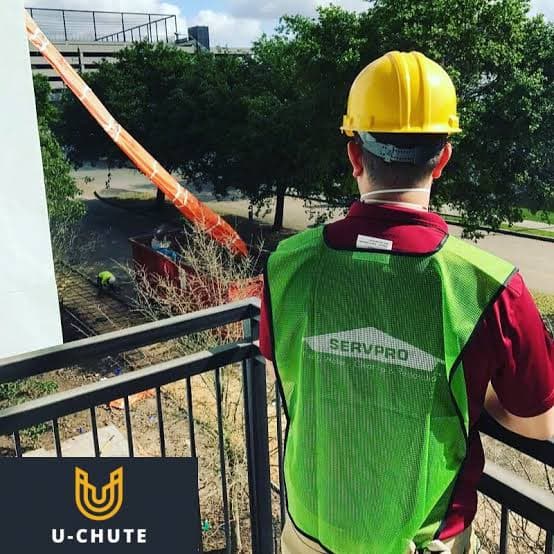
Every debris chute system lives or dies at one critical point: the door. The trash chute door is where workers load material, where accidents happen if the setup is wrong, and where a sloppy connection between floors causes dust clouds, spillage, and OSHA headaches. Get the door right and the whole system works. Get it wrong and you'll be cleaning up debris — and potentially dealing with citations — all day long.
This guide breaks down everything contractors, roofers, demolition crews, and junk removal teams need to know about trash chute doors — how they work, what materials hold up under real job-site conditions, how to set up safe loading points on multi-story projects, and how a reusable polymer-fabric chute system simplifies the whole picture. Whether you're running a single-story roof tear-off or a high-rise gut renovation, the principles are the same.
What Is a Trash Chute Door, Exactly?
In a traditional built-in trash chute — the kind found in multi-story apartment buildings and hospitals — a chute door is a hinged metal access panel mounted in the wall or on a landing. Workers open the panel, drop waste into the vertical shaft, and the debris falls to a bin at the bottom. These residential and commercial chute doors are typically made of galvanized steel or stainless steel and are designed for repeated daily use over the life of the building.
On a construction site, the concept is the same but the execution is different. A temporary construction debris chute doesn't have permanent wall-mounted doors. Instead, each section of the chute connects to a loading collar, a bracket, or a specially shaped inlet that serves the same function: a controlled, safe opening where material enters the chute at an upper floor and gravity does the rest of the work.
Permanent Building Chute Doors vs. Construction Site Chute Inlets
It's worth drawing this distinction clearly because contractors often search for "trash chute door" when they actually need a construction debris chute inlet or loading funnel. Here's a quick comparison:
- Permanent chute doors — steel or aluminum, wall-mounted, code-compliant for occupied buildings, designed for paper bags and bagged household waste, not bulk demolition debris.
- Construction chute inlets — temporary, scaffold- or window-mounted, wide-mouth to accept full loads of drywall scraps, shingles, concrete chunks, and lumber — the material that actually comes off a job site.
- Reusable polymer-fabric sections — flexible, lightweight sections that stack and connect at each floor level, with a top inlet that acts as the loading point for each elevation.
The rest of this guide focuses primarily on the construction site context, because that's where most contractors need guidance. If you manage a building and need to maintain or replace a residential chute door, some of the inspection and safety principles still apply.
Why the Loading Point Is the Most Dangerous Part of Any Chute System
Industry safety data consistently shows that loading points — the doors and inlets of debris chutes — account for a disproportionate share of job-site injuries related to chute systems. The reasons are straightforward: workers lean over the opening, heavy material can bounce back, connections that aren't secured can dislodge under load, and debris kicked up from below can exit at the loading point unexpectedly.
OSHA's ergonomics and safe-loading guidelines emphasize that any opening through which material is transferred at elevation requires a defined safe work procedure. That means workers shouldn't be improvising how they load a chute every time — the inlet should be positioned, secured, and used the same way on every load.
The Four Most Common Chute Door Safety Failures on Job Sites
- Unsecured inlet collars — the loading funnel or top ring isn't clamped to the scaffold or window frame firmly, so it shifts when material is dropped in.
- Overfilling at the inlet — workers dump too much material at once, causing backpressure and debris blowback out of the opening.
- Wrong-angle loading — material is thrown sideways into the inlet instead of directed downward, stressing the sidewalls of the chute and the connection point.
- No barrier at ground level — the debris can pile up and block the bottom of the chute, causing a backup that eventually bursts through a sidewall or blows out the top inlet.
All four of these failures are preventable with proper setup and crew training. The chute door or inlet is not a passive part of the system — it's an active control point.
Materials Used in Construction Trash Chute Doors and Inlets
When you're evaluating a debris chute system, the material of the inlet, collar, and body of the chute matters more than most contractors realize. The inlet takes constant mechanical abuse — heavy debris, irregular shapes, repeated loading cycles — and it has to do that without splitting, cracking, or deforming in a way that causes the section below it to shift.
Galvanized Steel and Stainless Steel
Traditional construction chute inlets are made from galvanized or stainless steel. They're heavy, they hold their shape under load, and they don't crush. The downsides: steel is heavy (a steel chute section can weigh 40 to 80 pounds per section), rusts if the galvanizing is damaged, and costs significantly more than polymer alternatives. For a comparison of steel vs. polymer-fabric chute systems overall, the stainless steel trash chute vs. polymer-fabric breakdown covers the trade-offs in detail.
Polymer-Fabric (Woven Polypropylene and Similar Composites)
Reusable polymer-fabric chute sections — the material U-Chute uses — are engineered to be lightweight without sacrificing durability. The fabric is woven tight enough to contain fine debris like roofing granules and drywall dust, while the polymer coating resists abrasion from rough concrete and masonry. The top of each section forms the inlet: a wide, reinforced opening that acts as the loading collar for that elevation.
- Typical section weight: 10 to 25 pounds versus 40 to 80 for steel.
- Reusable across multiple projects — not a single-use or disposable product.
- Flexible enough to absorb impact without cracking or deforming the opening shape.
- Free US shipping from U-Chute, no freight surcharges for heavy steel sections.
Rigid Plastic
Some budget chute systems use rigid plastic sections with molded inlets. These are cheaper upfront but are prone to UV cracking, brittleness in cold weather, and cracking at the inlet lip under repeated impact. For occasional light-duty use they may suffice, but on a serious demo job they tend to fail before the project is done.
How a Multi-Story Chute System Uses Multiple Loading Points
One of the most important things to understand about construction debris chutes is that on a tall building, you typically don't want all workers loading from one floor. That would mean debris falls the full height of the chute every time, building up speed and increasing the risk of a blowout at the bottom. Instead, well-designed multi-story chute setups have a loading inlet at each active floor level.

With a modular chute system like U-Chute's stackable sections, each section connects to the one above and below it. The top of each section can serve as an active loading point for that floor. Workers on the third floor load into the inlet for the third floor section. Workers on the fifth floor load into the fifth floor inlet. The debris travels down through the connected sections and exits at the dumpster on the ground.
Matching Chute Length to Your Drop Height
U-Chute sells chutes in four sizes to cover the range of real-world job-site drop heights:
- 10 ft lite-duty — single-story roofing, low-clearance applications, light demolition.
- 10 ft heavy-duty — single-story but with heavier debris loads: concrete, tile, dense material.
- 25 ft heavy-duty — two- to three-story projects, mid-rise renovation work.
- 50 ft heavy-duty — four or more stories, commercial gut-outs, significant drop height required.
Sections can be stacked to reach the height you need. Each section connection point becomes a potential loading inlet for that elevation. For detailed setup guidance by project type, the roofing demolition debris chute setup guide walks through the full process step by step.
Securing the Trash Chute Door or Inlet at Each Floor
Securing the loading inlet correctly is non-negotiable. A loose inlet that shifts mid-load can send debris sideways, injure workers, and damage the structure below. Here's the standard procedure for securing a construction chute inlet at an upper floor loading point:
Window-Frame Mounting
- Identify a window or opening directly above the dumpster or collection zone below.
- Thread the top section of the chute through the window opening so the inlet collar is at worker-accessible height inside the building.
- Use anchor straps or clamps to secure the chute to the window frame or adjacent structural member — the chute should not be able to swing horizontally.
- Confirm the chute hangs plumb (vertically) from the inlet to the dumpster below. A chute that runs at an angle puts stress on the connection points and can cause sections to separate.
- Have a second worker confirm the connection points between all chute sections are secure before loading begins.
Scaffold-Frame Mounting
- Attach the top chute section to the scaffold frame at the highest active work level using the chute's built-in mounting loops or brackets.
- At each intermediate floor, secure the chute body to the scaffold frame with additional ties — this prevents the chute from swinging under load.
- At the bottom, position the chute outlet directly over the dumpster opening. The outlet should be close enough to the dumpster that debris doesn't miss — typically within 12 to 18 inches of the dumpster rim.
- Keep the dumpster gate closed on any side adjacent to pedestrian or traffic areas to contain debris that may bounce on impact.
Loading Protocol: How to Use the Chute Inlet Safely Every Time
Even a perfectly secured trash chute door or inlet is only as safe as the workers using it. A few minutes of crew briefing before the first load is dropped pays off all day in speed, cleanliness, and injury prevention.
Pre-Load Checklist for Every Loading Session
- Confirm the dumpster below is in position and not full — a full dumpster will cause debris to pile on top of the chute outlet and backfill up the shaft.
- Confirm all section connections are still secure — vibration from earlier loads can loosen connections over the course of a shift.
- Confirm no workers are standing below the chute outlet or in the debris drop zone.
- Confirm the loading inlet is clear — no debris has accumulated at the collar from a previous load.
Loading Technique That Protects the Inlet
- Direct material downward — don't throw material sideways into the inlet. Guide it straight down through the opening.
- Load in manageable batches — a 5-gallon bucket of debris at a time, not a full wheelbarrow dumped in one shot. Volume overloads create backpressure.
- Keep the inlet area clear — don't let debris pile up around the collar; it makes precise loading impossible and increases the chance of spillage.
- Call out before loading — use a simple verbal signal ("loading!") so anyone near the outlet below knows to step clear.
Trash Chute Door Codes and Regulations: What Contractors Need to Know
Permanent building trash chute doors in occupied structures are subject to fire codes, building codes, and health department regulations in most jurisdictions. For construction sites, the regulatory picture is different but still real.
OSHA's construction standards (29 CFR 1926) address debris handling and waste disposal. Specifically, construction waste that is dropped more than 20 feet to any exterior point of a building must be contained in an enclosed chute. That's a federal requirement, not a suggestion. If your drop height exceeds 20 feet and you're dropping debris without a chute, you're out of compliance.
For projects in Texas — where U-Chute ships regularly — local municipalities may have additional requirements around dumpster placement, setback from property lines, and dust control. Always confirm local requirements with your project's general contractor or owner before setup. The construction debris chute cost in Texas guide covers permitting context alongside pricing.
Fire Door Ratings for Permanent Chute Doors
If your project involves maintaining or specifying a permanent trash chute door for a building (not a construction chute), fire rating matters significantly. Most building codes require a minimum 1.5-hour fire-rated door for trash chute access in multi-family and commercial buildings. The door must be self-closing and self-latching, with no hold-open devices. Confirm the specific rating required by your local fire marshal before specifying or replacing a permanent chute door.
Sizing a Trash Chute Door Opening for Different Material Types
The opening size of a trash chute door or inlet determines what material can actually enter the chute. This seems obvious, but it's a source of real frustration on job sites when workers try to load material that's too large for the inlet, breaking the collar or jamming the shaft.
Standard Inlet Sizing by Material Type
- Loose demolition debris (drywall, plaster, insulation) — a 20 to 24-inch diameter inlet is sufficient; material breaks apart easily and flows.
- Roofing shingles and tiles — shingles can be 12 by 36 inches; the inlet needs to accommodate full or half shingles without forcing. A 24-inch minimum diameter is recommended.
- Lumber scraps and trim pieces — length matters more than width; pieces up to 4 feet long can typically be fed vertically through a standard inlet.
- Concrete and masonry chunks — keep these to under 20 pounds per piece to prevent blowout at the outlet. Break larger chunks before loading, or use a heavy-duty chute section rated for the impact load.
U-Chute's heavy-duty sections are designed for the real-world range of construction debris. The lite-duty 10 ft option is better suited to lighter residential work where the material profile is lighter — shingles, minor demolition scraps, and similar. For anything involving tile, concrete, or dense masonry, go heavy-duty. See the full debris chute systems overview to compare specs across all four sizes.
Maintenance and Inspection of a Reusable Trash Chute System
One of the biggest advantages of a reusable polymer-fabric chute system over disposable or single-use systems is the return on investment across multiple projects. But that return only materializes if you maintain and inspect the chute properly between uses.
Post-Project Inspection Checklist
- Inspect the inlet collar (top section) for tears, fraying, or deformation at the loading lip — this area takes the most abuse.
- Check all section connection points for wear or damage to the connection mechanism.
- Inspect the chute body for any punctures or abrasion damage that might let fine debris escape during future use.
- Clean the interior surface of each section — packed-in debris left inside a stored section can cause mold growth and accelerated material degradation.
- Store sections flat or loosely rolled, not kinked, in a dry location out of direct UV exposure.
Proper storage and inspection between jobs dramatically extends the service life of each section. A well-maintained U-Chute chute system is designed to work across many projects — that's the whole point of the reusable design. For anyone managing disposal costs across multiple jobs, the construction debris dumpster rentals guide pairs well with this, covering the total cost picture of debris management.
Trash Chute Setup for Specific Industries and Project Types
Different trades use trash chute door setups in different ways. The core mechanics are the same, but the specific configuration, loading frequency, and material type vary enough that it's worth walking through the most common use cases.
Roofing Contractors
Roofers are among the highest-volume users of construction debris chutes. A single-story residential tear-off might go through 15 to 20 squares of shingles in a day — that's 1,500 to 2,000 pounds of material that needs to get from the roof to the dumpster without being thrown over the edge. The 10 ft heavy-duty chute is the most common choice for single-story residential. The inlet mounts at the eave line, the outlet drops directly into a dumpster positioned on the driveway or at the curb. Roofers in markets like Boulder, CO, Asheville, NC, and Portland, ME use this setup routinely because it's faster and cleaner than tarping and hand-carrying.
Demolition Crews
Demo projects generate a wider variety of debris — drywall, lumber, concrete, tile, plumbing fixtures, and mixed waste. The chute inlet sees more varied loads and more impact. Heavy-duty sections are non-negotiable. On multi-story demo jobs, stacking 25 ft or 50 ft heavy-duty sections with active inlets at multiple floors is the standard professional approach. For high-rise context, the 432 Park Avenue trash chute case study illustrates the complexity of debris management at scale.
Junk Removal Companies
Junk removal crews often work in occupied residential buildings — apartment cleanouts, estate clearances, hoarding situations. These jobs involve narrow hallways, stairwells, and restricted access. A lightweight polymer-fabric chute can be rigged through a window in ways a steel system cannot. The chute door (inlet) in this context needs to be manageable by a two-person crew working in tight quarters. The 10 ft or 25 ft options are most practical for this application.
Renovation Contractors
Kitchen and bathroom renovations in multi-unit residential buildings often require removing heavy materials — tile, cabinets, countertops — from upper floors. A chute lets crews work faster without multiple stair trips. Even in markets far from each other — from Sarasota, FL to Fargo, ND — the core setup is identical. That's one of the advantages of a simple, modular system: it travels and adapts to any job site geography.
Buying a Trash Chute System: What to Look for Beyond the Door
When you're buying a construction debris chute, the inlet quality is just one factor. Here's the full checklist of what experienced contractors evaluate before purchasing:
- Section connection mechanism — how do sections attach to each other? Snap-rings, tie straps, and hook-and-loop systems all work, but ease of setup and reliability under load varies.
- Outlet design — does the bottom section direct material cleanly into a dumpster, or does it fan out in a way that misses the container?
- Weight per section — lighter sections mean faster setup and less physical strain on crews, which matters on a 10-hour job day.
- Reusability — will this last across 10 jobs or fall apart after 2? Polymer-fabric is a significant durability step up from thin plastic.
- Shipping cost — steel chute systems often ship freight with surcharges that add hundreds of dollars to the invoice. U-Chute ships free anywhere in the US.
- Sizing options — does the supplier offer multiple lengths so you can match the chute to your actual drop height rather than buying excess?
For anyone weighing the full cost picture, including where to dispose of the debris once it's in the dumpster, the complete 2026 guide to construction debris disposal covers disposal sites, fees, and options by material type. The EPA's materials waste and recycling data is also worth reviewing for any project where recyclable materials are being removed — sorting at the inlet (before the chute) can reduce disposal costs significantly.
Frequently Asked Questions
What is a trash chute door and how does it differ from a construction chute inlet?
A trash chute door typically refers to the hinged access panel on a permanent building trash chute — the wall-mounted metal door you open to drop waste into a residential or commercial building's built-in chute shaft. A construction chute inlet is a temporary loading point at the top of a construction debris chute, designed for wide-mouth loading of demolition material like shingles, drywall, and lumber. Both serve the same function — a controlled opening to load a vertical chute — but they're built for very different applications and load types.
How do I secure a trash chute inlet at a window or upper floor opening?
Thread the top section of the chute through the window or floor opening so the inlet collar is accessible at worker height. Secure the chute to the window frame or adjacent structural member using anchor straps or clamps — the inlet must not be able to shift horizontally under load. Confirm the chute hangs plumb from the inlet to the dumpster below, and check that all section-to-section connections are tight. Have a second worker verify the full setup before loading begins, and reinspect connection points periodically throughout the work day.
What materials can I load through a construction trash chute inlet?
Construction debris chute inlets are designed for roofing shingles, drywall, insulation, lumber scraps, tile, plaster, and mixed demolition debris. Concrete and masonry chunks are acceptable in heavy-duty chutes but should be kept to manageable piece sizes — under 20 pounds per piece is a good rule of thumb to prevent blowout at the outlet. Avoid loading materials that are longer than the inlet diameter unless they can be fed vertically. Liquids, chemicals, and hazardous materials should never be loaded into any construction debris chute.
Is there an OSHA requirement to use a trash chute on a construction site?
Yes. OSHA's construction standards (29 CFR 1926) require that debris dropped more than 20 feet to any exterior point of a building must be contained within an enclosed chute. Beyond that specific requirement, OSHA's general duty clause applies: employers must provide a workplace free from recognized hazards. Throwing debris off upper floors without a chute creates falling-object hazards for workers and bystanders below, which falls squarely under that clause. Many general contractors and building owners require chute use at any elevation above one story, independent of OSHA's threshold.
How many chute sections do I need for my project?
Calculate your drop height from the highest active loading point to the top of the dumpster on the ground. U-Chute's 10 ft sections cover single-story jobs, 25 ft covers two to three stories, and 50 ft covers four or more stories. For taller drops, sections can be stacked and connected. Measure the actual drop height on your specific site — floor-to-floor heights vary, especially in older construction, so never assume standard dimensions without measuring. When in doubt, go longer rather than shorter; a chute that falls slightly short of the dumpster will cause spillage on every load.
Can I use a reusable debris chute for both roofing and interior demolition?
Yes. Reusable polymer-fabric chutes like U-Chute's are versatile enough to handle both roofing tear-offs and interior demolition work. For roofing, the inlet mounts at the eave line and angles debris into the dumpster on the ground. For interior demolition, the inlet is positioned in a window or floor opening and the chute drops vertically outside the building. The same sections work for both applications. The heavy-duty versions handle the denser, more varied material profile of interior demo work, while the lite-duty 10 ft option is well suited to lighter residential roofing applications.
How do I keep the trash chute inlet area clean and prevent debris backflow?
The two main causes of debris backflow at the inlet are overfilling and a blocked outlet at the bottom. Load in manageable batches rather than dumping entire loads at once — this prevents pressure buildup in the shaft. Keep the dumpster monitored and have it swapped before it's completely full; a filled dumpster with debris piled over the outlet will cause backup up the entire chute within minutes. Keep the inlet collar area clear of loose debris between loads, and inspect the connection points between sections at least twice per shift to confirm nothing has shifted under the cumulative load impact.
Ready to Set Up a Safer, Faster Debris Removal System?
A well-configured trash chute door or inlet isn't a minor detail — it's the control point that makes your entire debris removal operation safe, fast, and compliant. Whether you're running a single-story roof tear-off or managing a multi-story commercial demo, the right chute and the right setup procedure make a measurable difference in how much your crew gets done per day.
U-Chute manufactures reusable polymer-fabric debris chutes in four sizes — 10 ft lite-duty, 10 ft heavy-duty, 25 ft heavy-duty, and 50 ft heavy-duty — with free shipping to any address in the United States. Every size is priced on the site so you can compare options and order the right setup for your next project without calling anyone.
Browse all debris chute sizes and order online, or contact U-Chute directly if you have questions about which configuration fits your specific job. For more background on the product line and the company behind it, visit the About U-Chute Trash Chute page. If you have additional questions, the U-Chute FAQ covers the most common contractor questions in one place.
Quality construction debris management without compromise — that's what every project deserves, starting at the door.