
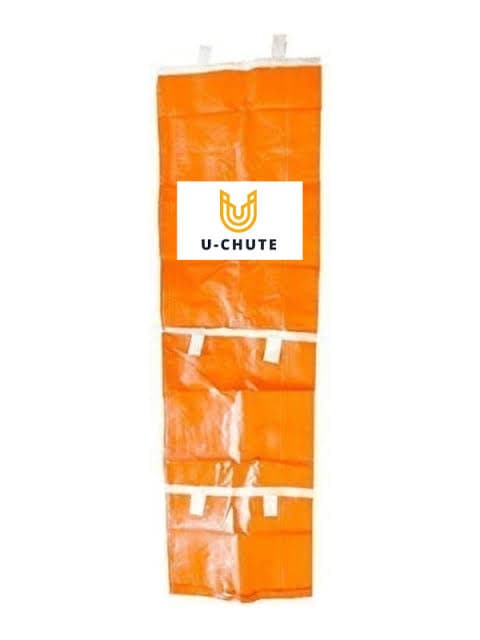
If you are pricing out a demolition, roofing, or renovation project in Texas and need a way to move debris from upper floors to a dumpster below, the first question is almost always the same: how much does a construction debris chute cost? The answer depends on several factors — chute size, material quality, reusable versus single-use design, and where you buy. This guide cuts through the noise and gives you real numbers, Texas-specific context, and a clear framework for choosing the right chute for your project and your budget.
The Short Answer: Construction Debris Chute Prices in Texas in 2026
Prices vary widely depending on chute type, size, and supplier. Here is a quick snapshot of what Texas contractors are paying right now:
- Disposable cardboard or single-use plastic chutes (10 ft section): $30–$80 per section, but they are typically thrown away after one use.
- Reusable polymer-fabric chutes — 10 ft lite-duty: Entry-level price point, ideal for light residential demo and small reroofing jobs.
- Reusable polymer-fabric chutes — 10 ft heavy-duty: Mid-range investment for commercial and multi-family projects.
- Reusable polymer-fabric chutes — 25 ft heavy-duty: Best value for mid-rise projects where stacking sections gets expensive with single-use options.
- Reusable polymer-fabric chutes — 50 ft heavy-duty: Purpose-built for high-rise demolition, large-scale commercial teardowns, and ongoing fleet use.
The key insight: reusable chutes cost more upfront but far less per use. A Texas roofing crew that runs 30 jobs a year with a disposable chute on each project is spending thousands annually on waste. A single reusable unit amortizes down to a fraction of that cost.
Why Texas Projects Have Unique Debris Chute Needs
Texas is one of the most active construction states in the country. From the high-rise corridor along Houston's Westheimer to Austin's constant condo boom and the sprawling commercial demolition happening across DFW, Texas contractors handle enormous volumes of debris — and they operate in heat that punishes cheap equipment quickly.
Climate and Heat Load on Chute Materials
Summers in Texas routinely push triple digits from May through September. Standard UV exposure in Dallas or San Antonio is among the highest in the continental US. Low-grade plastics and thin synthetic fabrics degrade rapidly in these conditions. If you are pricing a chute for a Texas job, material durability is not optional — it is a line-item cost. A chute that cracks, tears, or warps after two projects in Houston heat is not a bargain at any price.
Polymer-fabric construction — the same material used in heavy-duty industrial bagging and outdoor containment — holds up significantly better under sustained heat and UV than thin cardboard or budget plastic alternatives.
Texas Job-Site Safety Expectations
Texas follows federal OSHA standards on debris management and worker safety. Overhead debris is one of the leading contributors to struck-by injuries on construction sites nationwide. Using a properly rated, securely fastened chute is not just a best practice — it is a risk-management decision that affects your liability exposure and your workers' comp rates. The OSHA ergonomics and safe handling guidelines are worth reviewing for any crew moving heavy demolition material repeatedly throughout the workday.
Reusable vs. Disposable: The True Cost Comparison
This is where most buyers get the math wrong. The sticker price on a single-use chute looks lower. But once you run the numbers across a realistic project count, reusable chutes are almost always cheaper over any meaningful time horizon.
Scenario: Texas Roofing Contractor — 30 Jobs per Year
- Single-use cardboard chute (10 ft): $50 per section × 2 sections per job × 30 jobs = $3,000/year in chute costs alone, with no asset at the end.
- Reusable polymer-fabric chute (10 ft heavy-duty): One-time purchase. After 30 jobs, your cost per use has dropped to a small fraction of the purchase price — and the chute is still serviceable for more projects.
The math only gets more favorable as project count rises. Texas junk removal companies, demolition contractors, and remodelers running high volumes of jobs will see the break-even point arrive within a few months of first use.
Scenario: Texas Demolition Contractor — High-Rise Teardown
On a 10-story commercial teardown in Houston, a contractor might need 50 feet or more of vertical chute drop. Using single-use sections at that scale is expensive and generates significant plastic waste. A 50 ft heavy-duty reusable chute handles the full drop in one continuous run, mounts securely to the structure, and gets packed back up when the job is done for use on the next contract.
Check out our detailed breakdown in the Trash Chute for Demolition Contractors: Cost Estimate and Complete Buying Guide for a deeper look at how project scale affects the math.
The Four Sizes and What They Cost to Operate
U-Chute sells reusable polymer-fabric construction trash chutes in four configurations. Understanding which size fits your project is the most important step before you look at price.
10 ft Lite-Duty
Designed for light residential demolition, single-story reroofing jobs, small bathroom or kitchen gut-outs, and property cleanup applications. If you are dropping debris from a single story or working a compact job site where payload weight stays low, this is your entry point. The lite-duty is the most compact to transport and store, making it popular with smaller renovation crews and independent junk removal operators.
10 ft Heavy-Duty
The workhorse unit for Texas contractors who need a compact footprint but are handling heavier materials — shingles, drywall, concrete rubble. The heavy-duty polymer-fabric construction tolerates repeated drops of dense debris without abrading or tearing. This unit stacks with additional 10 ft sections if you need to extend your drop height on a future job.
25 ft Heavy-Duty
Covers two- to three-story drops in a single unit and is the most commonly purchased size for mid-size commercial remodeling projects, multifamily renovations, and Texas apartment complex work. Instead of stacking three separate 10 ft sections and managing the connection points, you get a longer single run that installs faster and handles more debris volume per hour.
For project-specific guidance on residential scopes, the Trash Chute for Residential Renovation Under $5,000 Buyer's Guide walks through exactly when the 25 ft unit makes sense versus a shorter configuration.
50 ft Heavy-Duty
Built for high-rise demolition, multi-story commercial teardowns, and construction crews that need to manage continuous debris flow from significant heights. The 50 ft heavy-duty is the unit Texas roofing and demolition contractors reach for when the job site is a mid-rise hotel renovation or a large apartment building demo. It is also the preferred choice for companies building a permanent fleet of equipment across multiple crews.
Learn more about common mistakes crews make at height in our Construction Chute Mistakes Contractors Make on High-Rise Job Sites.

What Drives the Price Variation Between Chute Models
If you are comparing chutes across suppliers and seeing a wide price range, here is what actually accounts for the difference:
- Fabric weight and weave density: Heavier-weight polymer fabrics resist abrasion from concrete chunks and metal fasteners. Lighter fabrics fail faster under repeated use.
- Reinforced connection hardware: The joints between chute sections take enormous stress during use. Cheap hardware fails at the connection point first.
- UV stabilization: For Texas job sites, a chute left mounted in the sun for the duration of a project needs UV-stabilized fabric to avoid degradation.
- Section length: Longer sections mean fewer connections to install and fewer weak points in the run.
- Warranty and replaceability: A supplier who stands behind the product with clear replacement policies reduces your long-term risk.
Visit the Debris Chute Systems for Construction Sites Across Texas page for a full look at U-Chute's product lineup and specifications.
Renting vs. Buying a Construction Debris Chute in Texas
Some Texas contractors wonder whether renting a debris chute is more cost-effective than buying. Here is a straightforward comparison.
When Rental Might Make Sense
- You have exactly one job that requires a chute and you are confident you will never need one again.
- The project requires a length configuration significantly longer than your typical scope.
- You are a general contractor who has subcontracted the debris work and wants someone else to own the equipment.
When Buying Is Almost Always Better
- You run three or more projects per year where a chute would be useful — the break-even is often just two to four rentals.
- You want the chute available on demand without scheduling or pickup/drop-off logistics.
- You are building out a professional crew kit and want debris management as part of your standard setup.
- You want to eliminate per-project overhead costs that are difficult to forecast when bidding jobs.
For most Texas contractors — roofers, demo crews, junk removal operators, and renovation teams — buying a reusable chute outright is the better business decision within a single busy season.
Shipping Costs and Delivery to Texas Job Sites
One cost factor that often gets overlooked when comparing chute prices: shipping. Some suppliers charge significant freight for large or heavy chute systems, which can add meaningfully to the effective purchase price.
U-Chute ships free to anywhere in the United States, including every Texas city and rural route. Whether your project is in El Paso, Amarillo, Corpus Christi, or a small town in the Panhandle, you pay what is listed — no freight surcharges, no rural delivery fees. This matters when you are budgeting a project and need clean, predictable numbers. You can review shipping details and product pricing directly on the All Services page.
Environmental Cost of Debris Chutes — a Factor Texas Contractors Increasingly Track
Beyond dollar cost, Texas contractors are increasingly factoring environmental impact into procurement decisions — particularly those working on projects with green building certifications or sustainability requirements.
Single-use chutes generate significant plastic and cardboard waste on every project. A reusable polymer-fabric chute, used across dozens or hundreds of projects, dramatically reduces that waste footprint. The EPA's materials waste and recycling data consistently shows construction and demolition debris as one of the largest waste streams in the United States — choosing reusable equipment over disposable alternatives makes a measurable difference.
For a detailed look at the full lifecycle impact, read our post on Construction Debris Chute Environmental Impact and Carbon Footprint 2026.
Hidden Costs That Inflate Your Real Price (and How to Avoid Them)
The listed price of a debris chute is only part of the picture. Here are the hidden costs that catch Texas contractors off guard:
Labor Time Installing and Removing a Poorly Designed Chute
A chute that requires complex rigging or special tools to mount adds labor hours to every install and every teardown. On a multi-week commercial demo, that adds up fast. Look for chutes with straightforward mounting systems that your crew can set up and break down without specialist knowledge.
Replacement Costs from Premature Failure
A cheap chute that fails mid-project means emergency procurement, potential job delays, and the original purchase cost is effectively wasted. Buying a quality unit once is cheaper than buying a low-quality unit twice.
Debris Cleanup When a Chute Fails
If a section tears or a joint fails and debris scatters, you now have a safety incident, a cleanup bill, and a potential OSHA recordable event. The liability and labor cost of that scenario far exceeds any savings from purchasing a cheaper chute.
Storage and Transport Overhead
Bulky or awkward chute systems that do not pack efficiently cost you truck space and storage yard real estate. Lightweight polymer-fabric systems that fold or stack compactly minimize this overhead, making them easier to manage across a multi-crew operation.
Who Uses Construction Debris Chutes in Texas — and What They Pay For
Texas has a remarkably diverse construction economy. Here is how different contractor types approach the debris chute buying decision:
Roofing Contractors
Texas roofers are among the highest-volume users of debris chutes in the country, driven by hail season, hurricane recovery work along the Gulf Coast, and the sheer volume of new residential development in suburban DFW, Austin, and San Antonio. Most roofing crews prefer the 10 ft or 25 ft heavy-duty options for their portability and speed of setup between jobs.
Demolition Contractors
Commercial demolition firms working in Texas cities invest in 50 ft heavy-duty systems as core fleet equipment. The economics are clear: a single high-rise teardown in Houston can span weeks, and a quality chute that survives the entire job without replacement is worth multiples of its purchase price in avoided single-use costs.
Junk Removal Companies
Texas junk removal operators running apartment cleanouts, estate clear-outs, and multi-family turnovers use debris chutes to speed up the loading process and reduce the physical strain on their crews. The OSHA ergonomic guidelines on repetitive lifting reinforce why a chute that eliminates multiple stair carries per day has real safety value beyond the speed benefit.
General Contractors and Renovation Crews
GCs overseeing multi-trade renovations on commercial or multifamily properties use debris chutes to maintain clean floors, reduce trip hazards, and keep the job site organized for all trades. A chute that routes debris directly into a dumpster from upper floors eliminates one of the most chaotic elements of a busy remodel job.
How to Pick the Right Size for Your Texas Project
Use this quick decision framework before you buy:
- Measure your drop height. From the highest floor you will be clearing debris to the top of your dumpster or ground collection point, how many feet do you need to cover?
- Assess your material weight. Light drywall and insulation = lite-duty is fine. Shingles, concrete, tile, or brick = heavy-duty every time.
- Count your annual project volume. The more projects, the more the per-use cost of any purchase drops.
- Think about crew size and setup speed. Longer single sections install faster than multiple short sections. A three-person crew on a fast-paced reroofing job benefits from the 25 ft unit over three 10 ft sections.
- Factor in storage. Do you have a yard, a shop, or just a truck? Lighter, more compact units are easier to manage in tight storage situations.
Still working through the decision? The Frequently Asked Questions page covers common sizing questions in detail, or reach out via the Contact page for direct guidance.
State and Local Regulations That Affect Debris Chute Use in Texas
Texas does not have a single statewide building code, but most Texas cities with significant construction activity — Houston, Dallas, Austin, San Antonio, Fort Worth — operate under local amendments to the International Building Code. Key points relevant to debris chute cost planning:
- Permitting: Some jurisdictions require permits for debris chute installations on public-facing structures. Check with the local building department before setup on any urban job site.
- Dumpster placement: Where your chute terminates matters. Most Texas cities have rules about dumpster placement relative to traffic lanes, sidewalks, and property lines.
- OSHA compliance: Federal OSHA standards apply to all Texas job sites regardless of local code. Chutes must be properly secured to prevent movement and tipping during use.
For a broader look at how state-level regulations affect debris chute operations, the Winter Trash Chute Safety Regulations by State 2026 guide provides a useful reference, even for Texas contractors primarily focused on warm-weather operations.
Making Your Purchase: What to Expect When You Buy from U-Chute
U-Chute sells directly online, which means you skip the distributor markup that inflates prices through traditional equipment supply channels. The process is straightforward:
- Choose the size that matches your project drop height and material weight.
- Add to cart and check out — pricing is listed clearly with no hidden fees.
- Free shipping to your Texas address, whether you are in a major metro or a rural county.
- Receive the chute, set it up on your first project, and start calculating your per-use savings immediately.
Learn more about the company's history, manufacturing approach, and commitment to quality on the About U-Chute Trash Chute page.
Frequently Asked Questions
How much does a construction debris chute cost in Texas?
The cost of a construction debris chute in Texas depends on the size and type you choose. Disposable single-use sections typically run $30–$80 each, but they are discarded after one use. Reusable polymer-fabric chutes from U-Chute are priced clearly on the site across four sizes — 10 ft lite-duty, 10 ft heavy-duty, 25 ft heavy-duty, and 50 ft heavy-duty — and all ship free anywhere in the US including Texas. For most contractors, the reusable option pays for itself within a single season of regular use.
Is it cheaper to rent or buy a debris chute for a Texas job?
For contractors running three or more projects per year that require a debris chute, buying almost always beats renting on a total cost basis. Rentals add per-project expense that compounds quickly, plus scheduling and logistics overhead. A reusable chute purchased outright becomes a depreciating tool with near-zero per-use cost once the initial investment is recovered. The break-even point for most Texas contractors using a reusable chute compared to renting arrives within two to four jobs.
What size debris chute do I need for a Texas roofing project?
For standard single-story residential roofing in Texas, the 10 ft lite-duty or 10 ft heavy-duty handles the drop comfortably. For two-story homes, the 25 ft heavy-duty provides a clean continuous run without the need to stack multiple sections. If you are working on commercial buildings or multi-story structures, step up to the 50 ft heavy-duty. When in doubt, measure the vertical distance from your highest work point to the dumpster opening and match accordingly.
Do debris chutes hold up in the Texas heat?
Quality matters enormously here. Budget plastic or thin synthetic chutes degrade quickly under Texas UV exposure and heat, particularly during summer months when job sites can sustain temperatures well above 100 degrees Fahrenheit. U-Chute's polymer-fabric construction is designed for durability under sustained outdoor conditions. When evaluating any chute for Texas use, ask specifically about UV stabilization and heat resistance in the fabric and hardware before purchasing.
Does U-Chute ship to all Texas cities?
Yes. U-Chute offers free shipping to anywhere in the United States, including every Texas city, suburb, and rural location. Whether your project is in Houston, Dallas, El Paso, Corpus Christi, Lubbock, or a small town in West Texas, there are no freight surcharges or rural delivery fees. The price you see on the product page is the price you pay — nothing added at checkout for delivery to Texas addresses.
Are reusable debris chutes better for the environment than disposable ones?
Yes, significantly. Single-use cardboard or plastic chutes generate waste on every project, contributing to the already substantial construction debris stream. The EPA identifies construction and demolition waste as one of the largest material waste categories in the US. A reusable polymer-fabric chute used across dozens or hundreds of projects eliminates that per-project waste entirely. For Texas contractors working on LEED projects or clients with sustainability requirements, reusable equipment supports environmental compliance goals.
What debris materials can a construction trash chute handle?
U-Chute's heavy-duty polymer-fabric chutes are designed to handle the full range of common construction debris: asphalt shingles, drywall, insulation, lumber, tile, light concrete rubble, and general mixed construction waste. The lite-duty model is best suited to lighter-weight materials like insulation, drywall pieces, and light demo scraps. For heavier, denser materials on any project — especially in Texas where full teardowns are common — the heavy-duty models are the appropriate choice.
Ready to Price Your Texas Construction Debris Chute?
Stop guessing at debris chute costs and get the right unit for your Texas project at a price that makes sense for your operation. U-Chute's reusable polymer-fabric chutes are built for real job sites, available in four sizes to match your drop height and material weight, and ship free anywhere in the United States.
Browse the full lineup and buy directly online — no distributor markup, no freight surcharges, no surprises. Visit the Debris Chute Systems for Construction Sites Across Texas page to see current pricing and choose the size that fits your next project. Questions before you buy? The Contact page connects you directly with the U-Chute team.