
Interior demolition is a different animal than new construction. You are not building up — you are tearing down, gut-renovating, or stripping a space to the studs. The debris volume is high, the timeline is tight, and you rarely have the luxury of a big open staging area on the ground floor. Throwing debris out a window or hauling it armload-by-armload down stairs costs you labor hours you cannot bill back to the client.
A trash chute solves that problem. But before you buy, you need to understand how trash chute pricing actually works for interior demolition work specifically — because the calculus is different than it is for new construction or roofing. This guide breaks down every cost factor, size option, and ROI consideration so you can walk away knowing exactly what to spend and why.
Why Interior Demolition Creates Unique Chute Requirements
Interior demo jobs generate concentrated, heavy debris streams in confined spaces. You might be pulling drywall, plaster, sub-flooring, cabinetry, tile, dropped ceilings, or a combination of all of them — often from upper floors of a residential or commercial building where there is no exterior scaffold and no loading dock.
That scenario creates three distinct pressures on your debris management system:
- Drop height matters immediately. Even a two-story gut renovation puts your debris 15 to 20 feet above the dumpster. Without a chute, that is a manual carry or a dangerous throw.
- Debris is mixed and unpredictable. Interior demo material ranges from light drywall dust to heavy tile chunks. Your chute needs to handle variable loads without tearing or clogging.
- Access is limited. Window openings, stairwells, and hallways constrain what equipment you can bring in. A lightweight, stackable chute system is far more practical than heavy steel alternatives.
Understanding these pressures is the first step to buying the right chute at the right price point. For a broader overview of debris management options, see our Debris Chute Systems for Construction Sites Across Texas page.
The Four Chute Sizes and Their Base Price Tiers
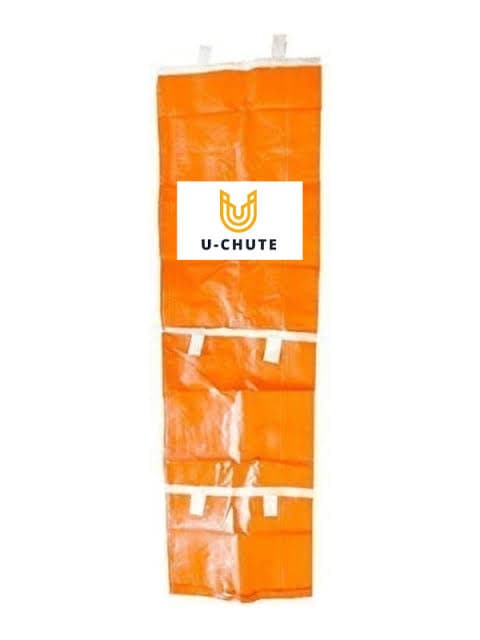
U-Chute manufactures reusable polymer-fabric trash chutes in four configurations. Each one is priced transparently online, and all ship free anywhere in the United States. Here is how the size tiers map to interior demolition use cases:
10 ft Lite-Duty
This is the entry-level option. It is designed for single-story drops — think a raised-floor renovation, a first-floor addition tearout, or a basement demo where the dumpster is at grade. Lite-duty fabric is appropriate when you are moving lighter materials: drywall, insulation, light framing scraps. It is the most affordable chute in the lineup and the easiest to set up solo.
10 ft Heavy-Duty
The same drop length as the lite-duty, but with reinforced polymer-fabric construction rated for heavier loads. If your interior demo involves tile, concrete board, thick plaster, or anything with real mass, this is the minimum you should run for a single-section setup. The price step up from lite-duty is modest and well worth it for mixed-material jobs.
25 ft Heavy-Duty
This is the workhorse for most interior demolition contractors. A 25-foot chute covers two to three story drops reliably, which covers the vast majority of residential gut-renovations and mid-rise commercial interior demo. Multiple sections stack and connect, giving you flexibility to dial in the exact drop height you need. This is where most contractors running regular interior demo work will land.
50 ft Heavy-Duty
The top-of-line configuration for taller commercial buildings, multi-story gut renovations, or any job where the debris origin point is consistently above the third floor. If you are bidding on hotel room renovations, office park strip-outs, or healthcare facility interior demolition, this is the configuration that keeps your crew safe and your schedule intact.
You can review all configuration options on our All Services page, and get straight answers about sizing on our Frequently Asked Questions page.
What Actually Drives Trash Chute Pricing
Sticker price is only part of the story. When you are evaluating trash chute pricing as an interior demo contractor, these are the cost drivers that determine your real-world spend:
Material Construction
Polymer-fabric chutes like those U-Chute manufactures are significantly lighter and more affordable than steel or aluminum alternatives, while still handling the load demands of interior demolition debris. The fabric is engineered to resist tearing from sharp edges — a real concern when you are dumping broken tile, splintered lumber, or plaster chunks. The material cost is built into the purchase price, not charged separately.
Drop Height Needed
The longer the chute configuration you need, the higher the purchase price. This is linear and predictable. Measure your typical drop height before you buy. If most of your interior demo contracts are in two-story residential homes, a 25 ft heavy-duty configuration is probably your sweet spot. If you routinely work in four-story commercial buildings, you need to budget for the 50 ft option.
Single Purchase vs. Rental Cost
Many contractors default to renting debris chutes per job. Rental fees for a single interior demo project can easily run $150 to $400 or more depending on the market and duration. A reusable chute purchased outright pays itself back after two to four uses in most cases. Because U-Chute chutes are reusable and durable, the per-job cost drops dramatically with each successive project. For a detailed breakdown, read our Trash Chute for Demolition Contractors: Cost Estimate and Complete Buying Guide.
Shipping Costs
U-Chute ships free to anywhere in the United States. That zero-dollar shipping cost should factor into any true comparison with competitors who charge freight on bulk or heavy items. Free shipping on a 50 ft heavy-duty chute is a meaningful discount versus paying to freight a comparable product.
How to Calculate Your ROI Before You Buy
The single best argument for buying a reusable trash chute is the math. Here is a simple framework interior demolition contractors can run on any job:
Step 1 — Estimate Your Manual Labor Cost Without a Chute
Count the number of trips your crew makes carrying debris from the work area to the dumpster on a typical day. Multiply trips by average time per trip (walk up, load, walk down, unload). Multiply that total time by your blended crew labor rate. On a two-story gut renovation, it is common for a three-person crew to spend one to two hours per day purely on debris transport. At $35 to $55 per labor-hour, that is $105 to $330 per crew per day lost to carrying trash.
Step 2 — Estimate Days on a Typical Interior Demo Job
A standard residential gut renovation interior demo phase might run three to seven days. A commercial strip-out might run two to three weeks. Multiply your daily labor waste by your job duration. Even on a five-day residential job, you could be hemorrhaging $525 to $1,650 in unproductive labor.
Step 3 — Compare to the Chute Purchase Price
A reusable chute eliminates most of that labor waste by letting debris flow directly to the dumpster. The chute pays for itself on the first or second job for most contractors. Every subsequent job is pure margin recovery. If you run interior demo as a regular service line, that math compounds significantly over a year of work.
Step 4 — Factor in Safety and Liability
OSHA ergonomics guidelines make clear that repetitive heavy lifting and carrying on construction sites is one of the leading sources of musculoskeletal injury. A crew member with a back injury on a gut renovation can cost you far more in workers' compensation, schedule delays, and replacement labor than the entire chute purchase price. Reducing manual carrying is not just an efficiency play — it is a risk management play.
Sizing Your Chute to the Interior Demo Job Type
Not every interior demo job is the same. Here is a practical size-matching guide based on common project types:
- Single-story slab-on-grade renovation (no basement): 10 ft lite-duty may be sufficient if there is a window or door opening at or near grade. 10 ft heavy-duty is the safer choice for mixed materials.
- Two-story residential gut renovation: 25 ft heavy-duty. This covers the typical 18 to 22-foot drop from a second-floor window to a dumpster on the driveway.
- Three-story residential or small commercial building: 25 ft heavy-duty at minimum; 50 ft if the debris loading point is on the top floor.
- Four-story and above commercial interior demo: 50 ft heavy-duty. Do not compromise on this — debris velocity from high drops requires reinforced fabric that holds up to impact loads.
- Basement demo where debris exits at grade level: 10 ft heavy-duty is usually appropriate. The drop is short but the material is often heavy (concrete, masonry, old mechanicals).
If you are working in specific markets, check out our location guides — for example, Reusable Trash Chutes in Boulder, Colorado or Reusable Trash Chutes in Asheville, NC — for regional contractor perspectives on chute selection.
Reusable vs. Single-Use Chutes: The True Cost Comparison

Some contractors purchase disposable or low-grade chutes that are only meant to last a single project. On the surface, this looks like a lower upfront cost. In practice, it is almost always more expensive over time.
The Single-Use Math Problem
If a single-use chute costs $80 to $120 and you run 20 interior demo jobs per year, you are spending $1,600 to $2,400 per year just on chutes — and getting nothing back at year's end. A reusable polymer-fabric chute from U-Chute, properly maintained, can handle dozens of projects. The annualized cost drops to a fraction of that, and the capital asset stays on your balance sheet.
The Durability Factor
Polymer-fabric construction is specifically designed to withstand the kind of abuse interior demolition debris delivers: sharp edges, variable weights, impacts from irregular-shaped materials. Cheap single-use alternatives often tear mid-job, creating a debris hazard and forcing you to stop and deal with the failure rather than staying on schedule.
Tax Treatment
A reusable chute is a depreciable business asset. A single-use consumable is just an expense. Depending on your accounting approach, the reusable chute may generate better tax treatment over time. For a detailed look at how construction chute purchases affect your tax picture, read our Construction Chute Tax Deductions for Contractors in 2026 guide. The SBA's small-business guidance also covers how to think about capital equipment decisions for growing contractor operations.
Waste Management Context: Why Debris Containment Pays Beyond Labor
Interior demolition generates an enormous volume of construction waste. EPA data on materials waste and recycling consistently shows that construction and demolition debris accounts for a substantial share of total US solid waste. Contractors who manage that debris efficiently — directing it cleanly into dumpsters rather than scattering it across a job site — gain real advantages:
- Cleaner job sites reduce debris scatter that can trigger municipal code violations or neighbor complaints, particularly in urban or dense residential settings.
- Better dumpster utilization means less overflow, fewer hauling trips, and lower dumpster rental costs. Debris that funnels directly into the container packs more efficiently than debris thrown or carried.
- Faster material sorting is possible when debris flows in a controlled stream. If you are separating recyclables from landfill material — which EPA recycling programs increasingly incentivize — a chute-fed dumpster gives you more control over the stream.
- Reduced site cleanup time at day's end. Fewer scattered materials mean less sweeping, raking, and general cleanup labor at the close of each shift.
Common Pricing Mistakes Interior Demo Contractors Make
After watching contractors across many markets approach trash chute buying decisions, the same errors come up again and again. Avoid these:
Undersizing the Chute
The most common mistake. A contractor working primarily on two-story houses buys the 10 ft lite-duty because it is the cheapest option, then discovers it does not reach the dumpster from the second-floor window without an awkward angle. Measure your drop height before you buy. Add a foot or two of buffer. Getting the size right the first time is cheaper than returning or buying a second chute.
Buying on Upfront Price Alone
The cheapest chute by sticker price is almost never the cheapest chute over a year of use. Factor in reuse cycles, durability, and the labor savings the chute generates. A $50 cheaper chute that tears after three jobs costs more than a properly constructed reusable chute that runs 30 jobs without issue.
Not Accounting for Shipping
Some contractors compare chute prices without adding freight. A competitor's chute listed at a lower price but with $75 to $150 in shipping charges may actually cost more than U-Chute's free-shipping price. Always compare total delivered cost.
Skipping Heavy-Duty When the Job Calls for It
Lite-duty chutes have their place, but interior demolition debris is often heavier than it looks. Plaster, tile, and hardwood flooring chunks can tear a lite-duty fabric, creating a mid-job hazard. If there is any doubt about material weight, step up to heavy-duty. The price difference is small; the mid-job failure cost is large.
Not Planning for Winter or Seasonal Conditions
If your interior demo work runs year-round — which it does for most contractors — factor in seasonal conditions. Frozen debris, ice, and cold-weather brittleness can affect chute performance. Make sure you understand material specifications before committing to a chute for cold-weather work. Our Winter Trash Chute Safety Regulations by State 2026 guide covers this in detail.
How to Set Up a Trash Chute for Interior Demolition: A Quick Playbook
Getting your chute deployed correctly on an interior demo job is as important as buying the right one. Here is a practical setup checklist:
- Measure the drop. Stand at the window or opening where debris will exit and measure to the top of the dumpster. That is your minimum chute length. Add 2 to 3 feet for positioning flexibility.
- Confirm the opening size. The chute needs to fit through the window, doorway, or stairwell opening. Measure the width and confirm the chute inlet diameter clears it without forcing.
- Position the dumpster directly below. Minimize angular deviation from vertical. The steeper and more direct the drop, the better the debris flow and the less stress on chute connections.
- Secure the top section. Use the chute's hanging hardware or anchor points to fix the inlet firmly at the upper opening. A poorly anchored top section is a safety hazard when heavy debris impacts it.
- Check all section connections. If you are running a multi-section chute, confirm each connection point is fully engaged before loading debris.
- Brief your crew. Designate a debris-loading procedure — no oversize chunks that can jam the chute, no heavy objects dropped from height without a spotter below, no simultaneous loading from multiple floors.
- Monitor the dumpster level. A full dumpster with debris piling up at the chute outlet creates a backup hazard. Keep the dumpster managed throughout the day.
For residential interior demo specifically, our Trash Chute for Residential Renovation Under $5,000: The Complete Buyer's Guide covers additional setup and budgeting considerations in depth.
Regional Considerations for Interior Demo Contractors
Interior demolition work happens everywhere, and local factors can affect how you think about chute pricing and selection. Urban markets like New York or dense Northeast cities have specific compliance requirements — our Trash Chute Safety Compliance Checklist New York 2026 is a useful reference if you work in or near that market.
In markets with active construction and renovation cycles — places like Sarasota, Florida, Boca Raton, Florida, and Columbia, South Carolina — interior demo contractors often run multiple simultaneous jobs, making a reusable chute even more valuable. One chute that moves from job to job beats renting a fresh chute for every project.
In colder markets like Manchester, New Hampshire, Fargo, North Dakota, or Billings, Montana, year-round interior demo work makes a durable reusable chute a particularly strong investment, since you cannot rely on outdoor staging for debris management in winter months.
Junk Removal and Mixed-Use Applications
Interior demolition contractors often overlap with junk removal operations, particularly on estate cleanouts, commercial clearouts, and renovation prep projects. If your business spans both service lines, a trash chute system earns its price across both use cases.
Junk removal in multi-story buildings — apartment buildings, commercial offices, storage facilities — creates the same problem as interior demo: debris needs to move from upper floors to a ground-level container efficiently. The chute solves that problem identically. A single chute purchase that supports your demo work and your junk removal work has an even faster ROI timeline than a single-use calculation would suggest.
Learn more about how U-Chute systems serve a range of applications on our About U-Chute Trash Chute page.
What to Look for in a Long-Term Chute Supplier
If you are running interior demolition as a regular business, the chute you buy today may not be the last one you buy. Here is what to evaluate when choosing a supplier for the long term:
- Direct manufacturer pricing. Buying direct from the manufacturer rather than through a distributor eliminates the middleman markup. U-Chute sells direct online, which keeps pricing competitive.
- Consistent product quality. The chute you buy for your next job should perform identically to the one you bought two years ago. Material consistency matters for planning and safety.
- Transparent online pricing. You should not have to call for a quote to know what a chute costs. Pricing that is visible and consistent online saves time when you are bidding a job and need to factor equipment costs quickly.
- Free shipping. Freight charges on construction equipment add up. A supplier with free US shipping nationwide is a meaningful operational advantage.
- Reachable customer support. When you have a question about sizing or a concern about a product, you want a supplier who picks up or responds quickly. Reach the U-Chute team through our Contact page.
Frequently Asked Questions
What size trash chute do I need for a two-story interior demolition job?
For a typical two-story interior demolition project, the 25 ft heavy-duty chute is the right choice for most contractors. The drop from a second-floor window to a ground-level dumpster usually measures 18 to 22 feet, and you want buffer length to position the inlet cleanly at the opening. The heavy-duty fabric is the appropriate spec for mixed interior demo materials including tile, plaster, drywall, and framing debris. Do not try to stretch a 10 ft chute with improvised extensions — that creates a debris hazard and defeats the safety purpose of using a chute in the first place.
How quickly does a reusable trash chute pay for itself on interior demolition jobs?
For most interior demolition contractors, a reusable trash chute pays for itself within two to four jobs. The primary savings come from reduced labor time — crews that no longer carry debris up and down stairs by hand recover one to two hours per day of productive labor. At typical crew labor rates, that daily savings often exceeds the daily amortized cost of the chute purchase within the first few uses. Additional savings come from fewer dumpster hauls, cleaner job sites, and reduced injury risk.
Can I use the same trash chute for both interior demolition and roofing jobs?
Yes. U-Chute's polymer-fabric chutes are designed to handle a range of construction and demolition applications, including roofing tear-offs, interior gut renovations, junk removal, and general debris management. The heavy-duty configurations in particular are built for mixed-material use. If you run both roofing and interior demo work, a single chute purchase covers both service lines, improving your return on investment even further. The key is matching the drop height to the taller of your two typical job scenarios.
Does U-Chute charge for shipping to my state?
No. U-Chute ships free to anywhere in the United States. That applies to all four chute configurations, including the 50 ft heavy-duty. When you compare pricing across suppliers, always compare total delivered cost — a lower sticker price with freight charges may end up costing more than U-Chute's all-in free-shipping price. Free shipping nationwide is a standard part of what U-Chute offers, not a promotional exception.
What is the difference between lite-duty and heavy-duty trash chutes for interior demo?
The lite-duty configuration uses a lighter polymer-fabric construction appropriate for lower-weight debris streams — think light drywall, insulation, and similar materials. The heavy-duty configurations use reinforced fabric designed to handle heavier and sharper materials without tearing: tile, plaster, concrete board, hardwood flooring, metal framing. For interior demolition specifically, heavy-duty is almost always the right call. Interior demo debris is inherently mixed and unpredictable, and the marginal price difference between lite-duty and heavy-duty is far smaller than the cost of a mid-job chute failure.
Are there compliance or safety rules I need to follow when using a trash chute on an interior demo site?
Yes. OSHA and local municipal codes typically require that debris chutes be properly anchored, that drop zones below chute outlets be barricaded, and that workers below be protected from falling debris during loading. In some states and cities, particularly in the Northeast and larger urban markets, there are specific chute-use permit requirements or inspection standards. Always check your local jurisdiction's requirements before deploying a chute. Our blog covers jurisdiction-specific compliance in guides for markets including New York — see the Trash Chute Safety Compliance Checklist New York 2026 for an example of what compliance looks like in a high-regulation market.
How many interior demo jobs can I expect to get out of a single U-Chute trash chute?
With proper setup, use, and storage, a U-Chute reusable polymer-fabric chute can handle dozens of interior demolition projects. The actual lifespan depends on how the chute is used — a crew that loads debris carefully and avoids forcing oversized chunks through the chute will see significantly more service life than one that treats the equipment roughly. Storing the chute dry and inspecting connection points and fabric seams before each job extends its useful life considerably. Many contractors who run consistent interior demo work get years of service from a single chute purchase.
Ready to Price Out Your Interior Demo Chute? Here Is Your Next Step
You now have the full picture: how chute sizes map to interior demolition job types, how to calculate your ROI before you buy, what drives real pricing differences, and what mistakes to avoid. The only thing left is to pick the right configuration for your crew and your typical project scope.
U-Chute makes that easy. All four configurations — 10 ft lite-duty, 10 ft heavy-duty, 25 ft heavy-duty, and 50 ft heavy-duty — are priced transparently online with free US shipping. No quotes, no freight surprises, no middlemen. You see the price, you choose the size, you order, and you get to work.
Visit our Debris Chute Systems page to compare configurations side by side, or contact the U-Chute team if you have a specific job scenario you want to talk through before you buy. Getting the right chute the first time is always cheaper than buying twice.