
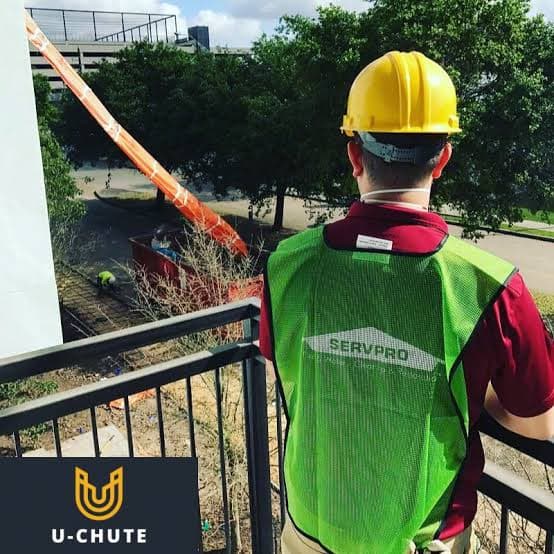
Small commercial jobs — the kind that clock in under $10,000 in total project value — rarely get the same attention as big-budget builds. Budgets are tighter, crews are leaner, and every dollar you spend on equipment has to earn its place. But here is the thing: debris management is just as critical on a 10-square rooftop replacement or a small storefront gut-out as it is on a multi-story demolition. Maybe more so, because the margin for waste (in time, cost, and safety incidents) is razor thin.
A trash chute for small commercial projects is one of the most cost-effective tools you can add to a lean job site. It keeps debris moving safely from the work level to the dumpster below, protects pedestrians and property, and cuts down the number of trips your crew makes hauling material by hand. This guide breaks down everything you need to know — from choosing the right chute size to setting it up correctly — so you get full value out of a modest investment.
Why Small Commercial Projects Need Debris Management Too
It is easy to assume a trash chute is only for skyscraper demolitions or large-scale renovation jobs. That assumption costs small commercial contractors real money every season.
Consider the math on a typical small commercial reroofing job: two workers, a two-day timeline, and roughly 4 to 6 tons of tear-off shingles. Without a chute, that material gets tossed over the edge — or worse, carried down ladders — creating hazards for anyone passing below, risking property damage, and burning time your crew should spend on the actual work.
The Hidden Costs of Skipping a Chute
- Labor drain: Manual debris carry-down averages 30 to 45 minutes of productive labor per ton on a two-story structure. On a small job that cannot spare any slack, that is significant.
- Liability exposure: Tossing debris without directional control is a real OSHA concern. OSHA ergonomics guidelines address the musculoskeletal risks of manual material handling — a chute eliminates most of that risk on descent.
- Property damage: A falling chunk of concrete or bundle of old shingles landing on a client's HVAC unit or signage turns a profitable small job into a painful claims conversation.
- Dumpster overflow: Without directed deposit, debris scatters around the bin and blows into adjacent lots, which can trigger local ordinance fines.
The point is simple: the budget is small, but the consequences of poor debris management are not. A reusable polymer-fabric chute that ships free and costs a fraction of the job value is an easy decision when you frame it that way.
Understanding the Budget Reality: Projects Under $10,000
A project in the $3,000 to $10,000 range is a daily reality for roofing companies, junk removal crews, light demolition contractors, and small remodeling outfits. This bracket typically includes:
- Small commercial roof replacements (flat roofs, 1,000 to 3,000 square feet)
- Storefront interior gut-outs and build-outs
- Retail space light demolition
- Restaurant kitchen renovation debris removal
- Small office strip-outs and drywall demo
- Junk removal from small commercial properties
Equipment spending on jobs at this level is typically constrained to 5 to 15 percent of the project value. That means your debris management solution needs to come in under $500 to $1,500 in most cases — and it needs to be reusable across multiple future jobs to justify itself fully. That is exactly where a quality polymer-fabric chute from U-Chute Trash Chute fits.
One-Time Purchase vs. Renting Every Job
Renting a chute system through an equipment dealer often runs $75 to $200 per day, plus delivery fees. On a three-day small commercial job, that is $225 to $600 before you factor in logistics. Buy a reusable chute once and it pays for itself within two or three jobs — then every future deployment is pure savings on the equipment line.
See our reusable trash chute price breakdown by size to compare the cost tiers across U-Chute's four available configurations.
Choosing the Right Chute Size for a Small Commercial Job
U-Chute manufactures four sizes. Understanding which one fits your small commercial project is the first real decision to make. The wrong size either leaves you short on reach or saddled with unnecessary weight and cost.
10 ft Lite-Duty: The Tight-Budget, Single-Story Option
The 10 ft lite-duty chute is built for single-story structures and light debris loads. Think a one-story retail strip mall rooftop, a residential-adjacent small commercial demo, or a junk removal job where you are clearing lightweight materials from a low elevation. It is the most affordable entry point and handles jobs where the drop height does not exceed roughly one story.
- Best for: 10 to 14 foot drop heights
- Material type: lighter debris — drywall scraps, packaging, light demolition waste
- Typical use case: storefront cleanouts, small restaurant dumpster-adjacent clearing
10 ft Heavy-Duty: Single-Story With More Punch
Step up to the heavy-duty construction if you are dealing with heavier material at single-story heights — asphalt shingles, concrete fragments, tile, or denser commercial flooring tear-out. The polymer fabric handles the impact loading that lite-duty cannot absorb as reliably over many cycles.
25 ft Heavy-Duty: The Sweet Spot for Most Small Commercial Work
For most small commercial jobs in the two- to three-story range, the 25 ft heavy-duty is where most buyers land. It covers the majority of commercial structure heights in that category — two-story retail, small office buildings, two-story restaurant demolitions — while remaining manageable for a small crew to rig and configure. This is arguably the most versatile option for the under-$10,000 project bracket.
You can review the full technical breakdown in our complete 50 ft heavy-duty construction chute specifications guide, which also covers how the modular sections stack across all sizes.
50 ft Heavy-Duty: For Taller Small-Commercial Structures
Some small commercial buildings punch above their weight in height. A narrow three-to-five story professional office building can still be a modest-budget demo job if the scope is limited. If your drop height exceeds 25 feet, the 50 ft heavy-duty chute gives you the reach you need without forcing you into expensive specialty rentals.
How Polymer-Fabric Chutes Perform on Commercial Job Sites
Contractors unfamiliar with polymer-fabric construction chutes sometimes wonder how they hold up against metal or rigid alternatives. The short answer is: very well, with significant practical advantages for small commercial operations.
Weight and Portability Advantages
A rigid metal chute system is heavy, requires more crew to rig, and demands a dedicated equipment vehicle. Polymer-fabric chutes are lightweight by comparison. A small crew of two can handle setup and breakdown without specialty rigging equipment. For contractors running lean — which is most small commercial operators — that translates directly into lower labor costs per deployment.
Durability and Reuse Cycles
The reusable nature of the polymer-fabric build is critical for the ROI math. These are not single-use disposable liner products. A well-maintained chute goes job after job, amortizing its purchase price across dozens of projects. Proper rinse-and-store maintenance between uses extends service life significantly.
For seasonal maintenance considerations, the winter construction debris chute safety checklist covers material care in cold-weather climates — relevant for contractors in northern states who winterize their equipment.
Versatility Across Debris Types
Small commercial projects generate a surprisingly wide mix of debris. On a single storefront gut-out you might move drywall, tile, metal conduit, wood framing, and commercial ceiling tiles. A well-built polymer-fabric chute handles this range without needing debris-type-specific accessories. That flexibility matters when your job mix varies week to week.
Setting Up a Trash Chute on a Small Commercial Site: Step-by-Step
Proper setup is where many first-time chute users underperform. A correctly rigged chute is faster to load, safer for ground-level workers, and puts debris exactly where you want it.

Pre-Setup Planning Checklist
- Measure your drop height accurately. Account for rooftop parapet height or slab overhang — your chute needs to reach from the debris source to within safe distance of the dumpster opening.
- Position the dumpster before rigging the chute. The chute exit should clear the dumpster sides without resting inside. A free-hanging exit 12 to 18 inches above the dumpster rim works well.
- Identify your anchor points. On commercial structures, common anchor points include parapet walls, window openings, scaffold frames, and roof hatches. Have securing straps and rope rated for the load ready.
- Establish a ground-level exclusion zone. Mark a minimum 6-foot perimeter around the dumpster drop area. No pedestrian access during active use.
- Check local permit requirements. Some municipalities require a chute permit for right-of-way setups. Verify before you start.
Rigging the Sections
- Connect sections starting at the top anchor point and work downward.
- Each section should overlap the one below by the recommended distance — check the product documentation for your specific chute model.
- Secure the top section to the anchor point with load-rated straps. The top is where lateral forces concentrate during debris loading.
- Do not over-tension straps — the chute should hang with controlled drape, not be pulled taut at angles that could shift the exit direction.
Active-Use Safety Protocol
- Load debris in controlled volumes — do not dump a full wheelbarrow at once into the top opening. Feed debris progressively to prevent jamming or load spikes.
- Post one crew member near the base during active loading to monitor the exit and flag any blockage signs.
- Never allow personnel in the ground exclusion zone while the chute is being loaded above.
For roofing-specific setup scenarios, the complete contractor guide to roofing demolition debris chute setup goes deep on anchor configurations for sloped and flat commercial roofs.
Common Mistakes Small Commercial Contractors Make With Debris Chutes
Learning from common errors saves you time, money, and avoidable site incidents. Here are the mistakes that come up most often on small commercial jobs.
Undersizing the Chute
Buying the lite-duty version because it is the cheapest option, then using it for heavy commercial tile or shingle loads, accelerates wear and risks fabric failure under impact. Match the chute to the actual debris weight and drop height, not just the purchase price.
Skipping the Exclusion Zone
On small commercial sites — particularly in active retail areas or urban storefronts — foot traffic around the dumpster is constant. Assuming debris will land cleanly in the bin without establishing a physical barrier is a liability risk. Use cones, tape, and signage every time.
Improper Storage Between Jobs
Leaving a wet chute folded in the back of a truck for two weeks introduces mold, accelerates fabric degradation, and creates odor problems. After each use, rinse, dry, and store in a clean bag or container. A chute that is maintained properly lasts dramatically longer than one that is not.
Ignoring Drop Height Math
Measuring drop height from the roof edge to the ground is not the same as measuring from the roof edge to the dumpster opening. If your dumpster sits inside a loading dock that is 3 feet below grade, your effective drop is 3 feet longer. Measure the actual debris travel distance, not the nominal building height.
Debris Chutes for Specific Small Commercial Industries
Different small commercial sectors have distinct debris profiles. Here is how a trash chute fits into each context.
Roofing Contractors
Roofing is the highest-volume single-use case for construction trash chutes in the small commercial bracket. Shingle tear-off, felt underlayment, metal flashing, and nails all need to move fast and land in the bin. A 25 ft heavy-duty chute covers most two-story commercial roof replacements cleanly. Roofers in markets like Asheville, NC or Boulder, Colorado deal with varied building heights and terrain — having the right chute size on the truck every day saves setup delays.
Junk Removal Companies
Junk removal crews on commercial cleanout jobs — office liquidations, storage facility clear-outs, small warehouse purges — move high volumes of mixed material fast. A chute speeds the process significantly when the structure has two or more stories, turning a four-hour manual carry-down into a far shorter operation.
Light Demolition Contractors
Interior gut-outs on small commercial properties generate a concentrated surge of heavy debris — drywall, framing, concrete block, flooring. The 25 ft or 50 ft heavy-duty options handle this category. Contractors serving markets like Charleston, West Virginia or Columbia, SC regularly take on two- to three-story commercial demo work in this scope range.
Remodeling and Build-Out Crews
Retail build-outs and restaurant renovations generate ongoing debris streams throughout the project. Having a chute available for demolition phases and rough framing stages — then breaking it down for finish work — is an efficient workflow that many small commercial remodeling outfits adopt after their first use.
Logistics: Ordering, Shipping, and Getting to Work Fast
For small commercial contractors, speed-to-job matters. You should not have to wait a week and pay freight fees for a basic piece of debris management equipment.
U-Chute ships all four chute sizes free anywhere in the United States. The process is direct: choose your size on the site based on drop height and debris type, place the order, and receive the chute ready to deploy. There are no dealer intermediaries adding markup, no rental logistics to coordinate, and no delivery fees eating into the project margin.
If you serve multiple markets across regions — say, roofing projects in Sarasota, Florida in winter and Fargo, North Dakota in warmer months — the chute ships to wherever you need it, and it travels with your rig afterward.
For a detailed look at the all-in cost across project scopes, the 2026 trash chute cost estimator by project scope gives you the numbers to put into your bid worksheets.
Environmental Considerations for Small Commercial Debris Management
Environmental compliance is increasingly relevant even on small commercial jobs. Many municipalities now require construction debris diversion documentation, and clients in certain sectors — healthcare, education, retail — have their own sustainability requirements that flow down to contractors.
Using a reusable chute rather than disposable single-use systems is a concrete step in the right direction. Beyond the chute itself, proper debris channeling into segregated dumpsters (recyclable material separate from landfill-bound waste) supports diversion compliance. The EPA's materials waste and recycling data consistently shows that construction and demolition debris is one of the largest waste streams in the country — making organized, directed debris management a real contribution to reducing landfill loads.
For contractors who want to position their small commercial services as sustainability-conscious, the combination of a reusable chute system and documented debris sorting is a talking point worth including in client proposals. The EPA's recycling overview is a useful reference for understanding what categories of construction debris are recyclable and what downstream options exist in most markets.
Spring and Summer Peak Season: Maximizing Your Chute Investment
Small commercial project volume concentrates heavily in spring and summer across most of the country. Roofers, demolition crews, and remodeling contractors all see their busiest weeks between March and September. Having a chute already in your equipment inventory when the season ramps up — rather than scrambling to rent one when demand peaks and availability tightens — is a straightforward competitive advantage.
The spring construction debris cleanup tips for contractors in 2026 covers seasonal workflow adjustments that pair well with a properly equipped debris management setup. Contractors who pre-equip before the season rather than react to each job's needs run smoother operations and turn more projects per season.
Frequently Asked Questions
What size trash chute do I need for a typical small commercial roofing job?
For most small commercial roofing jobs on one- to two-story structures, the 25 ft heavy-duty chute covers the majority of drop heights. If you are working on a single-story flat roof with a drop of 10 to 14 feet, the 10 ft heavy-duty option may be sufficient. Measure your actual drop from the work surface to the dumpster opening — not just the building height — before selecting a size. When in doubt, the 25 ft version gives you flexibility across multiple job types.
Is a trash chute worth buying for just one or two small commercial jobs?
Yes, particularly if the alternative is renting. Equipment rental for a debris chute typically runs $75 to $200 per day before delivery fees. A single purchase from U-Chute pays for itself in two to three job deployments and ships free anywhere in the US. If you do any volume of small commercial work — even a handful of jobs per season — the math strongly favors a one-time purchase over repeated rentals.
Can I use a polymer-fabric chute for heavy commercial debris like concrete or tile?
Yes, with the right model. The heavy-duty polymer-fabric chutes are designed for dense, high-impact commercial debris including concrete fragments, tile, asphalt shingles, and commercial flooring material. Use the lite-duty version only for lighter debris loads. Overloading a lite-duty chute with heavy material accelerates wear and can cause premature fabric failure. Match the product specification to your actual debris type and load weight.
Do I need a permit to use a construction trash chute on a small commercial site?
Permit requirements vary by municipality. If the chute and dumpster are entirely on private property, permits are typically not required. When the setup extends into a public right-of-way — sidewalk, parking lane, or alley — most cities require a right-of-way or encroachment permit. Check with your local building or public works department before setup. In urban commercial districts especially, a quick call to the permit office saves potential fines.
How do I maintain a reusable trash chute between jobs?
After each use, remove any material buildup from inside the sections. Rinse the fabric with a hose if debris residue remains. Allow the sections to dry fully before storing — folded wet fabric held for extended periods can develop mold or odor problems and accelerates material degradation. Store in a clean, dry bag or container in your vehicle or warehouse. Proper maintenance between jobs dramatically extends the service life and protects your investment across dozens of future deployments.
What safety measures are required when using a debris chute on a small commercial site?
Establish a clearly marked ground-level exclusion zone around the dumpster — a minimum 6-foot perimeter — and keep all non-essential personnel out during active loading. Secure the top anchor point with load-rated straps rated for the expected debris weight. Feed debris progressively rather than dumping large volumes at once to prevent blockage or load spikes. Post signage at the perimeter warning of overhead debris hazard. These basic protocols align with general OSHA guidance on managing overhead hazards during construction and demolition work.
Does U-Chute ship to all US states?
Yes. U-Chute offers free shipping on all four chute sizes to anywhere in the United States. Whether you are based in a major metro or running projects in a rural market, there are no regional surcharges or delivery fees. Orders are placed directly on the website. For any questions about your specific order or delivery, the contact page and FAQ are the best starting points.
Ready to Equip Your Small Commercial Operation With the Right Trash Chute?
A trash chute for small commercial projects does not need to be complicated or expensive. The right polymer-fabric chute — matched to your drop height and debris type, purchased once, and deployed across many jobs — is one of the most cost-efficient equipment decisions a lean contractor can make.
Browse the full lineup of U-Chute sizes and configurations on the debris chute systems page. All sizes ship free across the US. Find the chute that fits your project, place your order, and get to work.