
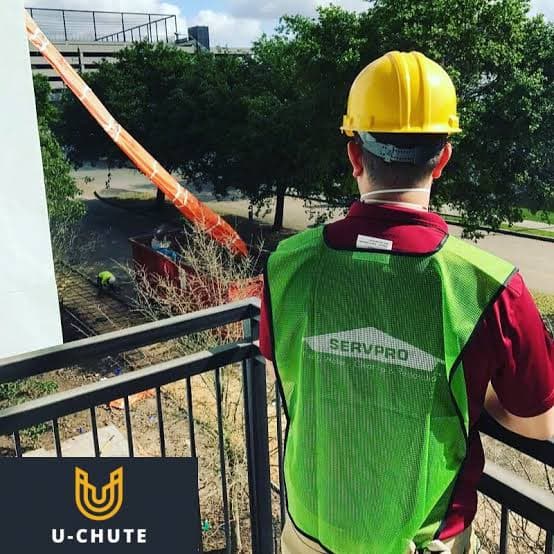
Apartment buildings generate a staggering volume of debris — during renovation, roofing work, gut-out demolition, or even routine junk removal between tenants. If you're a contractor, property manager, or demo crew working on a multi-story residential building, moving that material from upper floors to a dumpster is one of the most physically demanding and time-sensitive parts of the job.
That's exactly where trash chutes for apartment buildings earn their keep. The right chute system turns a slow, back-breaking process into a smooth, gravity-powered operation — keeping your crew safer, your timeline tighter, and your job site cleaner. This guide covers everything from how chutes work in a residential high-rise context to sizing, setup, safety compliance, and what to look for when you're choosing equipment.
Why Apartment Buildings Create Unique Debris Challenges
Multi-story residential buildings aren't like single-family homes or commercial warehouses. The structure itself creates the challenge: material needs to travel vertically, through tight stairwells or over balcony railings, before it ever reaches ground level. Manual carry-down methods are slow, exhausting, and genuinely dangerous.
Consider what a typical apartment renovation project might involve:
- Drywall removal from multiple units across several floors
- Flooring tear-out — tile, hardwood, laminate, subfloor
- Kitchen and bathroom gut-outs with heavy fixture debris
- Roofing tear-off from the top of the structure
- Junk removal between tenants (furniture, appliances, bagged trash)
Multiply any of those scenarios across a 6-story, 10-story, or even 3-story walk-up and you have a serious logistics problem. Workers carrying heavy loads down stairs trip, strain muscles, and slow the whole job down. OSHA's ergonomics guidelines make clear that repeated manual lifting and carrying of heavy loads is one of the leading causes of musculoskeletal injury on job sites — and apartment building work is a textbook case of that hazard.
The Stairwell Problem
Even in buildings with elevators, using them for debris removal is usually off the table — property managers protect their elevator interiors, and building policies often prohibit construction traffic in resident-use elevators. That pushes everything into the stairwells, where narrow landings and tight turns make carrying large pieces of debris genuinely precarious.
The Noise and Resident Disruption Factor
Occupied apartment buildings add another layer of complexity: residents are still living there. Constant foot traffic up and down stairwells, debris being dragged across floors, and dumpster drops happening at random intervals throughout the day all create friction with property management and residents alike. A properly set-up chute system consolidates that chaos into a predictable, contained flow.
How Trash Chutes Work on Multi-Story Residential Projects
The core principle is simple: gravity does the work. A trash chute is a connected series of sections that funnel debris from an upper-floor opening down to a dumpster or waste pile at ground level. Workers load material into the top — through a window, over a balcony railing, or from a rooftop — and it slides down to the container below without anyone carrying it a single flight of stairs.
For a detailed breakdown of the mechanics, our guide on how trash chutes work covers the full process from setup to teardown. The short version for apartment building applications:
- Identify the drop point — typically a window opening, balcony edge, or roof edge above the dumpster location.
- Select the right chute length to match your drop height (more on sizing below).
- Secure the top of the chute to the building using straps, scaffold hooks, or a window bracket.
- Position the dumpster or debris pile at the bottom so the chute's outlet directs material in cleanly.
- Load debris into the top inlet and let gravity handle the rest.
Reusable polymer-fabric chutes like the ones U-Chute manufactures are particularly well-suited to apartment buildings because they're lightweight enough for one or two workers to carry up to an upper floor, flexible enough to navigate modest offsets in the building's profile, and durable enough to handle repeated heavy loads without tearing.
Choosing the Right Chute Size for Apartment Building Work
Sizing is where contractors most often make mistakes — either undershooting the drop height and rigging a hazardous workaround, or overbuying length they don't need. U-Chute's lineup covers the most common scenarios in apartment building work across four sizes:
- 10 ft lite-duty: Light residential junk removal, single-story drop scenarios, or low-volume between-tenant cleanouts.
- 10 ft heavy-duty: Short drops with heavier material — tile, drywall, minor demolition debris from second or third-floor units.
- 25 ft heavy-duty: Mid-rise work, typically covering 3-to-6-story apartment buildings depending on ceiling height and the mounting point's elevation above ground.
- 50 ft heavy-duty: Taller buildings, rooftop drops on 5-to-8-story structures, or any project where you need maximum reach without piecing together workarounds.
How to Calculate the Drop Height You Actually Need
Don't just count floors — measure the actual vertical distance from your planned loading point to the top of your dumpster or debris pile. A standard apartment floor-to-floor height is roughly 9 to 10 feet, but older buildings can run taller, and the loading point may be a window sill rather than the floor surface. Add a few feet of buffer so the outlet end sits inside or directly over the dumpster without whipping around.
For a 4-story apartment building with a rooftop loading point, your drop to a dumpster sitting at grade might be 40 to 45 feet — which puts the 50 ft heavy-duty chute in the right range. For a 3-story building with a third-floor window drop, 20 to 25 feet to the dumpster top is common, making the 25 ft heavy-duty the right call.
Stacking Sections for Custom Heights
U-Chute's sections are designed to stack, which means you can match the chute length precisely to your project's drop height rather than choosing the next size up and dealing with excess material pooling on the ground. This matters on apartment building sites where the dumpster is often in a parking lot, alley, or tight courtyard — extra chute length flopping around at the bottom creates a tripping hazard and directs material outside the dumpster.
Apartment Building Setup Scenarios: Real-World Examples
Theory is useful, but contractors learn best from situations they recognize. Here are three common apartment building scenarios and how a chute system fits each one:
Scenario 1: Third-Floor Gut-Out Renovation
A contractor is renovating six units on the third floor of a 1970s apartment complex — full kitchen and bathroom demo, drywall removal, flooring tear-out. The building's windows open outward and the dumpster placement is directly below in the parking lot. Drop from window sill to dumpster top: approximately 18 feet. The 25 ft heavy-duty chute provides ample reach with a controlled outlet angle into the container. Workers load debris through the open window; no stairwell hauling required.
Scenario 2: Roofing Tear-Off on a 5-Story Building
A roofing crew is tearing off a built-up roof on a 5-story apartment building in a dense urban neighborhood. The drop from the roof parapet to the dumpster in the alley below is approximately 48 feet. The 50 ft heavy-duty chute handles the full drop with the outlet directed cleanly into the container. The crew loads old roofing material — shingles, membrane, insulation — directly from the roof surface into the chute's inlet. Roof debris reaches the dumpster in seconds instead of minutes per load.
Scenario 3: Between-Tenant Junk Removal in a Walk-Up
A junk removal company is clearing out a vacated unit on the fourth floor of a 1920s walk-up with no elevator. Furniture, appliances, and bagged junk need to reach the dumpster on the street. The 25 ft heavy-duty chute is rigged from the fourth-floor window. Smaller items and bags go straight down the chute; larger pieces are broken down or staged at the window for direct loading. The job that would have taken a crew half a day of stairwell hauling is finished in a fraction of the time.
Safety Considerations for Chute Use on Apartment Buildings
Running a chute on an occupied or semi-occupied residential building requires extra attention to safety — both for your crew and for residents and bystanders below.

Secure the Landing Zone
Before the first piece of debris goes down, the area below the chute outlet must be controlled. Use construction fencing, cones, or barriers to keep residents, pedestrians, and vehicles clear of the dumpster zone. Designate one crew member as a ground-level spotter during active loading. Post signage on building entrances warning residents of overhead work if the chute passes near any exterior walkway or entrance.
Secure the Chute at the Top
An unsecured chute inlet is a hazard. The top section needs to be firmly anchored to the building — typically using scaffold hooks, ratchet straps through the window frame, or dedicated mounting hardware. The chute should not be able to shift or swing under load. Check the anchor points before each work session, especially if the chute has been left in place overnight.
Load Size and Rate Control
Don't overfeed the chute. Large chunks of masonry, concrete blocks, or heavy appliance parts can jam mid-chute or blow out the outlet with dangerous force. Break large pieces down to manageable sizes before loading. Set a pace — load, wait for the material to clear the outlet, then load again. This prevents buildup inside the chute that can create pressure and unpredictable discharge.
OSHA Compliance on Residential Sites
OSHA's construction safety standards apply to apartment building renovation work just as they do to commercial sites. Proper personal protective equipment, fall protection at any loading point above 6 feet, and controlled access to the debris zone are all non-negotiable. A trash chute system actually supports OSHA compliance by reducing the manual carry-down trips that put workers at the greatest ergonomic and fall risk. For more on compliance specifics, OSHA's ergonomics resource center is a solid starting point for understanding load-handling requirements.
Environmental and Waste Management Considerations
Apartment building renovations and demolitions generate significant quantities of mixed debris — and increasingly, contractors are expected to sort and divert recyclable materials rather than landfilling everything. A well-organized chute system actually supports better waste sorting because it concentrates material flow into a predictable stream.
When the dumpster is positioned at the chute outlet, it's practical to separate dumpsters by material type: one for general debris, one for clean drywall that can be recycled, one for metal. Workers feed each type down on a schedule or sort at the outlet. This approach aligns with EPA guidance on construction and demolition waste management, which highlights the significant recycling potential in C&D material streams.
For contractors who want to go deeper on this, our guide to construction debris recycling covers how to find local recycling options and structure your debris stream to meet those requirements.
Reusable Chutes Reduce Waste Themselves
It's worth noting that reusable polymer-fabric chutes have a meaningful environmental advantage over single-use alternatives. A U-Chute heavy-duty system is designed to be used across multiple projects — not discarded after one job. That means less plastic waste from your operation over time, which matters both for environmental responsibility and for EPA recycling and waste reduction goals that are increasingly embedded in municipal contracting requirements.
Trash Chutes vs. Manual Carry-Down: The Real Cost Comparison
Contractors sometimes hesitate on chute equipment because of the upfront cost. The comparison looks very different when you account for real labor costs on a multi-day apartment building project.
- Manual carry-down: Two workers carrying debris down three flights of stairs make, on average, 4-6 trips per hour depending on load size and fatigue. At a loaded labor rate of $35-55 per worker per hour, that's significant cost per cubic yard of debris removed.
- With a trash chute: One worker at the loading point feeds debris continuously while one worker manages the dumpster zone. The throughput per hour increases substantially, and the physically demanding carry trips are eliminated entirely.
- Injury risk: A single soft-tissue injury from a stairwell carry — a twisted ankle, a strained back — costs far more in workers' comp, lost labor, and schedule disruption than a chute system that prevents the incident entirely.
Reusable chutes amplify the value further. Unlike a one-time rental, a purchased U-Chute system is an asset that travels from project to project. For demolition contractors, junk removal companies, and roofing crews that regularly work on multi-story residential buildings, the equipment pays for itself across a handful of jobs.
Who Uses Trash Chutes on Apartment Building Projects
It's not just demo contractors who benefit from chute systems on residential buildings. The range of trades and services that encounter multi-story debris challenges is broader than most people assume:
- General contractors managing full apartment renovations or gut rehabs
- Roofing companies doing tear-offs on flat or low-slope apartment roofs
- Junk removal crews handling between-tenant cleanouts or estate cleanouts in multi-story buildings
- Flooring contractors doing large-scale flooring replacement across multiple units
- Property management companies coordinating self-managed renovations on their own portfolios
- Restoration contractors removing fire- or water-damaged materials from upper floors
U-Chute's direct-sale model means any of these businesses can purchase the right size chute online, receive it with free US shipping, and have it on the job within days. There's no rental coordination, no return logistics, and no per-day cost accumulating while the project runs long. See the full lineup on our debris chute systems page.
Apartment Building Chute Setup: Step-by-Step
Setting up a trash chute on an apartment building for the first time is straightforward if you follow a logical sequence. Here's a field-ready setup checklist:
- Assess the site: Identify the drop point (window, balcony, roof), measure the vertical drop to the dumpster top, confirm the dumpster can be positioned directly below.
- Select chute size: Match the total chute length to the drop height with a few feet of buffer. Stack sections as needed.
- Establish the exclusion zone: Fence or cone off the area below the chute outlet before any setup work begins. Post signage on building access points.
- Carry chute sections to the loading floor: Lightweight polymer-fabric sections can be carried up stairs by one person. No heavy equipment required.
- Anchor the top section: Use scaffold hooks, ratchet straps, or a window bracket to secure the chute inlet to the building structure. Test the anchor before loading.
- Connect sections: Follow the section connection method for your chute system — typically overlap and strap connections that take seconds to complete.
- Verify outlet position: Walk down to confirm the chute outlet is positioned over the dumpster opening, not over the edge or onto the ground.
- Brief the crew: Confirm load size limits, loading pace, and ground-level spotter responsibilities before work starts.
- Begin loading: Feed debris into the inlet at a controlled pace. Monitor the outlet and dumpster fill level throughout the job.
For related tips on seasonal prep and site cleanup planning, our spring construction debris cleanup guide has practical advice that applies to apartment building projects year-round.
Common Mistakes Contractors Make with Apartment Building Chutes
Even experienced contractors make avoidable errors when running chutes on multi-story residential buildings. Here are the most common and how to sidestep them:
Undersizing the Chute for the Drop
Choosing a 25 ft chute for a drop that's actually 30 feet means the outlet sits at an awkward angle or doesn't reach the dumpster cleanly. Always measure, don't estimate. A short chute on a tall drop is a debris scatter problem waiting to happen.
Skipping the Exclusion Zone
In occupied apartment buildings, residents use exterior areas — parking lots, courtyards, side entrances — throughout the workday. Assuming the area below will stay clear without barriers is a serious mistake. Set up physical barriers and check them throughout the day.
Loading Too Fast or Too Heavy
Momentum builds in a long chute. A crew that feeds material too rapidly creates a compression wave inside the chute that can generate force at the outlet well beyond what the dumpster and surrounding area can safely absorb. Load at a controlled pace and keep oversized pieces out of the chute inlet.
Not Checking Anchor Points After Wind or Weather
An overnight wind event can loosen strap anchors. Check all mounting points at the start of each workday, especially on exterior drops where the chute is exposed to wind load throughout the evening.
Trying to DIY a System from Scratch
It's tempting to cobble together a homemade chute from tarps or plastic sheeting, especially for a one-off job. The risks — material failure mid-drop, inadequate anchor points, inconsistent outlet positioning — usually outweigh the savings. Our guide on homemade construction chutes breaks down exactly what that tradeoff looks like in practice.
Market Trends: What's Changing for Apartment Building Debris Management in 2026
The apartment construction and renovation market in 2026 is being shaped by several converging pressures that make efficient debris management more important than ever:
- Aging housing stock: A large portion of the US multifamily housing inventory was built in the 1960s through 1980s. Full gut renovations and unit upgrades are surging as property owners modernize aging buildings, generating substantial debris volumes floor by floor.
- Tighter municipal waste rules: Cities across the country are updating construction waste ordinances to require higher diversion rates from landfills. Contractors who can demonstrate organized debris handling — which a chute system supports — are better positioned to meet permit conditions.
- Labor cost pressure: With skilled construction labor remaining expensive, any system that reduces the number of worker-hours spent on non-skilled material handling tasks (like stairwell hauling) directly protects job margins.
- Insurance and liability awareness: Property owners and GCs are more attentive than ever to on-site safety practices. A crew running a proper chute system with exclusion zones and anchor checks presents lower liability exposure than one doing manual carry-downs with no fall protection protocol.
For a broader look at where the debris management market is heading, our Q1 2027 trash chute market trends post covers what contractors should be watching for in the near term.
Frequently Asked Questions
What size trash chute do I need for a 4-story apartment building?
For a 4-story apartment building, the right chute size depends on your specific drop height — not just the floor count. A typical 4-story building has a roof or top-floor window height of roughly 35 to 45 feet above grade. Measuring from your loading point to the top of your dumpster will give you the actual drop. In most cases, the 50 ft heavy-duty chute provides the right reach for a 4-story drop from a roof or upper-floor window, while the 25 ft heavy-duty may be sufficient for lower-floor window drops on the same building.
Can trash chutes be used on occupied apartment buildings?
Yes, trash chutes are regularly used on partially occupied apartment buildings during renovation or roofing projects. The key requirements are establishing a secure exclusion zone below the chute outlet, posting clear signage for residents, coordinating loading hours with property management to minimize disruption, and ensuring the chute path doesn't pass in front of occupied unit windows or active building entrances. Proper setup and crew briefing make chute use safe and compliant on occupied residential sites.
How do I anchor a trash chute to an apartment building window?
The most common method is to use ratchet straps or scaffold hooks fed through the open window frame and secured to the window's structural surround or a horizontal brace placed across the interior of the window opening. The goal is a secure anchor point that keeps the chute inlet stable under repeated loading without damaging the window frame. Some contractors use dedicated window bracket hardware designed for chute mounting. Always test the anchor by applying manual load before feeding debris through.
Are reusable trash chutes worth buying vs. renting for apartment building projects?
For contractors and property management companies that regularly work on multi-story residential buildings, purchasing a reusable chute system is almost always the better financial decision over time. Rentals accumulate per-day costs and require coordination logistics. A purchased U-Chute system ships free, is ready to deploy on demand, and travels from project to project as a durable asset. The break-even point against rental costs typically occurs within just a few projects, making ownership the more economical choice for any contractor doing regular multi-story work.
What materials can be safely sent down a trash chute on an apartment building project?
Heavy-duty polymer-fabric chutes handle a wide range of construction debris: drywall sections, flooring materials (tile, hardwood, laminate), bagged trash and junk, roofing material including shingles and membrane, light framing lumber, and general demolition debris. Materials to avoid include extremely heavy concentrated loads like solid concrete blocks or large stone pieces, which should be broken down before loading. Liquids, hazardous materials, and anything that could puncture the chute fabric should never be fed into the system.
Do trash chutes require a building permit to use on apartment buildings?
In most jurisdictions, using a construction trash chute on an apartment building does not require a separate permit beyond the standard building or demolition permit already issued for the project. However, requirements vary by municipality. Some cities require notification or approval from the building department if the chute extends over public sidewalks or ROW. Always check with the local authority having jurisdiction before setup, especially in dense urban areas where the dumpster may be placed in a street parking lane under a temporary encroachment permit.
How do I keep the dumpster zone safe when running a chute on an apartment building?
Establish a physical exclusion zone using construction fencing, barricades, or cones around the entire dumpster area — not just directly under the outlet. Post clear signage on the building at all accessible points warning of overhead debris work. Assign a dedicated ground-level spotter during active loading hours whose sole job is monitoring the exclusion zone and communicating with the loading crew via radio or signal. At the end of each workday, confirm the dumpster lid or cover is in place if the site is in a pedestrian area.
Ready to Equip Your Crew for Apartment Building Work?
Whether you're running a full gut renovation on a 6-story complex or clearing out units on a 3-story walk-up, the right trash chute system makes the debris side of the job faster, safer, and more cost-effective. U-Chute's reusable polymer-fabric chutes are built for exactly this kind of work — lightweight enough to carry upstairs, durable enough to handle heavy loads repeatedly, and sized to match whatever drop height your project demands.
All four sizes ship free anywhere in the United States. No rental coordination, no per-day fees, no waiting on a truck — just order the size you need, receive it, and get to work. Visit our debris chute systems page to see the full lineup and choose the right chute for your next apartment building project. Have questions about sizing or setup for a specific job? Our FAQ page covers the most common scenarios, or reach out directly and we'll help you get the right equipment for your project.