

Every roofing contractor knows the moment a tear-off gets rolling, the debris problem becomes very real, very fast. Shingles, underlayment, nails, rotted decking — it all has to come off the roof and land somewhere safe. How you move that material from the eave to the dumpster below is one of the most consequential workflow decisions on any job. Done right, it protects the homeowner's property, keeps your crew off the ladder carrying heavy loads, and keeps the job site clean enough to satisfy any inspector. Done wrong, it costs you in callbacks, liability claims, and wasted labor.
Trash chutes for roofing are the professional answer to this challenge. This guide covers everything — why they matter, how to size them, how to rig them safely, common mistakes to avoid, and how to get the most value out of a reusable polymer-fabric chute across dozens of jobs.
Why Roofing Debris Management Is a Bigger Deal Than Most Contractors Admit
It is tempting to think of debris removal as the unglamorous part of roofing — something you just deal with. But poor debris management quietly inflates your job costs and exposes you to real risk. A roofer tossing shingles directly off the edge can send a bundle of three-tab straight through a fence panel, into a flower bed, or onto a parked car. Even if the homeowner says nothing at the time, that damage can surface as a dispute weeks later.
Beyond property damage, there is the physical toll on your crew. Carrying debris down a ladder is tiring and dangerous. OSHA's ergonomics guidance consistently identifies repetitive heavy-load carrying as a leading driver of musculoskeletal injury in construction. A crew that is hauling shingles down a ladder all day is a crew that gets hurt and slows down. A well-rigged chute eliminates that entirely.
The Hidden Labor Cost of Not Using a Chute
Time-and-motion studies on roofing tear-offs consistently show that manual debris handling — carrying loads down, staging them, moving them again to the dumpster — can consume 20 to 30 percent of total tear-off labor. On a large residential reroof, that is two to four crew-hours lost to pure logistics. Multiply that across a season and the cost is significant. A properly deployed chute channels debris directly into the dumpster or onto a tarp in one controlled motion, compressing that labor cost dramatically.
What Trash Chutes for Roofing Actually Are (and What They Are Not)
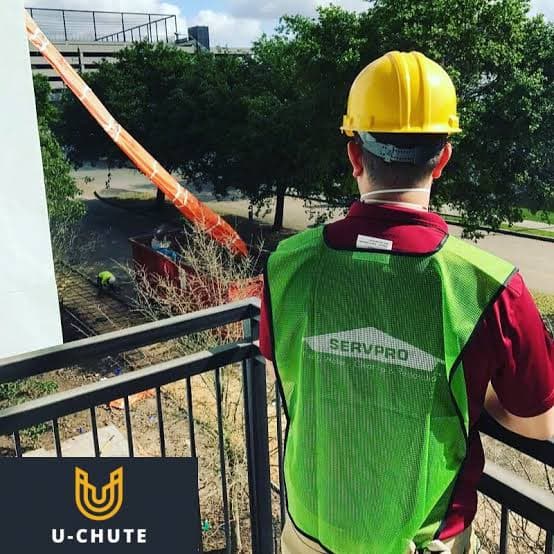
A roofing trash chute is a sectional, gravity-fed tube that attaches to the eave or a window opening and extends vertically down to a receiving container. Workers load debris at the top and gravity does the rest. Modern chutes like those manufactured by U-Chute are made from durable polymer-fabric — a woven, reinforced material that is far lighter than steel or hard-plastic alternatives but handles the abrasion of shingles, nails, and broken decking without issue.
What they are not is a one-time-use disposable. Reusable chutes are designed to be deployed, broken down, cleaned, stored, and redeployed on the next job. That fundamentally changes the economics. You are not renting or discarding — you are buying a durable tool that earns its cost back across many projects.
Polymer-Fabric vs. Rigid Chute Systems
Rigid chute systems — typically aluminum or hard plastic — are the old standard. They are heavy, awkward to transport in a service van, and time-consuming to assemble. Polymer-fabric chutes collapse for transport, weigh a fraction of the equivalent rigid section, and can be rigged much faster on site. For roofing crews who move from job to job daily or weekly, that portability difference is enormous.
- Weight: Polymer-fabric sections are significantly lighter than metal equivalents, reducing truck payload and setup fatigue.
- Transport: Sections fold or roll, fitting easily in a truck bed or trailer without a dedicated chute rack.
- Setup time: A polymer-fabric chute can be rigged by one person in minutes versus a two-person job for rigid systems.
- Durability: Reinforced fabric handles abrasive roofing debris — shingles, gravel, nail-studded wood — through many cycles.
- Reuse value: Built for repeated deployment, not single use.
Sizing a Chute for Roofing Applications
Getting the right length is the most important purchase decision you will make. A chute that is too short leaves a gap between the bottom of the chute and your dumpster, allowing debris to scatter. A chute that is far longer than necessary adds unnecessary cost and rigging complexity. The key measurement is your effective drop height — the vertical distance from the eave or attachment point down to the top of the receiving container.
How to Measure Drop Height on a Roofing Job
- Stand at the base of the structure and identify where the dumpster will sit.
- Measure from the dumpster lip up to the eave overhang or the window opening you plan to use as the chute entry point.
- Add two feet of buffer — you want the chute bottom to sit just inside or just above the dumpster opening, not right at the rim.
- Select the chute length that meets or exceeds that number.
U-Chute offers four sizes: a 10 ft lite-duty, 10 ft heavy-duty, 25 ft heavy-duty and 50 ft heavy-duty. For most single-story residential reroof jobs, the 10 ft heavy-duty is the right starting point. For two-story homes, a 25 ft section typically covers the drop. For multi-story commercial applications — think flat-roof commercial buildings or high-rise facade work — the 50 ft heavy-duty is built for the task. Sections can also be combined on eligible configurations, so as your business grows into taller projects, your equipment scales with it.
Matching Chute Duty Rating to Roofing Debris
Roofing debris is abrasive and irregular. Full bundles of architectural shingles, chunks of ice-and-water shield, broken OSB decking, and loose nails all make their way down the chute. This is not light-duty material. For anything beyond a small repair job, the heavy-duty designation is the right call. The lite-duty 10 ft chute is better suited to lighter residential cleanout tasks where the debris profile is less aggressive.
Rigging a Roofing Chute: Step-by-Step Setup
Proper rigging is the difference between a chute that works all day and one that shifts, spills, or fails mid-job. Here is a proven setup sequence for a standard residential roofing application.
Pre-Setup Checklist
- Confirm dumpster placement — it should be as close to the structure as safely possible, directly below the planned chute exit.
- Inspect the chute sections for any damage from the previous job before deployment.
- Identify the attachment point: an eave bracket, a window opening brace, or a scaffold rail.
- Ensure the attachment hardware is rated for the debris load you expect.
- Brief your crew on the loading protocol — no jamming, no oversized pieces, steady feed rate.
Rigging Steps
- Secure the top mounting bracket to the eave fascia, scaffold, or window frame. The bracket should hold the chute inlet at a slight forward angle — roughly 10 to 15 degrees off vertical — to keep material moving without free-fall slamming.
- Attach the first chute section to the bracket using the integrated connection hardware. Confirm the section is seated and locked before releasing.
- Add additional sections from the top down, interlocking each section securely before proceeding. Never add sections from the ground up — the weight of unsupported sections above creates hazardous instability.
- Position the bottom outlet so it discharges into the dumpster, not onto its exterior wall. Use a bungee or strap to anchor the bottom section to the dumpster rim if wind is a factor.
- Test with a small amount of debris before full loading. Watch for sway, misalignment, or debris escaping at joints.
For a detailed safety checklist specific to 10 ft chutes, see our 10 ft Construction Trash Chute Safety Checklist.
Job-Site Safety Protocols When Using Roofing Chutes
A chute dramatically improves job-site safety compared to tossing debris — but only if you operate it correctly. The chute itself introduces a few specific hazards that every roofer should understand before deployment.
Ground-Level Exclusion Zones
The area directly below and around the chute outlet is a live debris zone. No pedestrians, no other tradespeople, and no equipment should be in that zone while the chute is loaded. Mark the exclusion zone with cones or tape and brief the homeowner before the job starts. Debris can occasionally bounce or eject at the outlet, especially if the chute is loaded too aggressively at once.
Loading Discipline Prevents Jams
Chute jams happen when workers try to force oversized pieces down the tube or dump too much material at once, creating a plug. Break large decking sections into manageable pieces before loading. Feed the chute steadily rather than in large bursts. If a jam occurs, do not reach down into the chute — use a long handle to dislodge the blockage from above.
Wind Load and Chute Stability
At height, chutes act like a sail in crosswind conditions. On days with sustained winds above 20 mph, evaluate whether a full-length chute deployment is appropriate. If you proceed, add intermediate tie-offs to the structure at every 10 to 15 feet of chute length to prevent sway that can compromise the mounting bracket.
Roofing Applications Beyond Standard Residential Reroof
Most contractors think of roofing chutes in the context of a residential shingle tear-off — but the applications are broader than that, and understanding the full range helps you get more value from your equipment investment.
Commercial Flat-Roof Tear-Offs
EPDM, TPO, and built-up roofing systems on commercial flat roofs generate enormous debris volumes. The material is often bulky and heavy — multiple layers of membrane, insulation board, and ballast gravel. A 50 ft heavy-duty chute is frequently the right tool here, allowing a full crew to strip a large section and funnel everything directly into a roll-off container below without any ladder carries.
Chimney and Fascia Repair Work
Masonry chimney rebuilds and fascia replacement jobs generate a surprising volume of debris — brick fragments, mortar, old wood — from a compact area at height. A 10 ft heavy-duty chute positioned at the chimney base can direct that material into a wheelbarrow or small container, keeping the yard clean and protecting landscaping below.
Storm Damage Restoration Projects
After major weather events, roofing crews often work multiple jobs in rapid succession. Speed of setup and breakdown becomes critical. A lightweight polymer-fabric chute that can be rigged in under 10 minutes and loaded in a standard truck bed is a genuine competitive advantage when you are cycling through multiple storm-damage jobs in a week. Crews in markets like Sarasota, FL, Boca Raton, FL, and Charleston, WV — areas with active storm seasons — have found reusable chutes pay for themselves quickly in exactly this scenario.
Solar Panel Installation Debris
As solar installations on existing residential roofs have accelerated through 2026, roofing crews are increasingly called in to handle the structural prep work — removing old shingles, reinforcing decking, and sometimes replacing sections of roof entirely before panel installation. All of that generates debris that needs to come down cleanly. A chute keeps the solar installation crew's staging area free of roofing material and prevents costly panel or equipment damage from falling debris.
Renting vs. Buying: The Roofing Contractor's Math
If you are still renting chutes job by job, the economics of ownership deserve a close look. Rental fees for a single-job chute typically range from $75 to $200 per day depending on market and size. Add delivery charges, pickup fees, and the hidden cost of scheduling your job around rental availability, and the true per-job cost is often higher than the rental rate alone suggests.
A reusable U-Chute chute purchased outright and deployed across 20 to 30 jobs per season pays for itself in rental cost savings within the first season for most active contractors. After that, every job is running on pure margin improvement. For a deeper breakdown of this analysis, see our post on Debris Chute Rental vs Buy for Construction.
Total Cost of Ownership Factors to Consider
- Purchase price: One-time, with free US shipping from U-Chute.
- Lifespan: Polymer-fabric chutes are built for repeated use across many seasons with proper care.
- Maintenance cost: Minimal — rinse after use, inspect joints, store dry.
- Rental avoided: Every job where you deploy your own chute is a rental fee not paid.
- Labor savings: Faster setup, faster tear-off, fewer ladder carries — all compound into real hourly savings per job.
Environmental Responsibility and Roofing Debris
Roofing generates a significant volume of construction and demolition waste. EPA data on materials, waste, and recycling consistently identifies construction and demolition debris as a major waste stream in the US. Shingles alone — asphalt shingles are petroleum-derived products — represent millions of tons of landfill input annually.
Using a chute does not reduce the total debris volume, but it does enable cleaner separation. When debris lands in a designated container rather than scattered across a yard, it is far easier to sort recyclable materials — metal flashing, clean wood, certain membrane types — from the true landfill fraction. Some regional recycling programs accept crushed asphalt shingles for road base material. Getting to that sorting step requires the debris to be contained and accessible, which a properly managed chute setup enables. See the EPA's recycling overview for broader context on construction material recovery.
Maintaining Your Roofing Chute Between Jobs
A reusable chute is an asset. Treat it like one and it will last many seasons. The maintenance requirements are genuinely minimal, but skipping them shortens the chute's usable life and can create safety issues on future jobs.
Post-Job Cleaning Routine
- Disconnect sections and lay them flat or hang them vertically.
- Rinse interior surfaces with a garden hose to clear fine debris — particularly shingle granules, which are abrasive and can degrade fabric if left packed in joints.
- Inspect every connection point and joint for wear, tears, or deformation. Address any damage before storage.
- Allow sections to fully air-dry before folding or rolling for storage. Storing wet accelerates mold and material degradation.
- Store in a dry location out of prolonged UV exposure — a truck box, garage shelf, or enclosed trailer is ideal.
For more on professional chute maintenance standards, our guide to trash chute cleaning for contractors covers the topic in depth.
Choosing the Right U-Chute Size for Your Roofing Business
The right chute for your business depends on the typical job types in your portfolio. Here is a practical selection guide for roofing contractors at different stages.
Starting Out: Single-Crew Residential Roofer
If your work is primarily single-story residential reroof jobs — standard ranch homes, bungalows, one-story additions — start with the 10 ft heavy-duty. It handles the drop height, it handles the debris profile, and it is the most portable option for a single-crew truck setup. It is priced accessibly and ships free, so the barrier to getting started is low.
Growing Business: Mixed Residential and Light Commercial
If your jobs regularly include two-story homes, townhouses, or light commercial flat roofs, add a 25 ft heavy-duty to your kit. Keep the 10 ft for the smaller jobs and deploy the 25 ft when the drop demands it. Having both sizes on hand means you are never under-equipped regardless of what the schedule brings.
Established Contractor: Multi-Story and Commercial
For contractors working multi-story commercial buildings, industrial facilities, or large apartment complexes, the 50 ft heavy-duty is the right tool. It is built for the vertical distances and debris volumes that come with that class of work. Crews in active markets like Boulder, CO, Asheville, NC, and Bend, OR have found the 50 ft chute essential for multi-story commercial reroof work where the drop height simply exceeds what a standard chute covers.
Common Mistakes Roofing Contractors Make With Debris Chutes
Even experienced contractors make avoidable errors with chute deployment. These are the most common ones — and how to sidestep them.
- Wrong length for the drop: Measure before you order. A chute that falls short of the dumpster is not safe or functional. Add that buffer as described in the sizing section above.
- Skipping the exclusion zone: Every year, workers and bystanders are struck by debris at chute outlets. Mark the zone, enforce it, and brief everyone on site including the homeowner.
- Overloading in bursts: Loading 10 shingles at once creates a surge that can jam the chute, stress the mounting bracket, and send material flying at the outlet. Train your crew to feed steadily.
- Storing wet: This one chute failure mode is entirely avoidable. Dry before you store, every single time.
- Using lite-duty for heavy debris: The lite-duty designation exists for a reason. Full shingle bundles and broken decking belong in a heavy-duty chute. Pushing lite-duty fabric beyond its design load shortens its life and can cause mid-job failure.
- Ignoring wind: A chute swinging in 30 mph gusts is a hazard for the crew above and everyone below. Add tie-offs or reschedule when conditions are marginal.
How Other Trades Use the Same Equipment
One of the strongest arguments for buying your own chute rather than renting is versatility. The same chute you deploy on a roofing tear-off is equally useful for window replacement projects, exterior siding jobs, interior gut-out renovations, and junk removal. Construction debris removal is a challenge across all of these trades, and the core tool is the same.
Junk removal companies, in particular, have found polymer-fabric chutes to be a natural fit — many jobs involve clearing upper-floor content (old furniture, appliances, accumulated materials) that is impractical to carry down stairs repeatedly. A chute rigged at a second-floor window turns a multi-hour carry job into a fast, controlled drop into the truck or dumpster below. If your business does any work beyond pure roofing, your chute investment works across all of it.
You can review all available configurations and find answers to common questions on the U-Chute FAQ page or explore the full product lineup at our services page.
Frequently Asked Questions
What size trash chute do I need for a typical residential reroof?
For most single-story residential reroof jobs, a 10 ft heavy-duty chute is the right starting point. Measure the vertical drop from your eave or attachment point to the top of your dumpster or container, add a couple of feet of buffer, and select the chute length that meets or exceeds that measurement. Two-story homes typically call for a 25 ft heavy-duty chute. When in doubt, go slightly longer rather than shorter — a chute that falls short of the container creates a debris scatter problem that defeats the purpose entirely.
Can roofing chutes handle architectural shingles and nails?
Yes. Heavy-duty polymer-fabric chutes are specifically designed to handle abrasive roofing materials including architectural shingles, three-tab shingles, nail-embedded wood decking, gravel ballast, and broken membrane material. The key is matching the duty rating to the debris profile — always use a heavy-duty chute for roofing tear-offs, not a lite-duty model. Lite-duty chutes are suited to lighter residential cleanout tasks, not the high-abrasion load of a full shingle tear-off.
How do I attach a trash chute to a roof or eave?
The most common attachment method for roofing applications is a bracket fastened to the eave fascia or secured to a scaffold rail at the eave line. The bracket holds the chute inlet at a slight forward angle to keep debris moving without creating a free-fall surge at the outlet. For window-opening attachment on interior gut-out projects, a brace frame across the window opening serves the same function. Always confirm the attachment hardware is rated for the debris load you expect, and add intermediate tie-offs to the structure for every 10 to 15 feet of chute length on taller drops.
How many jobs does a reusable chute last before it needs to be replaced?
With proper care — rinsing after use, drying before storage, and routine inspection of joints and connection points — a quality polymer-fabric heavy-duty chute can last many seasons across dozens to hundreds of job deployments. The most common cause of premature failure is storing the chute wet or deploying a lite-duty chute in a heavy-duty application. Treat it as the professional tool it is: inspect it, clean it, store it properly, and it will perform reliably across a long service life.
Is it better to rent or buy a trash chute for roofing?
For contractors who run regular jobs — even just 15 to 20 roofing projects per season — buying a reusable chute outright is almost always more economical than renting. Rental fees, delivery charges, and scheduling constraints add up quickly. A purchased chute pays for itself in avoided rental costs within the first season for most active contractors, then continues generating savings on every subsequent job. See our detailed breakdown in the Debris Chute Rental vs Buy guide for a full cost comparison.
Are there safety rules I need to follow when using a roofing chute?
Yes, and they matter. Establish a clear exclusion zone at the chute outlet and enforce it throughout the job — debris can bounce or eject unexpectedly, especially with high-volume loading. Brief the homeowner and any other trades on site about the hazard zone before work begins. Train your crew to feed debris steadily rather than in large bursts to prevent jams and outlet surges. In windy conditions above approximately 20 mph sustained, evaluate whether full-length chute deployment is appropriate and add intermediate tie-offs if you proceed. OSHA ergonomics and site safety standards apply to chute operations just as they do to any other on-site activity.
Can the same chute be used for jobs other than roofing?
Absolutely. The same heavy-duty polymer-fabric chute you use for roofing tear-offs works equally well for window replacement debris, exterior siding removal, interior gut-out renovations, and junk removal from upper floors. Versatility is one of the strongest arguments for buying your own chute rather than renting. If your business spans multiple trades or project types — which is common for general contractors, renovation crews, and junk removal operators — your chute earns its value across all of them, not just on roofing days.
Get Started With the Right Roofing Chute for Your Jobs
Trash chutes for roofing are not a luxury — they are a professional standard that protects your crew, protects your clients' property, and makes your jobs run faster and cleaner. The difference between tossing debris and running a controlled chute system is the difference between a job site that looks professional and one that looks chaotic.
U-Chute manufactures reusable polymer-fabric chutes in four sizes built specifically for the demands contractors face in the field. All sizes ship free anywhere in the United States. Order the size that fits your jobs, deploy it on your next tear-off, and experience the difference firsthand.
Browse the full lineup and place your order at our Debris Chute Systems page, or visit the About U-Chute page to learn more about how we build our products. Questions before you order? The Contact page is the fastest way to reach us directly.