
Every contractor eventually faces the same decision: how do you get debris from the upper floors of a job site down to ground level safely, efficiently, and without destroying your crew's schedule? Two options dominate the conversation — the classic dumpster parked at the curb, and a gravity-fed debris chute system hung directly from the structure. Both can work. But they don't work equally well on every project, and choosing wrong costs real money.
This guide breaks down the construction debris chute vs dumpster decision from every angle: cost, safety, speed, logistics, project type, and long-term value. By the end, you'll know exactly which tool fits your situation — and how to justify the call to any project owner who asks.
What Each System Actually Does
Before you can compare them fairly, you need a clear picture of how each method works at a functional level — not just the marketing pitch.
How a Construction Debris Chute Works
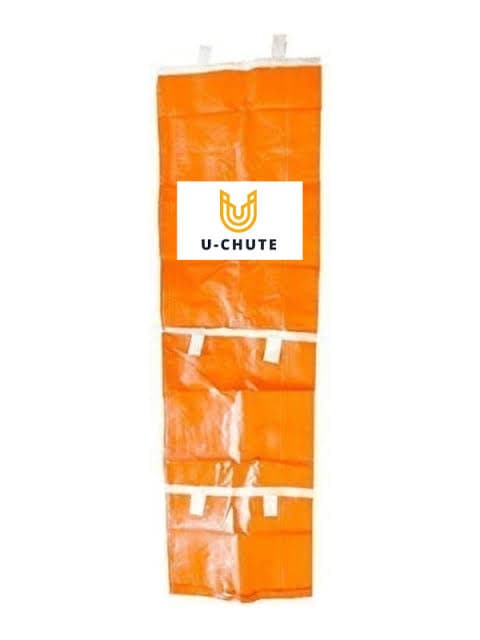
A debris chute is a series of modular, gravity-fed sections that hang from a window, balcony, or scaffold level and guide debris straight down into a waiting dumpster or roll-off below. Sections stack to match the drop height — whether that's one story or ten. U-Chute's reusable polymer-fabric chutes are available in 10 ft lite-duty, 10 ft heavy-duty, 25 ft heavy-duty, and 50 ft heavy-duty configurations, so you buy exactly what your drop height demands and nothing more. Lightweight sections mean one person can install the system in minutes, and the chute funnels debris away from workers and pedestrians on the ground level.
How a Dumpster-Only Workflow Works
In a dumpster-only setup, workers carry, shovel, or bucket-brigade debris from the work area to the dumpster. On a single-story slab or a ground-floor gut renovation, that workflow is perfectly reasonable. On anything above grade — a second-story roof tear-off, a third-floor gut, a high-rise window replacement — the logistics multiply fast. Workers make more trips, stairs become bottlenecks, and fatigue increases injury risk. The dumpster itself is still necessary in either scenario; the real question is how the debris gets into it.
The Real Cost Comparison
Cost is almost always the first objection when contractors consider adding a debris chute to a project. Run the numbers carefully, though, and the story changes.
Upfront Equipment Cost
Renting a dumpster typically runs anywhere from a few hundred to several hundred dollars per week depending on container size, haul-away fees, and your region. A reusable debris chute is a one-time purchase — see the Trash Chute Cost Estimator by Project Scope for a side-by-side look at how the math plays out across different project sizes. U-Chute systems ship free anywhere in the United States, eliminating a cost that catches contractors off guard with other suppliers.
Labor Cost Is the Hidden Number
The metric most contractors undercount is labor hours spent moving debris. Consider a three-story gut renovation:
- Without a chute: workers haul bags, buckets, and wheelbarrows down two or three flights of stairs, then out to the dumpster — multiple trips per hour, per worker, all shift long.
- With a chute: workers toss debris directly into the chute opening on their floor. One person on the ground manages the dumpster. The rest stay productive on the floor where the work is happening.
- Industry experience consistently shows that chute-equipped crews move debris 40 to 60 percent faster on multi-story projects — time that translates directly into wages saved or additional work completed.
When you factor in the rental vs. buy decision, owning a reusable chute for repeated projects makes the per-job cost drop substantially with every use.
Overflow and Overage Fees
Dumpster rental agreements come with weight limits and tonnage overage charges that can blindside a crew mid-project. A debris chute doesn't replace the dumpster, but it does help consolidate debris faster, which means you may be able to schedule fewer hauls or use a smaller container footprint. That coordination advantage is real money on longer projects.
Safety: Where the Two Methods Diverge Most
Safety compliance isn't optional on any job site. It's also the area where the debris chute vs dumpster debate becomes most clear-cut on multi-story work.
The Risk of Manual Debris Hauling
Carrying heavy loads down staircases is one of the most consistent sources of musculoskeletal injuries on construction sites. OSHA's ergonomics guidelines highlight repetitive lifting and awkward load-carrying as primary injury vectors. When workers are exhausted from hauling debris, their attention to the primary task — framing, roofing, demolition — suffers. Dropped materials from upper floors without a controlled chute also create ground-level strike hazards for anyone below.
How a Debris Chute Controls the Drop Zone
A properly rigged debris chute channels all falling material through a defined, enclosed path. There's no unpredictable scatter of shingles or drywall chunks. Bystanders and workers below know exactly where the debris lands, and that zone can be barricaded. The 10 ft Construction Trash Chute Safety Checklist walks through proper setup and securing procedures to keep every installation OSHA-compliant and structurally sound.
Dumpsters and Ground-Level Congestion
Positioning a dumpster close enough to a building that workers can reach it without long carries often means it ends up in a traffic lane, a pedestrian path, or in conflict with other equipment. Debris chutes let you position the landing zone precisely without forcing workers to traverse the most congested parts of a site. On tight urban lots — a common scenario for roofers and demo crews in dense neighborhoods — that flexibility is practically a necessity.
Project Types Where a Debris Chute Clearly Wins
Not every job needs a chute. But for specific project profiles, the chute is the obvious choice and using only a dumpster creates avoidable friction.
- Roofing tear-offs on two-story or taller structures: Shingles, underlayment, and decking are heavy and irregular. A chute aimed at the dumpster from the roofline eliminates the staging-and-carrying step entirely.
- Multi-floor interior demolition: Gut renovations of commercial buildings or apartment stacks generate enormous debris volume on floors far from the dumpster. A chute at each window opening solves the problem without sacrificing worker time.
- Junk removal from upper floors: Furniture, appliances, and general junk can't safely be tossed from a window without a controlled channel. Chutes make junk removal from above-grade units both safe and fast.
- Historic or urban renovation: Sites where sidewalk access is restricted and debris must land in a precise footprint benefit enormously from the directed flow a chute provides.
- High-volume shingle or insulation removal: Materials that generate large quantities of lightweight-but-bulky waste become manageable with a chute — workers aren't constantly leaving the roof to haul a bag down.

Project Types Where a Dumpster Alone Is Sufficient
Fairness demands acknowledging when you don't need a chute. A dumpster-only approach works fine when:
- All work is at ground level or on a single-story slab.
- Debris volume is low enough that a few trips per day to the dumpster don't materially slow the crew.
- The structure doesn't have accessible upper-floor openings (windows, balconies) where a chute could be anchored.
- The job is a small residential clean-out with minimal heavy material.
Honest contractors know their project. The goal is to match the tool to the task — and for the categories above, a dumpster alone is genuinely adequate.
Speed and Workflow: Side-by-Side on a Realistic Job
Let's walk through a concrete scenario: a three-unit, three-story apartment gut renovation. Walls, flooring, ceilings, and mechanical systems all coming out. Here's how each approach actually plays out on the clock.
Dumpster-Only Timeline
- Worker on floor 3 fills a debris bag.
- Worker carries bag to stairwell, navigates two flights with load.
- Worker exits building, crosses site to dumpster.
- Worker returns to floor 3 — round trip: 8 to 12 minutes depending on building layout.
- Multiply by 6 workers making 4 to 6 hauls per hour each.
That's a significant percentage of each worker's paid day spent in transit rather than on productive demolition work.
Debris Chute Timeline
- Worker on floor 3 fills debris bag or shovels directly into chute opening at the window.
- Debris travels down chute to dumpster below in seconds.
- Worker resumes demolition immediately — no stairs, no transit, no return trip.
- One ground-level worker monitors the dumpster landing zone.
The math on labor hours — and the project schedule — shifts noticeably in favor of the chute. On a week-long gut, that time difference can amount to completing the job in four days instead of five, or finishing each floor a half-day ahead of schedule.
Environmental Considerations
Construction debris is a significant contributor to the waste stream. According to the EPA's materials waste and recycling data, construction and demolition debris accounts for a substantial share of total solid waste generation in the United States. The method you use to move that debris affects how well you can sort and divert it from landfill.
Sorted Dumpsters vs. Mixed Loads
One argument for dumpsters in certain set-ups is that crews can more deliberately sort materials at the point of discard — wood in one bin, drywall in another — reducing contamination and increasing recyclability. However, this sorting discipline requires crew training and discipline that often breaks down under production pressure. The EPA's recycling program resources can help contractors identify regional facilities that accept separated C&D materials.
The Reusable Chute Advantage Over Single-Use Alternatives
Disposable or low-quality chutes that get discarded after one job contribute to waste. U-Chute's polymer-fabric construction is specifically engineered for repeated use across multiple projects, meaning the chute itself never ends up in a landfill prematurely. That's a real differentiator compared to cheaper, single-use-grade alternatives that crack or tear after one deployment.
Logistics and Setup Complexity
Setup time matters when crews are billing by the hour and project schedules are tight. Here's where debris chutes often surprise contractors who've never used one.
Chute Setup Time
U-Chute sections are lightweight enough for a single worker to handle. Rigging a chute at a window opening, anchoring it properly, and positioning the dumpster below can be accomplished in 30 to 45 minutes for a typical installation. Compare that to the time spent waiting for a dumpster delivery, dealing with permit issues for street placement, or repositioning a full container mid-project.
Dumpster Delivery Logistics
Dumpster delivery requires coordinating with a rental company — scheduling a drop-off window, ensuring street access for the truck, sometimes obtaining a municipal permit for sidewalk or street placement. In dense urban areas, this can be genuinely complicated and adds days to project planning. Owning a chute eliminates the scheduling dependency entirely: you show up, you rig the chute, you work.
Combining Both Systems
The most effective setup on medium-to-large projects isn't a chute instead of a dumpster — it's a chute feeding into a dumpster. You still need somewhere for the debris to land. The chute handles vertical transport; the dumpster handles collection. This is the standard professional configuration and the one that extracts maximum efficiency from both tools. See our full debris chute systems overview for guidance on matching chute length to dumpster position.
Choosing the Right Chute Size for Your Drop Height
If you've decided a debris chute belongs on your project, the next decision is sizing. Using an undersized chute creates dangerous conditions; oversizing wastes money. Here's the practical framework:
- 10 ft Lite-Duty: Best for low-volume residential work at one story of drop — small roof patches, minor interior demo, junk removal from a single floor.
- 10 ft Heavy-Duty: For denser or heavier debris at similar drop heights — concrete rubble, heavy tile, or high-frequency use on a short run.
- 25 ft Heavy-Duty: The go-to for two- to three-story projects — gut renovations, multi-unit residential demo, commercial interior work on mid-height buildings.
- 50 ft Heavy-Duty: Designed for taller commercial structures, high-rise window replacements, or any application where the drop height exceeds what the 25 ft configuration covers.
Sections stack, so you're not locked into a single configuration. You can combine sections to dial in the exact drop height your project requires. Questions about sizing for a specific job? Visit the U-Chute FAQ page for detailed guidance.
Who Uses Debris Chutes — And Why
The assumption that debris chutes are only for high-rise demolition is outdated. The user base has broadened considerably, and the tool is now standard on a wide range of project types:
- Roofing contractors use chutes on every steep-pitch or multi-story tear-off to eliminate shingle-hauling trips that slow production and exhaust crews.
- Demolition contractors rely on chutes for interior gut work where elevator use isn't practical and stairwells need to stay clear for safety egress.
- Junk removal companies use shorter chute configurations for cleanouts of above-grade units in apartment buildings and commercial properties.
- General contractors coordinate chute systems across multi-trade projects to keep common areas clear and debris moving off each floor without interrupting other trades.
- Specialty contractors — including window replacement crews, insulation installers, and flooring removal teams — use chutes when their specific work generates concentrated debris bursts at upper-floor locations.
U-Chute systems ship free across the entire United States, so whether you're working in Boulder, Colorado, Sarasota, Florida, or Asheville, North Carolina, the chute arrives ready to deploy without freight surprises.
Regulatory Context: What Contractors Need to Know
Debris management on construction sites isn't purely a logistical question — it has a compliance dimension. Construction debris chute regulations vary by state, and knowing your local requirements protects you from stop-work orders and fines.
Municipal Dumpster Permits
Placing a dumpster on a public street or sidewalk typically requires a permit from the local municipality. Permit timelines, fees, and placement restrictions differ significantly by city and state. Failing to obtain a permit — or violating placement rules — can result in fines or forced removal at the contractor's expense.
Chute Rigging Requirements
Debris chutes must be properly anchored and the drop zone must be barricaded to protect ground-level workers and the public. OSHA 29 CFR 1926 governs construction site safety broadly, and proper chute installation aligns with those standards when done correctly. The safety checklist covers the key anchoring and barricading steps in a format crews can use in the field.
Market Trends Shaping This Decision in 2026
The construction debris management space is evolving. Labor shortages have pushed project managers to scrutinize every workflow that consumes worker time. Debris hauling — the kind that chutes eliminate on multi-story jobs — has become one of the first targets for efficiency improvements as crews shrink and wage rates rise.
Meanwhile, the rental market for dumpsters has seen pricing pressure from fuel costs and driver availability. Contractors who own their debris management equipment — including reusable chutes — have more cost predictability than those who depend entirely on rental availability and pricing. See what industry insiders are watching in the Q1 2027 Trash Chute Market Trends for Contractors overview for a forward look at where the market is heading.
The broader push toward sustainable job site practices also favors reusable equipment over disposable alternatives. The spring 2026 debris cleanup guide covers practical sustainability steps contractors are integrating into their standard site protocols.
Making the Final Call: A Decision Framework
Use this quick framework to match your project to the right approach:
- Is all work at or near ground level? Yes → dumpster alone is sufficient. No → evaluate a chute.
- Is the project two stories or higher with significant debris volume? Yes → a debris chute is almost certainly the right call.
- Do you have accessible upper-floor openings (windows, balconies) to anchor the chute? Yes → installation is straightforward. No → assess rigging from scaffold.
- Will this project type repeat across your business? Yes → buying a reusable chute makes more financial sense than renting repeatedly.
- Is crew safety on stairs or with heavy loads a concern? Yes → a chute reduces that risk materially and aligns with OSHA ergonomic best practices.
For the majority of roofing, demo, and multi-story interior projects, this framework points clearly toward a debris chute working alongside — not replacing — the dumpster. The full range of U-Chute systems gives you a starting point for matching the right product to your answer.
Frequently Asked Questions
Does a debris chute replace the dumpster entirely?
No — a debris chute and a dumpster work together, not against each other. The chute handles vertical debris transport from upper floors down to ground level. The dumpster collects the debris at the bottom of the chute. On multi-story projects, this combination is the standard professional setup. You still need to arrange dumpster delivery and haul-away; the chute simply eliminates the labor-intensive step of manually carrying debris down stairs or across the site.
What is the biggest cost advantage of a debris chute on multi-story projects?
Labor savings are the primary financial advantage. On projects where workers would otherwise carry debris down multiple flights of stairs repeatedly throughout the day, a debris chute can reduce non-productive transit time by 40 to 60 percent. For a crew of five or six workers on a week-long gut renovation, that translates into a significant number of billable labor hours recovered — often enough to justify the chute purchase entirely on a single job, with every subsequent use adding pure savings.
How difficult is it to set up a U-Chute debris chute?
Setup is straightforward enough for a single worker to complete. U-Chute sections are lightweight polymer fabric, so they're easy to handle, carry up stairs, and rig at a window or balcony opening. A typical installation — from unboxing sections to having the chute rigged and ready — takes 30 to 45 minutes. Sections stack to match your specific drop height, so you configure the length you need rather than managing a fixed system that may not fit your job.
Are debris chutes required by OSHA on certain projects?
OSHA regulations under 29 CFR 1926 govern construction site safety, and certain debris handling scenarios — particularly dropping materials from heights — require controlled methods that protect workers and the public below. While OSHA doesn't universally mandate chutes by name, uncontrolled debris dropping is a citations risk, and a properly installed chute is one of the recognized methods for maintaining a compliant drop zone. Always consult your state's construction safety regulations and the relevant OSHA standards for your specific project type.
Can junk removal companies use construction debris chutes?
Absolutely — junk removal is one of the most common non-demolition use cases for debris chutes. When cleaning out above-grade apartments, condos, or commercial units, a chute installed at a window allows furniture, boxes, and general junk to move from upper floors to the collection container below without repeated stair carries. The 10 ft configurations are often the right fit for single-floor drop heights typical in residential junk removal work, while taller buildings may require the 25 ft or 50 ft heavy-duty systems.
What materials can a debris chute handle?
U-Chute systems are designed for standard construction and demolition debris — shingles, drywall, lumber scraps, flooring, insulation, general junk, and similar materials. Extremely heavy concentrated loads like large concrete chunks should be broken down before entering the chute. The lite-duty 10 ft model is appropriate for lighter, lower-volume debris streams, while the heavy-duty configurations handle the more demanding demolition debris typical on commercial gut projects. Always refer to the product specifications and the safety checklist for load guidance specific to each model.
Do debris chutes ship free, and how quickly can I get one on site?
U-Chute ships all systems free anywhere in the United States. Delivery timelines depend on your location and the carrier, but the online ordering process is straightforward — select the size you need for your project, complete the purchase, and the system ships directly to you. Because the chutes are reusable, the investment pays off across multiple jobs rather than being a single-use cost, making the purchase economics considerably more favorable than repeated rentals.
Ready to Stop Hauling and Start Moving Debris Smarter?
The construction debris chute vs dumpster question has a clear answer for most multi-story projects: you need both, and the chute is what turns a labor-intensive hauling process into a fast, controlled, and safe workflow. U-Chute reusable polymer-fabric chutes are available in four sizes, ship free across the United States, and are built to work project after project without degrading.
If you're ready to equip your crew with the right system, contact U-Chute with your project details, or head directly to the debris chute systems page to select the size that matches your drop height. Your crew — and your project schedule — will notice the difference on day one.