

When you're managing debris on a multi-story job site, the difference between a smooth operation and a dangerous, time-consuming mess often comes down to one piece of equipment: the debris chute. Specifically, the kind of plastic debris chute you choose — its material construction, its load rating, its length, and how it attaches to the structure — will determine whether debris moves quickly and safely from roof to dumpster, or whether your crew is hauling buckets by hand and filing incident reports.
This guide breaks down everything a working contractor or project manager needs to know about plastic debris chutes in 2026: how they're made, what separates durable polymer-fabric chutes from cheap single-use alternatives, how to size a chute system to your drop height, and what to look for before you place an order. If you're shopping for the first time or upgrading from a system that's been letting you down, this is the page to bookmark.
What Is a Plastic Debris Chute and How Does It Differ from Metal?
The term "plastic debris chute" gets used loosely in the industry, so let's define it clearly. A plastic debris chute is a gravity-fed tube or series of connected sections made from polymer-based materials — typically high-density polyethylene (HDPE), polyurethane-coated fabric, or similar engineered polymer composites — designed to channel construction waste, roofing material, demo rubble, and other debris from an elevated work area down to a dumpster or waste collection point at ground level.
Metal chutes — usually steel or aluminum — do exist, but they carry significant disadvantages for most job sites: they're heavy, they corrode over time, they're difficult to store and transport between projects, and they can be genuinely dangerous if debris catches an edge. Modern polymer-fabric chutes address all of those issues without sacrificing load capacity.
Why Polymer Fabric Outperforms Rigid Plastic
There's a distinction worth making between rigid plastic chutes (think thin injection-molded sections sometimes sold at hardware stores) and high-quality polymer-fabric chutes. Rigid plastic sections crack under impact, UV exposure, and temperature swings. They also tend to split at connection points when heavy debris hits them at speed.
- Polymer-fabric construction: Flexible enough to absorb impact without cracking
- Reinforced seams: High-stress connection points are stitched and bonded, not snapped together
- UV resistance: Engineered to hold up across full roofing seasons, not just a single project
- Lightweight sections: Easier for one person to carry up a ladder or scaffold
U-Chute's reusable chutes are built from exactly this category of material — a durable polymer-fabric that balances flexibility, strength, and long-term reusability across dozens of projects.
The Four Core Sizes: Matching the Chute to the Job
One of the most common buying mistakes contractors make is choosing a chute that's either too short for the drop height or over-specified for a simple one-story job. Getting the size right before you order saves time, shipping back-and-forth, and real money.
U-Chute's debris chute systems are available in four configurations designed to cover the full range of construction applications:
- 10 ft Lite-Duty: Ideal for single-story residential projects, minor demo work, and cleanup tasks where the drop height is modest and the debris volume is manageable
- 10 ft Heavy-Duty: Same drop length as the lite version but built for heavier loads — roofing tear-offs, concrete fragments, dense demolition debris
- 25 ft Heavy-Duty: The workhorse for two- and three-story residential projects, mid-rise commercial jobs, and renovation contractors who move between sites frequently
- 50 ft Heavy-Duty: Designed for four-story and taller structures — apartment buildings, commercial demolition, large-scale roofing contracts, and high-rise interior gut jobs
How to Calculate the Drop Height You Need
Measure from the loading point (the top opening where debris enters the chute) to the top of the dumpster or collection point below. Add at least two to three feet of buffer to that measurement — you want the chute to clear the dumpster lip comfortably without debris bouncing out. If you're between sizes, go longer. A chute that's slightly longer than needed is easy to manage; one that's too short creates a safety problem immediately.
- Single-story residential (8-12 ft eave): 10 ft chute
- Two-story residential (16-22 ft eave): 25 ft chute
- Three-story or small commercial (24-35 ft): 25 ft or stacked 50 ft
- Four-story and above (36 ft+): 50 ft heavy-duty
For a detailed breakdown by project type and debris volume, the Trash Chute Cost Estimator by Project Scope walks through specific scenarios with numbers attached.
Who Uses Plastic Debris Chutes? Industries and Applications
It's easy to think of debris chutes as a roofing-only tool, but the range of contractors who rely on them is much broader. Understanding where your application fits helps you make a smarter buying decision — particularly when it comes to load rating and chute length.
Roofing Contractors
Roofers are the most common users of plastic debris chutes, and for good reason. Shingle tear-offs generate enormous volume in a short window of time. Without a chute, crews are either throwing debris off the edge (a serious safety and liability issue) or making dozens of trips down ladders with buckets. A properly installed chute lets one person at the top feed material continuously while the rest of the crew keeps working.
Demolition Contractors
Demo work produces unpredictable debris — concrete chunks, metal, lumber, drywall, insulation — often in a single mixed stream. Heavy-duty chute sections handle this mix without tearing or collapsing under impact. If you're running interior gut jobs on multi-story buildings, a 50 ft heavy-duty system gives you the flexibility to extend the chute from upper floors to a dumpster at street level.
Junk Removal Companies
Junk removal crews moving furniture, appliances, and bagged waste out of upper-floor units benefit from even a 10 ft chute when stairs and elevators are the bottleneck. It's a simple setup that dramatically speeds up the job and reduces the physical strain on your crew — a real ergonomic win that aligns with OSHA's guidance on reducing musculoskeletal load from repetitive lifting and carrying.
Renovation and Remodeling Contractors
Kitchen and bathroom renovations in multi-story homes generate tile, drywall, cabinets, and fixtures that need to get out of the building quickly. A 25 ft chute rigged to a window frame is often the fastest solution, keeping the staircase clear and the job moving on schedule.
The complete guide to trash chutes for apartment buildings covers the specific setup considerations for multi-unit residential work in detail.
Reusable vs. Single-Use: The Real Cost Calculation
Single-use debris chutes — typically thin plastic bag-style systems — look attractive on the invoice because the upfront number is low. But the math changes fast when you account for the full picture.
Breaking Down the Per-Project Cost
A disposable chute system might cost $80-$150 per project. A reusable polymer-fabric chute from U-Chute represents a one-time purchase that ships free anywhere in the United States. If you use that chute on ten projects over the next two years — a conservative estimate for most active contractors — the per-project cost drops to a fraction of the disposable alternative.
- Single-use over 10 projects: $800-$1,500+ in cumulative spend
- Reusable chute over 10 projects: One purchase, zero recurring cost, still operational at project 10 and beyond
- Storage footprint: Reusable sections nest compactly in a truck bed or trailer
- Environmental impact: Less plastic waste going to landfill — consistent with EPA guidance on reducing construction material waste
The reusable model also aligns with how smart contractors think about tool and equipment purchases generally: buy quality once, maintain it, and amortize the cost across many jobs.
Safety Standards and Site Compliance for Debris Chutes
Running a debris chute on a job site isn't just an efficiency decision — it has safety and regulatory dimensions that every contractor should understand before the first section goes up.
The Basics of Secure Installation
A plastic debris chute that isn't properly anchored at the top and stabilized along its length is a hazard, not a solution. Key installation principles include:
- Secure the top loading funnel to scaffolding, a window frame, or a parapet wall using rated straps or tie-off hardware — never rely on the chute's own weight to hold it in position
- For longer runs (25 ft and above), use intermediate tie-offs every 8-10 feet to prevent the chute from swinging in wind or under heavy load
- Position the bottom outlet directly over the dumpster opening — not angled to the side, where debris can miss the container and create a hazard below
- Establish a clear exclusion zone at ground level beneath the chute while debris is being loaded above
- Brief all crew members on the loading protocol: no sharp metal objects with exposed edges that could puncture the chute, and no single loads so heavy that they cause the chute to jerk loose from its upper anchor
OSHA Considerations for Elevated Work
While OSHA does not prescribe a specific standard for debris chutes as standalone equipment, they fall under the broader framework of construction site housekeeping and fall hazard control. Using a chute reduces the number of times workers carry loads on stairs or ladders — directly lowering the risk of slip-and-fall incidents, one of the leading causes of construction fatalities. Document your chute installation as part of your site safety plan.
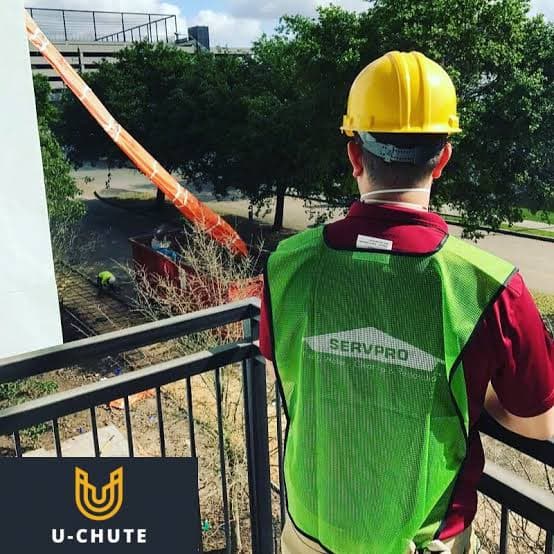
How to Inspect a Plastic Debris Chute Before and After Every Project
Reusable equipment earns its keep through proper maintenance. A quick inspection at the start and end of each job takes less than five minutes and dramatically extends the life of the chute while catching issues before they become mid-job failures.
Pre-Job Inspection Checklist
- Check all seams and stitching for fraying, separation, or punctures from the previous job
- Inspect connection hardware (hooks, straps, rings) for bending, cracking, or corrosion
- Verify that coupling points between sections lock securely and don't allow gaps where debris could escape
- Look for UV degradation on the outer surface — excessive fading or brittleness is a sign that a section needs to be retired
- Test the chute's shape by holding each section open — it should maintain its circular or oval profile without collapsing
Post-Job Cleanup Protocol
- Rinse interior sections with water to remove fine debris dust and abrasive particles that accelerate wear
- Allow sections to dry fully before folding for storage — trapped moisture promotes mildew and weakens fabric over time
- Store sections in a dry, shaded area of your trailer or storage unit — avoid leaving them under direct UV for extended periods when not in use
- Tag any section that showed signs of wear during the inspection so it can be evaluated before the next deployment
For a broader look at how chutes function across different project types, the complete guide to how trash chutes work covers the mechanics in detail.
Common Mistakes Contractors Make When Buying a Debris Chute
Buying the wrong chute — or buying the right chute and using it wrong — is expensive and frustrating. Here are the most common errors and how to sidestep them.
Mistake 1: Underestimating the Drop Height
This is the single most frequent sizing error. Contractors measure the building height but forget to account for the dumpster placement (which may be set back from the wall), the angle of the chute run, or the height of the dumpster itself. Always add a buffer and, when in doubt, go with the next size up. A 25 ft chute on a 20 ft drop gives you useful flexibility; a 20 ft chute on a 22 ft drop leaves you stranded.
Mistake 2: Choosing Lite-Duty for Heavy Debris
Lite-duty chutes are designed for lower-volume, lower-weight material — cardboard, light insulation, bagged household debris. Feeding concrete chunks, ceramic tile, or wet roofing material through a lite-duty section will shorten its life dramatically and may cause it to fail under load. When in doubt about debris weight and density, step up to the heavy-duty rating.
Mistake 3: Skipping the Exclusion Zone
Even a well-secured chute can swing, and debris can occasionally escape from the bottom opening at speed. Establishing a ground-level exclusion zone isn't optional — it's basic site safety that protects workers, bystanders, and vehicles in the work area.
Mistake 4: Storing a Wet Chute
Packing a damp chute into a storage bag or trailer shelf causes mildew, weakens seam integrity, and shortens the product's useful life. It takes twenty minutes to dry a chute properly; it costs significantly more to replace a section that's been destroyed by moisture damage in storage.
The post on homemade construction chutes versus buying covers more of these operational pitfalls for contractors who've tried to cut corners and paid for it later.
Plastic Debris Chutes vs. DIY Alternatives
Every experienced contractor knows someone who's rigged up a debris chute from PVC pipe, corrugated HDPE drainage tube, or even a series of tarps and bungee cords. Sometimes it works. More often, it creates problems that cost more to deal with than a proper chute would have.
- PVC pipe sections: Crack under impact from dense debris, have no flexibility to absorb load variation, and the connection joints separate under sustained use
- Corrugated drainage pipe: Not rated for construction debris loads, can collapse under the weight of heavy material, and the corrugated interior surface slows debris and causes clogs
- Tarp-and-frame rigs: No consistent tube shape means debris sprays at unpredictable angles, creating hazards at both the loading and discharge points
The fabrication time, material cost, and liability exposure of DIY alternatives rarely pencils out when compared to the cost of a proper reusable chute that ships free and arrives ready to use. EPA waste and recycling data also highlights the downstream benefit of using purpose-built, reusable equipment rather than disposable or improvised materials that end up as job-site waste themselves.
Plastic Debris Chutes for Specialized Applications
Beyond the standard roofing and demo use cases, plastic debris chutes show up in a surprisingly wide range of specialized applications. Understanding how other contractors deploy them might give you ideas for your own operation.
High-Rise Interior Gut Jobs
When a building is being stripped to the studs from the inside — removing drywall, electrical, plumbing, flooring across multiple floors — a 50 ft heavy-duty chute run from an upper-floor window to a dumpster at street level is often the most efficient debris management solution available. The alternative (elevator or staircase haul-outs) is slow, labor-intensive, and hard on equipment.
Rooftop Solar and HVAC Removal
Removing old solar panel arrays, rooftop HVAC units, and commercial roofing systems generates significant debris volume. A heavy-duty plastic debris chute lets crews manage the removal quickly without straining the building's elevator (if one even exists) or making repeated trips down service ladders.
Residential Renovation in Dense Urban Areas
In tight urban environments where dumpsters sit directly below the work area, a 10 ft or 25 ft chute rigged to a second- or third-story window speeds up debris removal dramatically. Contractors doing kitchen and bath renovations in row homes, brownstones, and urban condos find that a chute setup pays for itself in labor savings within two or three jobs.
Contractors working across varied geographies — from Boulder, Colorado to Sarasota, Florida and from Asheville, NC to Portland, Maine — all use the same basic setup, adapted to their local job types and building stock.
Market Trends Shaping Debris Chute Purchasing in 2026
The construction debris management category has seen real change over the past couple of years. Contractors are thinking differently about equipment purchases, and suppliers are responding. A few trends worth tracking:
- Reusability over disposability: As material costs and waste disposal fees have risen, the calculus strongly favors reusable equipment. Single-use chute systems are losing ground to polymer-fabric alternatives that survive dozens of projects.
- Direct-to-contractor purchasing: More contractors are buying equipment directly online rather than through distributors, capturing the savings that come from cutting out the middleman. Free shipping to any US address makes this accessible everywhere.
- Ergonomics and crew safety: Insurance costs and worker's comp exposure have pushed more contractors to prioritize equipment that reduces manual lifting and carrying — debris chutes fit directly into that trend.
- Waste diversion compliance: An increasing number of municipalities now require contractors to demonstrate debris separation and recycling practices as part of permitting. Construction debris recycling is easier to manage when debris is channeled cleanly into sorted containers rather than dumped in a mixed pile.
For a forward-looking view of where the market is heading, the Q1 2027 trash chute market trends post covers what to expect as we move into next year.
How to Order the Right Plastic Debris Chute from U-Chute
U-Chute sells directly online with free shipping to any address in the United States. The buying process is straightforward: measure your drop height, pick the size that covers it, and place the order. There are no minimums, no distributor markups, and no waiting on a quote from a sales rep.
- Step 1: Measure the drop from your loading point to the top of the dumpster or collection container
- Step 2: Add two to three feet of buffer to that measurement
- Step 3: Choose lite-duty or heavy-duty based on the type and density of your debris stream
- Step 4: Select the matching size — 10 ft, 25 ft, or 50 ft — and complete the order online
- Step 5: Receive your order with free US shipping, deploy on your next job
If you have questions about which configuration is right for your specific application, the FAQ page covers the most common pre-purchase questions, and you can always reach the team directly through the contact page.
Frequently Asked Questions
What materials are plastic debris chutes typically made from?
The term "plastic debris chute" covers a range of materials. The most durable options are made from polymer-fabric composites — typically polyurethane-coated woven fabric or high-density polymer blends — rather than rigid injection-molded plastic. Rigid plastic sections crack under impact and UV exposure, while polymer-fabric chutes flex to absorb load, resist tearing, and hold up across many projects. When evaluating a chute, look for reinforced seam construction and UV-stable fabric rather than thin-walled rigid plastic.
How long does a reusable plastic debris chute last?
With proper care — rinsing after each use, drying before storage, inspecting seams and hardware before each deployment — a quality polymer-fabric debris chute can last through dozens of projects over multiple years. The main factors that shorten lifespan are improper storage (folding a wet chute), overloading beyond the rated capacity, and feeding sharp or jagged debris without monitoring for punctures. Following a basic inspection and maintenance routine after each job is the most effective way to maximize service life.
Can I use a 10 ft chute on a two-story building?
It depends on the actual drop height. A standard two-story residential structure has an eave height of roughly 16-22 feet, which exceeds a 10 ft chute's reach. For most two-story applications, you'll need a 25 ft heavy-duty chute. If your specific building has a low eave — say, 10-12 feet — a 10 ft heavy-duty chute might work, but always measure the full drop from loading point to dumpster top and add a buffer before confirming your size selection.
Are there OSHA rules specific to debris chutes on construction sites?
OSHA does not publish a standalone standard specific to debris chutes, but they fall under OSHA's general construction housekeeping and fall hazard control requirements. Key compliance steps include securing the chute at the top and with intermediate tie-offs on longer runs, establishing a ground-level exclusion zone while loading is in progress, and briefing all crew members on loading protocols. Using a debris chute in place of manual carry-down also reduces musculoskeletal injury risk, which is a core focus of OSHA's ergonomics guidance.
Is free shipping really available to all US addresses?
Yes. U-Chute offers free shipping to any address in the United States on all four chute sizes — the 10 ft lite-duty, 10 ft heavy-duty, 25 ft heavy-duty, and 50 ft heavy-duty. There are no minimum order requirements and no geographic surcharges. The chutes ship direct from the manufacturer, which keeps pricing straightforward and eliminates distributor markups.
What's the difference between lite-duty and heavy-duty chutes?
Lite-duty chutes are designed for lower-density debris — bagged waste, light insulation, cardboard, and similar materials on single-story jobs where load stress on the chute is modest. Heavy-duty chutes use heavier fabric weight and reinforced construction to handle denser, more abrasive debris streams: roofing shingles, concrete fragments, ceramic tile, lumber, and mixed demolition material. If you're unsure which rating fits your project, default to heavy-duty — it's the safer and more versatile choice for most construction applications.
Can a single contractor set up a debris chute without additional crew?
For the 10 ft sizes, yes — a single person can typically carry, position, and secure the chute in a short amount of time. The 25 ft and 50 ft configurations are still manageable with one person but are significantly easier and faster with two, particularly when threading sections through windows or securing intermediate tie-offs on taller structures. The lightweight polymer-fabric construction is specifically designed to minimize the two-person setup requirement compared to heavier metal or rigid-plastic alternatives.
Ready to Order Your Plastic Debris Chute?
You now have everything you need to choose the right size, understand the load ratings, install it safely, and maintain it for years of reliable use. The next step is simple: measure your drop height, pick your size, and place your order directly through U-Chute's online store — with free shipping to anywhere in the United States, your chute arrives ready to put to work on the next job. If you have questions before you order, start with the FAQ page or reach out through the contact page and get a straight answer from people who build these systems.